
- Concrete Tools Home
- Screeds
- Tampers
- Concrete Floats
- Concrete Edgers
- Groovers
- Trowels
- Fresnos
- Power Tools for Concrete
- Choosing the Best Tool for the Job
- Must-Have Tools for Exterior Concrete: The five tools outdoor concrete contractors can’t live without
- Five Must-Have Tools for Decorative Flooring Contractors Create eautiful decorative concrete floors with these five tools
- Five Must-Have Tools for Concrete Countertop Contractors
- Related Information:
- Pouring and Finishing Tool Videos: See demonstrations of floating, troweling, edging, and more
- Concrete Finishing Tips: Creating a high-quality slab
- Product Newsletter: Sign up today to receive monthly updates
Top Reasons to Use a Concrete Finishing Aid
A practical guide to when finishing aids help, when they don’t, and how to use them correctly.
Concrete finishers frequently work within a narrow window between placement and final finishing — especially during hot, windy, or low-humidity conditions, when surface moisture evaporates faster than bleed water can replace it. To help manage those conditions, crews often rely on concrete finishing aids to preserve workability, reduce the temptation to add water, and stabilize the surface during difficult placements. Used correctly, finishing aids help maintain a workable cement paste at the surface, limit problems associated with rapid evaporation, and keep finishing on schedule. This article explains what finishing aids do, when they’re worth using, and how to avoid the common mistakes that can lead to callbacks.
WHAT IS A CONCRETE FINISHING AID?
A concrete finishing aid is a topical product, commonly formulated with colloidal silica, that’s sprayed lightly onto fresh concrete during floating or troweling to improve surface lubrication and finishability without the harmful effects of adding water. Finishers typically use one when the surface begins to tighten, crust, drag, or lose workable paste before it can be properly floated and closed.
Finishing aids are not the same as evaporation retardants, which form a temporary surface film that slows the evaporation of moisture already in the slab. Although both products help manage concrete surface moisture during challenging weather, they serve different functions and are applied at different stages of the finishing process. An evaporation retardant is generally applied soon after screeding and is not worked into the slab, while a finishing aid is applied during floating and troweling to improve the workability and lubrication of the surface paste.
Learn the important differences between evaporation retarders and finishing aids when working with concrete in hot or windy conditions.
WHEN SHOULD YOU USE ONE?
Use a finishing aid when rapid surface drying is affecting finishability. Watch for signs such as early crusting, excessive drag, premature stiffening, or a surface that is drying faster than the concrete below it.
A finishing aid is especially useful in conditions such as:
- Hot, windy, or low-humidity weather, when evaporation exceeds the rate of bleed water.
- Large, open placements exposed to direct sun or moving air.
- Interior pours where heaters, fans, open doors, or HVAC systems pull moisture from the surface.
- Finishing operations in which the surface begins to crust before the slab can be floated or troweled closed.
- Mixes with high supplementary cementitious material (SCM) contents that alter early-age surface behavior.
- Type 1L cement mixes, which exhibit lower bleeding and may be more susceptible to early surface drying or crusting under demanding conditions.
In these situations, a finishing aid buys time, minimizes rapid surface moisture loss, and helps crews avoid overworking the surface. However, it’s a situational tool and not something you need on every pour.
What the Pros Say
“The challenge isn’t necessarily that the concrete needs more water. The challenge is that moisture is leaving the surface too quickly.”
—David Ojeda, Fritz-Pak
WHAT ARE THE KEY BENEFITS?
When selected and applied properly, a colloidal-silica finishing aid may offer several practical benefits:
- Extends the finishing window: Gives crews additional time to float, trowel, and close the slab without rushing the work.
- Reduces the temptation to add water: Lubricates the surface without retempering or altering the water-cement ratio.
- Improves tool response: Reduces drag and helps floats and trowels glide more smoothly across sticky, low-slump, or high-SCM mixes.
- Helps manage rapid surface drying: Limits crusting and conditions that contribute to plastic-shrinkage cracking.
- Produces a more uniform finish: Better tool glide and less surface reworking can improve consistency in hard-troweled and decorative flatwork.
- Densifies the surface paste: May improve surface strength and durability by reacting with calcium hydroxide to form additional binding gel.
- Aids in the application of shake-on hardeners: Provides surface lubrication when a dry-shake hardener needs moisture to hydrate and integrate properly.
What the Pros Say
“The biggest advantage of a finishing aid is that it's going to add a little bit of moisture in a safe way. And it's going to help your tools glide across the surface.”
—Jeff Hershberger, Deco-Crete Supply
HOW IS A FINISHING AID DIFFERENT FROM AN ADMIXTURE?
An admixture is added to the concrete at the plant or during mixing to modify fresh or hardened properties. Common examples include water reducers, set retarders, accelerators, air-entraining admixtures, shrinkage-reducing admixtures, and integral color.
A finishing aid, by contrast, is applied directly to the surface of fresh concrete after placement to improve finishing conditions. Because it’s a topical product, it can’t correct internal mix problems such as improper slump, delayed setting, inadequate air content, or poor batch proportions. Those issues should be discussed with the ready-mix supplier before concrete placement.
HOW IS A FINISHING AID DIFFERENT FROM A CURING COMPOUND?
A curing compound is applied after finishing to retain moisture for proper hydration, while a finishing aid is applied during the finishing window to keep the surface workable. One product does not replace the other. The slab must still be cured with a compatible membrane-forming compound, wet-curing system, or another suitable curing method to ensure long-term strength and durability.
DO YOU NEED A FINISHING AID FOR EVERY POUR?
No. Under moderate weather conditions, with a workable mix and a well-planned placement, many slabs can be placed and finished successfully without one.
But you should consider keeping a product on hand when conditions are likely to be demanding, including:
- Hot, dry, sunny, or windy weather.
- Low-humidity conditions, including heated interior work.
- Large placements where crews must maintain a consistent finishing sequence.
- High-SCM or specialty mixes, including silica fume, fly ash, or other blends that may crust early.
- Decorative or hard-troweled slabs, where uniformity and finishing quality are especially critical.
WHEN IS A FINISHING AID NOT APPROPRIATE?
A finishing aid is a situational tool and shouldn’t be applied universally on every project.
In particular, do not use a finishing aid:
- Before bleed water has dissipated, which can trap moisture near the surface and contribute to a weak, dusty, or otherwise defective top layer.
- When the slab is already finishing normally and has adequate surface moisture.
- To correct mix-related problems involving design, batching, slump, air content, or set time.
- As a substitute for evaporation control measures such as windbreaks, sunshades, fogging, proper scheduling, or an evaporation retardant.
- Without confirming compatibility with color hardeners, release agents, densifiers, sealers, coatings, or other planned decorative products.
Get answers to frequently asked questions about concrete finishing aid products, including when to use them and why they are better than spraying the concrete surface with water.
HOW AND WHEN IS IT APPLIED?
A finishing aid is typically applied during the floating and troweling stage using a low-pressure pump sprayer. Apply the material in a light, even mist, then immediately work it into the surface. Simply spraying it on and letting it sit will not provide the intended benefit. Additional light applications can be used if the surface begins drying prematurely.
What the Pros Say
“DAY1 can flat-out save a slab when the surface starts closing up too fast. Just spray it on during floating and troweling, and again as needed throughout the finishing process.”
—John Reynolds, Technical Expert at Brickform | DAY1
Always follow the manufacturer’s technical data sheet, because dilution and coverage rates may vary by product. In general, use just enough material to keep the surface workable without rewetting it. Excess application can contribute to discoloration, haze, soft spots, and other surface defects.
COMMON MISTAKES TO AVOID WHEN USING A FINISHING AID
Not choosing the right product: Select a finishing aid suited to the slab, mix, and project conditions. Look for products that enhance workability, extend finishing time, and improve durability.
Using it too early: Applying before bleedwater is gone traps moisture and weakens the top layer.
Relying on it instead of curing: A finishing aid won’t replace a curing compound.
Applying DAY1 while finishing concrete slabs makes the process easier, faster, and produces better results. This concrete finishing aid offers so many benefits, it's like having an extra finisher on the job.
Uneven spraying: Ponding or puddling can lead to discoloration, hazing, or soft spots.
Not working it in while the concrete is still plastic: Failing to do so can leave a white residue on the surface.
Treating it as a universal fix: A finishing aid lubricates the surface to maximize workable time; it’s not a correction for mix design issues.
 Encore Finishing Aid
Improve workability and surface quality
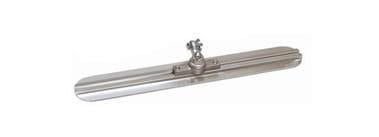 Kraft Concrete Float 24" x 3.25"
Lightweight magnesium float for small areas
 DAY1® Finishing Aid
Colloidal silica for easy, fast finishing


