Stamped Concrete Overlays: Add Pattern & Texture to Existing Concrete
How to resurface existing concrete with a stampable concrete overlay Updated June 4, 2026
A stamped overlay offers all the aesthetic benefits of conventional stamped concrete but is applied over existing concrete. Stamped concrete overlays allow you to enjoy the beauty and texture of natural stone, brick, slate, wood, and other materials without having to tear out and replace your slab. It's a great option if your concrete is structurally sound but plain, outdated, or showing its age.
Yes, stamped concrete overlays can be applied on new or existing concrete and on interior or exterior surfaces. They can even be applied to walls and other vertical surfaces. They are especially popular for refreshing the appearance of existing driveways, patios, walkways, pool decks, and floors. No tear out and replacement required.
The key requirement is that your existing concrete is in reasonably good condition. Before moving forward, consult a professional to determine if your surface is structurally sound. If the concrete has large cracks, significant spalling, or severe settlement, resurfacing may not be a viable option and replacement may be necessary.
"Carefully inspect the concrete for damage. Any significant structural damage will cause problems later on. Examples include large cracks, settling, and massive surface deterioration. Major cracking and shifting will cause the concrete overlay to break and crack, too."
A stamped overlay works on virtually any concrete surface:
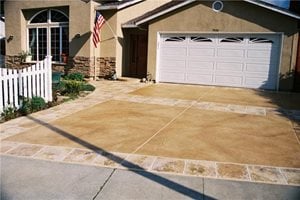
Driveways: A stamped overlay for your driveway gives you the high-end look of stone or brick pavers without the installation cost. See more driveway resurfacing options.
Patios:Resurfacing a concrete patio with a stamped overlay is a cost-effective way to update an outdoor living space. Pattern, color, and texture can all be changed in a single project.
Pool decks: Overlays are a natural fit for redoing existing pool decks that are worn or dated. Slip resistance depends largely on the sealer used, so ask your contractor about non-slip additives for wet areas.
Walkways and sidewalks: Whether your walkway has cracks, stains, or patched sections, a stamped overlay can bring it back to a uniform, cohesive finish.
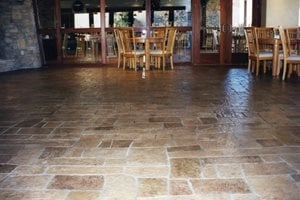
Interior floors: Stampable overlays aren't just for outdoor use. They can be applied to interior concrete floors to create a decorative finish that mimics natural stone, tile or even hardwood.
What the Pros Say
"Stampable overlays are a very durable material when used properly. We use them all the time on interior finished floors, basements, pool decks, patios, driveways — you name it."
— Bob Harris, Decorative Concrete Institute, Temple, Ga.
HOW A STAMPED OVERLAY IS APPLIED
A stamped overlay will be durable and long-lasting if applied correctly. The process involves several key steps:
Surface preparation The existing concrete is cleaned, cracks are repaired, and the surface is profiled so the overlay bonds properly. Surface prep is critical, poor prep is the most common reason overlays fail.
Applying the overlay The overlay mix is spread across the surface at a consistent thickness using a specialized gauge rake. Your contractor will determine the right thickness based on the stamp pattern being used.
Stamping Once the overlay reaches the right consistency, it's imprinted with stamp mats or texture skins to create the desired pattern. Timing is everything. There's a narrow window during which the material can be successfully stamped.
Sealing After the overlay cures, a sealer is applied to protect the surface and enhance the color. The finish can range from matte to high gloss.
Curious how the process works? Watch Bob Harris demonstrate the application of a stampable overlay over existing concrete.
A stamped concrete overlay typically runs $6–$14 per square foot installed, depending on your region, the size of the project, and the complexity of the pattern and color. Simpler single-color designs with a basic texture come in at the lower end, while multi-color work with intricate stamp patterns will be toward the higher end.
A few factors that affect your final cost:
Project size — Smaller projects often cost more per square foot because setup time and labor don't scale down proportionally. Some contractors charge a flat minimum for small jobs.
Surface condition — If significant crack repair or surface prep is needed before the overlay can be applied, that adds to the total.
Pattern and color complexity — A single-tone, single-pattern overlay costs less than a multi-color design with borders or accent colors.
Sealer type — Higher-end sealers or specialty finishes add to the cost but improve longevity.
One of the biggest advantages of a stamped overlay is the range of looks available. Common patterns include:
Ashlar slate
Random stone
Cobblestone
Brick
Wood plank
Seamless texture skins
Color can be added through integral pigments in the overlay mix, stains applied after stamping, or a tinted sealer. The combination of pattern and color is what makes a stamped overlay nearly indistinguishable from the natural material it's imitating.
While some concrete projects are manageable as DIY, a stamped overlay is not one we recommend attempting without experience. Here's why:
Timing is unforgiving.
The overlay has a narrow window during which it can be stamped. Too early and the mat sinks; too late and the material won't take an impression. Getting this right requires hands-on experience.
Surface prep is more involved than it looks.
Improper cleaning, profiling, or priming is one of the most common reasons overlays peel or don't bond evenly.
Mistakes are expensive to fix.
Unlike paint, you can't simply recoat an overlay that went wrong. Remediation often costs more than doing the job correctly the first time.
A qualified resurfacing contractor brings the experience to get all of this right, and deliver a result you'll be happy with for years.
Not all concrete resurfacing products are created equal. The resurfacers you'll find at big box home improvement stores are designed for simple surface repairs. They are good for filling cracks, restoring worn concrete, or evening out color. They're thin, cosmetic products that aren't meant to accept stamp patterns.
A professional stampable overlay is an entirely different category of material. These are polymer-modified cementitious systems specifically engineered to be applied at the right thickness, bond properly to existing concrete, and accept deep stamp impressions.
When hiring a contractor, it's worth asking what overlay system they use. Qualified decorative concrete contractors work with professional-grade systems from manufacturers like:
The specific product matters less than the contractor's experience with it, but knowing they're working with a professional system rather than a hardware store product is a good sign.
HOW THICK IS A STAMPED CONCRETE OVERLAY?
Stamped overlays are typically applied between 1/4 and 3/4 inch thick. The right thickness depends on the stamp pattern chosen. Deeper patterns require more material to produce a well-defined impression. Your contractor will determine the appropriate thickness for your project.
HOW LONG DOES A STAMPED OVERLAY LAST?
When applied properly, a stamped concrete overlay should last 10–20 years or more. It adds strength to the existing surface while updating its appearance. The longevity depends on:
Quality of installation — Surface prep and proper mixing are the biggest factors
Sealing — Regular resealing every 2–5 years (depending on traffic and exposure) is essential to maintaining appearance and protecting against moisture and UV damage
Climate — In areas with harsh freeze-thaw cycles, the overlay and sealer need to be appropriate for those conditions
Traffic levels — A driveway will see more wear than a backyard patio