Exposed aggregate and stamped concrete are two of the most popular decorative concrete finishes for driveways, patios, pool decks, and walkways. Both are durable, low-maintenance, and a significant upgrade over plain gray concrete. But they work differently and suit different priorities. Here is a look at what sets them apart and how to decide which one is right for your project.
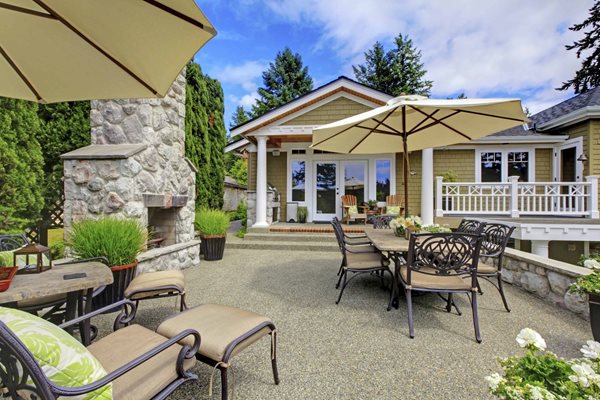
Classic Company
EXPOSED AGGREGATE
Cost: Lower; few extra materials beyond the aggregate
Best for: Driveways, pool decks, high-traffic areas
Slip resistance: Naturally nonskid
Design options: Aggregate type, size, and color; integral color; varied exposure depth; combine with other finishes
Maintenance: Reseal every few years; occasional cleaning
Winter use: Tolerates deicing salts well
DIY: Manageable for experienced finishers

Salzano Custom Concrete, Aldie, VA
STAMPED CONCRETE
Cost: $10 to $20+ per sq ft depending on pattern and color
Best for: Patios, courtyards, decorative entries
Slip resistance: Good; non-skid additive recommended near water
Design options: Virtually unlimited patterns and color combinations
Maintenance: Reseal every 2 to 3 years; occasional cleaning
Winter use: Avoid deicing salts, especially the first winter
DIY: Not recommended
What Is Exposed Aggregate Concrete and Where Is It Used?
Exposed aggregate is created by removing the outer layer of cement paste to reveal the decorative stone in the mix. The surface is rugged, naturally nonskid, and available in a wide range of colors and textures depending on the aggregate selected.
Common aggregate options include natural stone (quartz, granite, basalt, limestone), river gravel in earth tones, and recycled colored glass or seashells for specialty effects. Exposed aggregate is commonly used for driveways, patios, pool decks, and sidewalks and walkways.
What Is Stamped Concrete and Where Is It Used?
Stamped concrete is poured, colored, and then pressed with patterned mats before it hardens. The mats are molded from real stone, brick, and wood, so the results are highly realistic. Colors are applied using integral pigments, dry-shake hardeners, and surface stains, and multiple tones can be layered for natural-looking variation.
Popular patterns include flagstone and slate, cobblestone and brick, wood-grain plank (trending), and seamless textures without joint lines. Stamped concrete works well for patios, pool decks, driveways, walkways, and courtyards anywhere design and visual impact are the priority.
How Much Does Each Finish Cost?
Exposed aggregate is the more economical option. The process uses basic finishing tools and requires few additional materials beyond the decorative stone.
Stamped concrete costs more due to the additional labor, materials, and skill involved. Typical pricing:
- Basic (one color, one pattern): $10 to $14 per square foot
- Mid-range (borders, multiple colors): $14 to $20 per square foot
- High-end custom work: $20 or more per square foot
Sealing and Maintaining Both Finishes
Both finishes require similar ongoing maintenance. Reseal every few years and clean as needed with a hose or pressure washer and mild detergent. Neither finish is particularly demanding to keep up.
One exception: if you live in a freeze-thaw climate, avoid deicing salts on stamped concrete. Salts can cause surface scaling and spalling, especially in the first winter after installation. Use sand for traction instead. Exposed aggregate does not carry the same sensitivity.
Find a Decorative Concrete Contractor Near You
The best way to make a final decision is to see samples in person and get a cost estimate for your specific project. Find a decorative concrete contractor near you on Concrete Network.