
- Concrete Pool Deck Info
- Pool Deck Pictures
- Pool Deck Design Ideas
- Stamped Concrete and Other Popular Pool Deck Surfaces
- Stamped Concrete
- Colored Concrete
- Exposed Aggregate
- Modern Concrete Pool Decks
- More Pool Deck Surfaces
- Compare Concrete Pool Decks
- Installing and Maintaining Concrete Pool Decks
- Pool Deck Cost
- Pool Coping
- Pool Deck Sealer
- Pool Deck Repair
- Pool Deck Resurfacing & Coatings
- Pool Deck Cleaning
- Other Resources
- Concrete Contractors: Find Concrete Products and Suppliers
- Design Ideas: Pool Deck Info
Pool Decks
Guidelines for designing a swimming pool deck with slip resistance, sun reflectivity and orientation that suits almost any setting, budget and lifestyle
The area that surrounds your swimming pool is called a pool deck. For in-ground pools, many people choose a concrete pool deck, since it’s a durable material that can be customized. Wood and composite decking are used around above-ground pools.
Find pool deck contractors near me
One of the biggest trends in outdoor design today is installing a decorative concrete pool deck: a colored, textured, and inviting area surrounding the pool that provides a safe, slip-resistant deck for sunbathing and barbecuing.
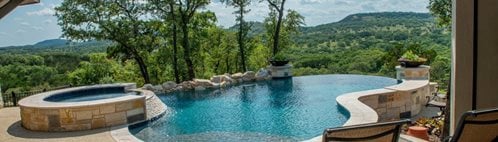 Concrete Pool Deck Pictures
Browse our library of concrete pool deck pictures for inspiration and ideas for your backyard oasis.
Concrete Pool Deck Pictures
Browse our library of concrete pool deck pictures for inspiration and ideas for your backyard oasis.
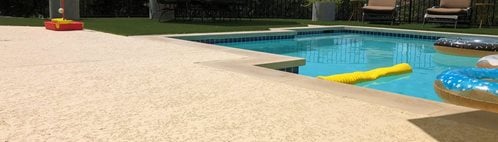 Cool Deck for Pools
Cool deck coatings add texture to existing concrete so they absorb less heat and aren't slippery.
Cool Deck for Pools
Cool deck coatings add texture to existing concrete so they absorb less heat and aren't slippery.
 Pool Deck Design Ideas
Discover useful resources and get behind-the-scenes info on outrageous concrete pool deck designs from across the country.
Pool Deck Design Ideas
Discover useful resources and get behind-the-scenes info on outrageous concrete pool deck designs from across the country.
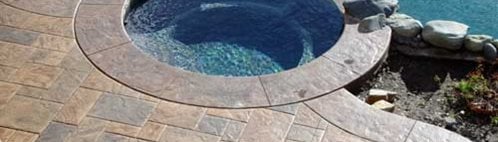 Pool Deck Resurfacing
Get ideas for sprucing up your existing pool deck with overlays that can be colored, stamped and stenciled.
Pool Deck Resurfacing
Get ideas for sprucing up your existing pool deck with overlays that can be colored, stamped and stenciled.
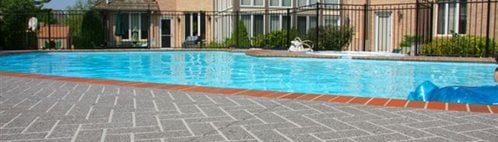 Pool Deck Material Options
Learn what materials are best for pool decks and compare concrete, stone, brick, tile, wood and other options.
Pool Deck Material Options
Learn what materials are best for pool decks and compare concrete, stone, brick, tile, wood and other options.
 Pool Coping
Compare popular types of pool coping, including poured and precast concrete, as well as natural stone.
Pool Coping
Compare popular types of pool coping, including poured and precast concrete, as well as natural stone.
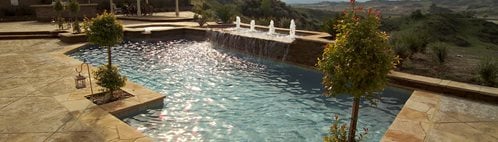 Stamped Concrete Pool Decks
Learn how a concrete pool deck can be imprinted with stamps in a variety of patterns and colors.
Stamped Concrete Pool Decks
Learn how a concrete pool deck can be imprinted with stamps in a variety of patterns and colors.
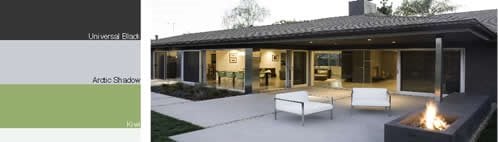 Outdoor Concrete Style Guides
Download these design sheets for concrete pool deck ideas in modern, old-world, or traditional design schemes.
Outdoor Concrete Style Guides
Download these design sheets for concrete pool deck ideas in modern, old-world, or traditional design schemes.
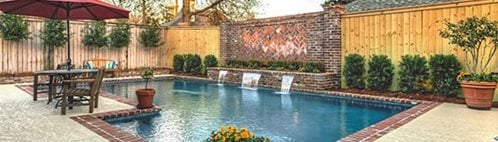 Pool Deck Contractors
Connect with pros that can pour your new pool deck or improve the look of your exisiting concrete.
Pool Deck Contractors
Connect with pros that can pour your new pool deck or improve the look of your exisiting concrete.
Decorative concrete has opened the doors to creating pool decks that complement the exterior of the home, meld with the outdoor environment, and replicate traditionally more expensive materials such as slate, stone, or even wood. Inground swimming pool decks are given nearly as much attention as the interior design of the home.
Sometimes referred to as cement pool decks, the choices available for designing a truly unique, functional, and affordable pool deck are at your fingertips.
POOL DECK ORIENTATION
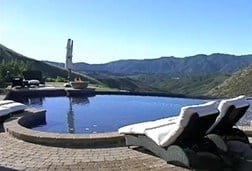
Pool Deck Orientation
Time: 00:37
Scott Cohen discusses the key factors to consider when orientating a pool, such as views, prevailing wind direction, and patterns of sun and shade.
View More Pool Deck Videos
Orientation to the House: When determining the location for your pool and deck, consider the shape and orientation of the house, think about views from the windows of the house, as well as the location of entrances and exits. Also consider the direction of prevailing wind and allow the house to provide protection from that direction. You also want to look at sun and shade angles in the yard, as you don’t want to locate your pool in a deep shade area.
Whenever possible, there should always be a deck area at the pool's northeast or northwest corner (depending on the region of the country and angle of the sun) to take advantage of afternoon sunlight reflecting off the pool's surface.
Keep in mind that the sun angle swings widely over the course of the year.
View Considerations: Orient your deck to take advantage of surrounding views both from within and outside the pool area. While it may seem more logical to locate the deck so that people have their backs to the house, sometimes the view of a well-landscaped rear façade may be more pleasing than a backyard fence or the view of a neighbor's home. However, if your home is surrounded by striking natural views, such as mountains, hills, rivers, lakes and sunsets, this should be accentuated by the deck orientation whenever possible. If there are unsightly views, consider how they might be screened with fencing or landscaping, or orient the deck to minimize them.
POOL DECK LOCATION
There are certain benefits and key design details to think about when placing a pool on a small property, a large property, or deciding whether or not to place it close to the back of the house. Below, you'll find design tips so you can make the best decision for your backyard space.
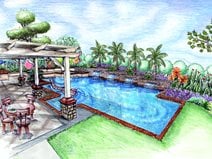
On smaller proerty
On a smaller property, often the pool must be located close to or adjoining the house itself, making it an extension of the home. As an entity close to the home, the pool deck should match or complement the colors and materials found on the home's exterior, as opposed to those of the surrounding landscape. Also blend the deck color and design with nearby paths or sidewalks.
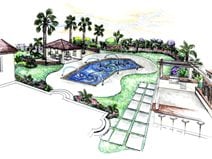
On larger property
On a large property, the pool and deck can be constructed well away from the house as a separate identity. If the pool is set out in the yard, away from the house, a larger deck will help define the area. Consider using a freeform design with a surface treatment that complements the natural landscaping. A pool set out in the yard needs to be visible from the house for safety, even if it is fenced.
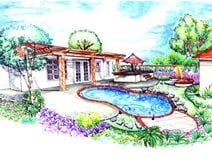
Pool deck close to house
A pool close to the house is convenient and easy to watch over, but the noise of children playing and splashing may prove to be disruptive for people inside the house.
POOL DECK LAYOUT
Often a pool is just one part of a bigger backyard picture that may include an outdoor kitchen, furnished seating areas, water features, a hot tub, or fireplace, providing year-round enjoyment in many areas of the country. Therefore, think of the entire pool area, with the deck serving as the primary framework.

Pool Deck Size & Shape
Time: 02:38
Tips on selecting the right size and shape for your pool deck. Visit several projects to see concrete pool deck styles, shapes and designs. Designer, Scott Cohen, explains the design of each pool deck.
View All 35 Outdoor Living Videos
Gathering Areas: Since the pool deck is where people will spend most of their time—whether to mingle, eat, lounge, or sunbathe—it's important to provide ample deck space along with furniture and tables. The barbecue area, waterfall, hot tub, fireplace, and other features should be located where there is enough space for people to gather. This may seem obvious, but quite often more thought is given to the type of feature that is being installed without considering the location and its surroundings.
Privacy and Noise Considerations: Gathering areas should be as far removed from your neighbors as the property or pool environment allows. Sounds—both those coming in from neighboring houses and traffic and those created by your pool activities—can be at least partially muffled with the use of running water, such as a waterfall or fountain. Plant buffers and earthen berms built from soil excavated from the pool are helpful in maintaining privacy as well as for dampening sound.
WAYS TO ENHANCE YOUR POOL DECK
Enhance your concrete pool deck and create a more comfortable and inviting atmosphere with these suggestions from the Association of Pool & Spa Professionals.
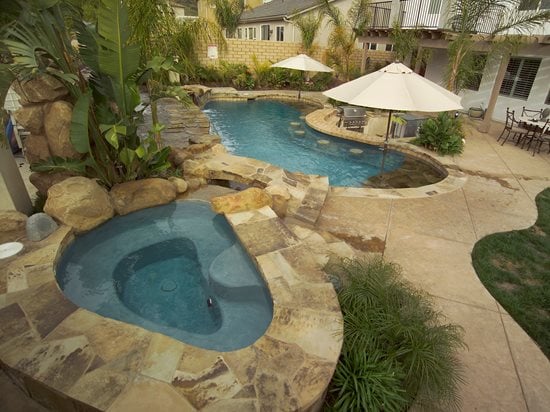
Use plantings around your pool deck to add interest, provide focal points, and to create a living privacy screen.
Landscape for atmosphere and privacy: Use landscaping to frame your pool deck and soften the concrete hardscape. Scatter planted areas about to add interest and provide multiple focal points. Use blooming plants sparingly (since they attract bees) and rely primarily on plants with variegated foliage to provide texture and visual interest. Plants can be practical as well as pretty. Hide a security fence with a "living screen" of shrubs or climbing plants. Create privacy walls with grasses and vine-covered trellises. Use raised planter boxes to create height and visual interest.
Use lighting to make your backyard magical: Consider uplighting on trees and architectural elements, pathway lighting to illuminate walking areas, and mercury vapor lighting up high for a soft, moonlit effect. Outline the perimeter of your pool with dramatic fiber-optic lighting.
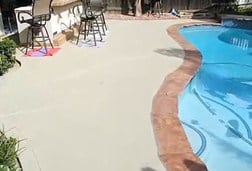
Enhancing Pool Decks
Time: 00:53
Six ways to change your pool deck for the better.
Extend your living space: Add outdoor kitchens or bars, and comfortable furniture to bring living space outdoors. Take cues from your indoor furnishings and décor when planning outdoor rooms. If you don't have a naturally shady seating area near the pool, create one with an umbrella-covered table, a canopy of gauzy netting, or a gazebo.
Provide plenty of seating: Accommodate guests around the pool with concrete seat walls or combination benches and planter boxes that offer seating as well as decorative interest.
Soothe with sound: Install architectural concrete fountains or man-made waterfalls. These water features not only add beauty, they also help to muffle unwanted noise from nearby traffic and neighboring homes.
Extend the play zone: Turn the entire backyard into a concrete playground by supplementing the pool and deck with a playing surface made of concrete. This can serve as anything from a mini basketball court or putting green to a regulation-size tennis court, depending on the space available.
SEALING AND PROTECTING CONCRETE POOL DECKS
No decorative concrete installation is complete without the application of a sealer. This final layer of protection will not only prolong the life of your deck, but also enhance its beauty and make the concrete easier to clean and maintain.
Film-forming sealers are the type most often used for decorative concrete work, and they do just what the name implies-form a protective film on the surface of the concrete that will prevent the intrusion of water, chlorides and harmful pool chemicals. Most of them also impart a sheen that highlights the beauty of colored or exposed aggregate finishes. Because good traction is important on pool deck surfaces, a slip-resistant additive such as Traction Grip from Brickform can be mixed into the sealer before application. These products can improve traction while providing a smooth feel underfoot.
For more information, see:
POOL DECK SAFETY
Pools are intended for fun and recreation, but they can also be hazardous play areas when walking surfaces become wet or the pool is left unsupervised. You'll enjoy your pool and deck more knowing you've made the area as safe as possible.

One way to improve traction on a pool deck is to use a textured or exposed aggregate finish.
Improve traction. Even a porous concrete surface can be slippery when wet, but decorative concrete treated with a color hardener or sealer can be especially slick because water tends to bead up on the surface. There are several ways to improve the traction of pool deck surfaces without detracting from the decorative appearance. These include the use of textured or exposed aggregate finishes, putting down a textured overlay, or mixing a clear plastic grit into the sealer before it's applied.
See Making Concrete Slip Resistant for more information.
Install barriers. According to recent statistics from the Consumer Product Safety Commission, an estimated 300 children under age 5 drown in residential swimming pools each year and another 2,000 end up in hospital emergency rooms. The best way to reduce accidental drownings in residential pools is to construct a barrier or fence that prevents children or intruders from gaining unsupervised access. The placement of this barrier should be considered in your pool deck design and layout. The CPSC handbook Safety Barrier Guidelines for Home Pools recommends that the top of a pool barrier be at least 4 feet above grade and the maximum clearance at the bottom not exceed 4 inches above grade.
Pool Deck Safety
Time: 00:32
Scott Cohen offers suggestions for improving the traction of concrete pool decks.
View All 35 Outdoor Living Videos
Other pool safety tips:
- Use self-closing and self-latching gates.
- Install alarms or motion sensors that notify you when someone accesses the yard or pool.
- Install a pool cover, which not only keeps out debris but also functions as a horizontal fence.
Check with your local building department to see whether these guidelines or other residential pool safety regulations have been incorporated into your town's building code.
POOL DECK CONSTRUCTION FUNDAMENTALS
Concrete pool deck construction requires following the same principles as building a high quality slab on grade. For more information, see:
- Subgrades and Subbases for Concrete Slabs
- Use a Low Water-to-Cement Ratio
- Use Fibers for Secondary Reinforcement
- Be Active in Deciding Where Control Joints Will be Placed
- Properly Curing Concrete Slabs


