
- Concrete Repair Home
- Surface Repairs
- Structural Repairs
- Slab Repairs
- Concrete Crack Repair
- Common Concrete Repairs
- Stamped Concrete Repair
- Driveway Repair
- Pool Deck Repair
- Garage Floor Crack Repair
- Fix Spalling Concrete
- Make New Concrete Match Old
- How to Fix Pitted Concrete
- Concrete Repair Methods & Systems
- Concrete Crack Injection for Basements
- Why Concrete Cracks
- Sunken Concrete Foundations
- Repairing Bowed Basement Walls Using a Carbon-Fiber-Reinforced Grid
Cracked Concrete - Why Does Concrete Crack?
Find out why concrete cracks and what to do about it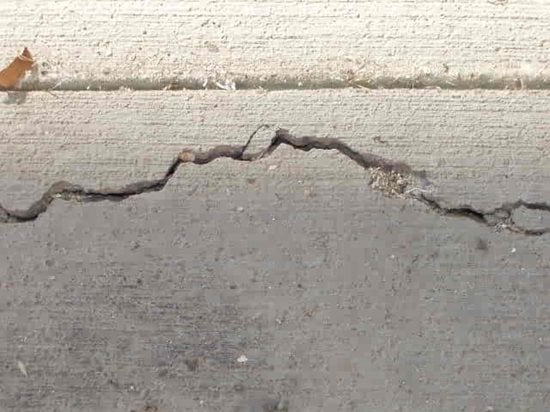
One of the most common questions received on ConcreteNetwork.Com is about cracks that are developing in newly poured concrete. The homeowner will question why it is cracking and did they receive a shoddy job.
Find concrete contractors near me offering repair services.
When installed properly, concrete is one of the most durable and long lasting products you can use around your home. But it is important that concrete contractors follow well-established guidelines with respect to concrete placement. Durable, high strength, and crack resistant concrete does not happen by accident.
WHY CONCRETE CRACKS
The following information is useful for diagnosing cracked concrete, but if you'd like an expert's opinion, contact a concrete contractor near you for an in-person assessment.
Reason #1 - Excess water in the mix
Concrete does not require much water to achieve maximum strength. But a wide majority of concrete used in residential work has too much water added to the concrete on the job site. This water is added to make the concrete easier to install. This excess water also greatly reduces the strength of the concrete.
Shrinkage is a main cause of cracking. As concrete hardens and dries it shrinks. This is due to the evaporation of excess mixing water. The wetter or soupier the concrete mix, the greater the shrinkage will be. Concrete slabs can shrink as much as 1/2 inch per 100 feet. This shrinkage causes forces in the concrete which literally pull the slab apart. Cracks are the end result of these forces.
The bottom line is a low water to cement ratio is the number one issue effecting concrete quality- and excess water reduces this ratio.
What you can do about it:
Know the allowable water for the mix the contractor is pouring- or be very sure you have chosen a reputable contractor who will make sure the proper mix is poured. It is more expensive to do it right- it simply takes more manpower to pour stiffer mixes.
Reason #2 - Rapid drying of the concrete
Also, rapid drying of the slab will significantly increase the possibility of cracking. The chemical reaction, which causes concrete to go from the liquid or plastic state to a solid state, requires water. This chemical reaction, or hydration, continues to occur for days and weeks after you pour the concrete.
You can make sure that the necessary water is available for this reaction by adequately curing the slab.
What you can do about it:
Reason #3 - Improper strength concrete poured on the job
Concrete is available in many different strengths. Verify what strength the concrete you are pouring should be poured at.
Talk to the ready mix supplier
Consult with the Ready Mix Concrete Association in your area.
Reason #4 - Lack of control joints
Control joints help concrete crack where you want it to. The joints should be of the depth of the slab and no more than 2-3 times (in feet) of the thickness of the concrete (in inches). So 4"concrete should have joints 8-12' apart.
Read more about control joints here.
Other reasons:
Never pour concrete on frozen ground.
The ground upon which the concrete will be placed must be compacted.
The sub grade must be prepared according to your soil conditions. Some flatwork can be poured right on native grade. In other areas 6"of base fill is required along with steel rebar installed in the slab.
Understand what you contractor is doing about each of the above listed items and you will get a good concrete job.
TYPES OF CRACKS IN CONCRETE
Some cracks are more concerning than others. Here's an overview of crack types and what to do about them.
- Hairline cracks at the surface should be repaired if they are widening with time, are a hazard, collect dirt or are unsightly.
- Shrinkage cracks occur while the concrete is curing and can be reduced or prevented with proper joint placement.
- Settlement cracks happen when the ground beneath the slab wasn't compacted properly and part of the concrete sinks.
- Structural cracks wider than a credit card, or that run through the entire slab require repair or replacement of the concrete.
Related: Garage Floor Crack Repair
ACCEPTABLE CRACK WIDTHS
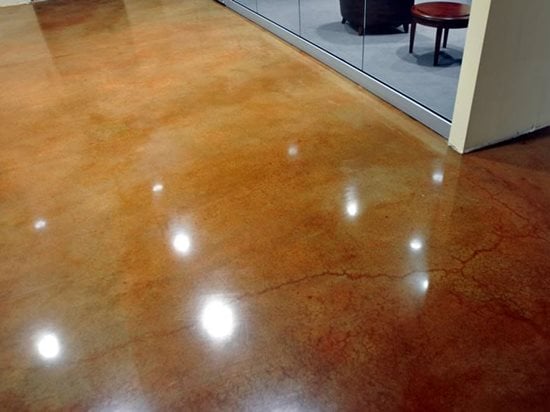
Not all cracks in concrete are serious enough to require repair. The hairline cracks in this floor were air brushed with brown dye to achieve a beautiful crackle pattern.
At what width does a crack in concrete become a problem? That question often arises, but unfortunately there is no definite answer. It can vary from one project to the next. The answer may also change with the person’s perspective: What is acceptable to the contractor, engineer, or architect may not be acceptable to the owner, who must live with the crack day after day. Even the American Concrete Institute has no standards or recommendations that give a "yes" or "no" answer as to what cracks need repair based on width and other factors.
In general, cracks wider than a credit card and running through the depth of the concrete are structural in nature and could be a sign of more serious problems (see Concrete Crack Repair Evaluation). These cracks -- no matter what the width -- are rarely acceptable. Consult an engineer or concrete repair professional to determine the cause of the crack and to recommend the best repair solution.
For hairline or non-structural cracks in concrete, the answer as to what’s acceptable is less clear. The width at which they became a problem requiring repair often depends on the following factors:
- Is the crack static or is it gradually becoming wider? If you notice movement of the crack, it may continue to widen if the crack isn’t repaired and could indicate a structural problem.
- If the crack is in a horizontal surface, such as a floor or slab, is it wide enough to present a tripping hazard?
- In foundation walls or slabs, is the crack wide enough to allow moisture seepage? (See Foundation and Basement Crack Repair.)
- Does the crack trap dirt and present a maintenance or sanitation issue?
- Is the crack an eye sore and located in a high-visibility area?
Be aware that if you decide to repair the crack, the repair itself is likely to be visible unless you cover it with an overlay. However, it’s often possible to disguise or accentuate a crack through sawcutting, staining and other techniques. (See Incorporating Cracks in Concrete Floor Design.)
4 WAYS TO PREVENT CRACKED CONCRETE
If you're having new concrete poured consider the following ways to prevent cracking:
- Start with a sound subgrade
Make sure the subgrade is compacted
Subgrades and subbases for concrete slabs: Why having good support is critical to success - Modify the concrete mix
Use a low water-to-cement ratio
Concrete admixtures that control cracking
Fiber reinforcement (like UltraFiber 500®) - Install joints
Be active in deciding where control joints will be placed
Joints in concrete slabs: Types and where to locate - Properly cure the concrete
Properly curing concrete slabs: Why and how to cure
Allow time to water cure
 High Performance Concrete Repair
Fast setting mix for structural repairs
High Performance Concrete Repair
Fast setting mix for structural repairs
 Epoxy Patch Kit
No-shrink, Over 10,000 PSI
Epoxy Patch Kit
No-shrink, Over 10,000 PSI


