
Surface Preparation Equipment
Tips for selecting the right machine for the job"Lack of surface preparation causes 90% or more of overlay failures," says technical expert Chris Sullivan of Sullivan's Corner. "The surface needs sufficient 'bite' for the overlay to bond, otherwise delaminating failure can result." Sullivan contends that for most decorative overlay projects, contractors should devote more time to surface prep than to the actual overlay installation itself.
Fortunately, an arsenal of high-performance equipment is available that can help you make the most efficient use of this time, enabling you to achieve the exact surface profile you need with less effort and mess than ever before possible. The most effective weapons for getting your concrete floors into shape are shotblasters, concrete grinders and scarifiers.
Shop for surface preparation equipment
Within these equipment categories, you'll find a wide array of models with applications as diverse as the products themselves, from compact handheld units for small jobs or working in tight spots to high-productivity ride-on machines for covering large expanses quickly. Many of these machines also come with an assortment of attachments, allowing you to remove a variety of different coatings and perform profiling tasks ranging from light roughening to aggressive milling. And in many cases, there's no need to worry about dust and debris. Machines that use dry-cutting methods usually have dust-collection capabilities, minimizing the cleanup work necessary before you apply a decorative treatment to the surface.
Matching the Machine to the Job
Let's address the most important question first: Do you really need an expensive piece of equipment to strip off old coatings and prepare concrete surfaces for coatings and toppings? Actually, you may be able to get by without one. In some cases, acid etching or chemical strippers will do the job. However, in most situations the best way to remove contaminants and unsound concrete is by mechanical means. A good surface prep machine will break up existing sealers, coatings or adhesives with no chemicals involved. It will also lightly pulverize the surface, leaving a roughened profile for overlays and toppings to grab on to. And unlike acid etching, mechanical abrasion can level uneven joints or high spots, polish rough or worn floors, smooth out trowel marks, and remove spalling or delamination.
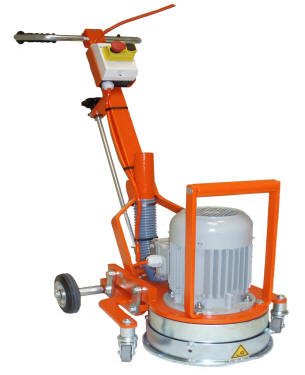 Grinder (FS-1500) from GrindAll Surfaces in Cleveland, OH
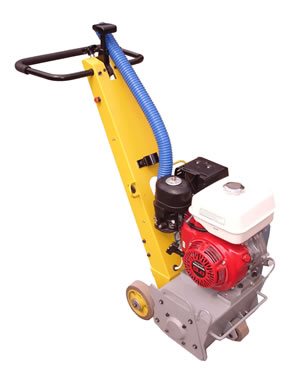 Scarifier from Levetec in Redmond, WA
Obtaining the right concrete surface profile, or CSP, is especially important when applying a new coating or overlay (see What's a Concrete Surface Profile, or CSP?). You have to achieve a profile deep enough to lock in the coating and ensure a good bond without going so deep that the coating won't be thick enough to hide your profiling work. The key to achieving good results is to match the equipment (and attachment) to the job at hand. But the decision isn't always clear-cut. For some jobs, there may be a number of viable solutions or you may need to use a combination of methods, such as shotblasting in open areas and hand grinding along edges and in corners.
Need help with your project? Find concrete contractors near me.
Because each type of machine takes a different approach to surface preparation, some units are better suited than others for certain tasks. Although this guide gives you a general overview of how the various machines operate and what they can accomplish, always consult with the equipment manufacturer, who can help you determine the best fit for a particular project. Many rental companies and dealers also have specialists available to answer your questions or arrange for an equipment demonstration. If possible, test out various types of equipment in a small area of your slab to determine which machine obtains the desired results.
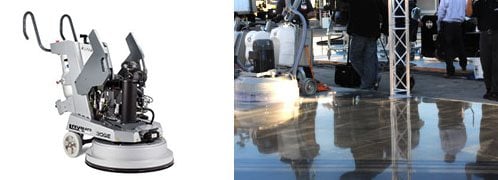 Propane Grinding Machines
Go cordless with the LAVINA elite series
Propane Grinding Machines
Go cordless with the LAVINA elite series
 Concentrated Concrete Cleaner
Clean and profile concrete in a single step
Concentrated Concrete Cleaner
Clean and profile concrete in a single step
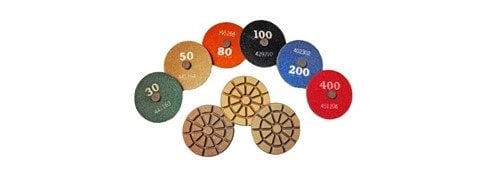 Surface Prep Diamonds
Superior floor with reduced steps
Surface Prep Diamonds
Superior floor with reduced steps
 CPS G-170 Electric
17" Floor Grinder 230 volt ($7,600)
CPS G-170 Electric
17" Floor Grinder 230 volt ($7,600)
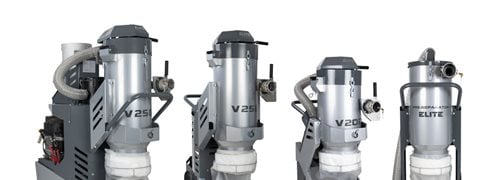 LAVINA® ELITE Vacuums
Ranging from 16" to 32"
LAVINA® ELITE Vacuums
Ranging from 16" to 32"
Ten Factors to Consider When Selecting Equipment
1. What type of material are you trying to remove?
Unsound concrete, epoxy coatings, mastics, paint? This is key to determining the right process for effective removal. A rubbery elastomeric coating, for example, will require scarification or grinding rather than shotblasting.
2. What is the thickness of the material you are trying to remove?
A grinder may be ineffective at removing coatings thicker than 1/8 inch.
3. What is the condition and age of the base concrete?
Is it delaminated and crumbling or relatively sound? If it's sound, what is the compressive strength? Older floors are typically harder because concrete continues to gain strength as it ages.
4. What degree of concrete surface profile are you trying to achieve?
For surfaces to be coated, the goal is a profile that will provide enough "tooth" for coating adhesion yet will be hidden by the thickness of the coating or overlay you will be applying. Most overlay and coating manufacturers will specify the method of surface preparation best suited for their systems. They may also indicate the concrete surface profile number needed for their product, per International Concrete Repair Institute guidelines.
5. What will be applied over the prepared surface?
A stain or a thin coating will generally require only light profiling while a thick overlay or self-leveling coating will adhere best to a heavily textured surface, such as that achieved by a scarifier or shotblaster.
6. What are the specifications?
Most coating manufacturers will specify the best surface preparation method to use for their products. On decorative concrete jobs, the architect may also specify the equipment to use to achieve the desired profile.
7. Are there any restrictions on noise, dust, equipment weight or size, exhaust fumes, and disposal of waste?
8. How large is the job, and what is the time frame for completion?
This will tell you the production rate you need to achieve. Most machine specs will indicate the maximum number of square feet of surface per hour their equipment can prepare. However, that rate will vary depending on job conditions, and it doesn't account for obstacles that may slow your progress and require handwork, such as corners and areas around obstructions.
9. What attachment options are available?
Machines that can be fitted with a wide assortment of attachments will offer greater versatility.
10. What type of power source is desired?
You can find machines that run on gasoline, propane, electricity, or compressed air. Decide what type of power is best suited for your needs and job conditions.
Renting vs. Buying
The price tag for high-performance surface prep equipment can be pretty steep. Expect to pay about $2,000 to $4,000 for a single-head floor grinder to over $6,000 for a four-head machine. A walk-behind shotblaster with a 13-inch blast path can set you back more than $20,000 while a ride-on scarifier with a 12-inch cutting swath can top $30,000. And these prices don't account for attachments, accessories or separate dust-control equipment.
If you do a lot of surface prep work, you can often justify the cost of purchasing your own equipment. But if you expect to use the machinery only about four or five times a year, you may be better off renting the equipment or subcontracting the work. For example, you can rent a 10-inch walk-behind floor grinder for about $235 - $450 a day. Many of these companies ship anywhere in the United States or have local outlets. Compare this to shelling out $4,000 or more to buy the machine new. You'll also save on maintenance expenses and depreciation costs.
If you do decide to buy, get the most from your investment by purchasing a machine that can perform multiple functions. It's also good to start out small, because regardless of the size of the slab, you'll always need a machine that can work in corners, next to walls and other tight spots.
Learn more about leasing equipment.


