
- Concrete Tools Home
- Screeds
- Tampers
- Concrete Floats
- Concrete Edgers
- Groovers
- Trowels
- Fresnos
- Power Tools for Concrete
- Choosing the Best Tool for the Job
- Must-Have Tools for Exterior Concrete: The five tools outdoor concrete contractors can’t live without
- Five Must-Have Tools for Decorative Flooring Contractors Create eautiful decorative concrete floors with these five tools
- Five Must-Have Tools for Concrete Countertop Contractors
- Related Information:
- Pouring and Finishing Tool Videos: See demonstrations of floating, troweling, edging, and more
- Concrete Finishing Tips: Creating a high-quality slab
- Product Newsletter: Sign up today to receive monthly updates
Concrete Tools Guide
Find the top concrete tools for placing and finishing concrete properly and with minimal effort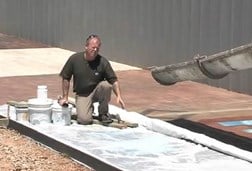
Placing & Finishing Concrete
Time: 6:03
Watch concrete being poured. This video includes tips on integrally colored concrete ready mix. See the process of placing, screeding, floating, and finishing a concrete slab.
Concrete tools, or cement tools, used for placing and finishing concrete correlate with each part of the finishing operation. They are listed in order in this section. You will learn the key quality components of each operation and what is critical to be done right.
HAND TOOLS FOR FINISHING CONCRETE
Despite all the high-tech power trowels, screeds, vibrators, and other super-charged equipment available today to facilitate placement and finishing of concrete, simple no-frills hand tools for finishing are far from obsolete. To smooth and level small residential slabs, perform delicate detail work, blend in surface color, or maneuver in tight areas, such as step surfaces or next to walls, there is no substitute for a trusty handheld float or trowel.
While concrete finishing tools don't vary significantly in design from manufacturer to manufacturer, they can vary in quality. The finishing tools you choose will also depend on the type of decorative concrete you're placing (such as stamped concrete versus an overlay) as well as the characteristics of the concrete.
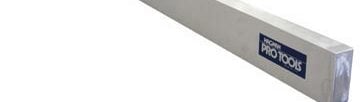 Concrete Screed
Used for the intial leveling of freshly placed concrete
Concrete Screed
Used for the intial leveling of freshly placed concrete
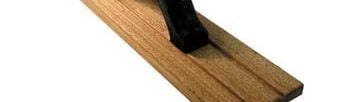 Concrete Floats
Used for eliminating ridges, filling voids and smoothing the surface
Concrete Floats
Used for eliminating ridges, filling voids and smoothing the surface
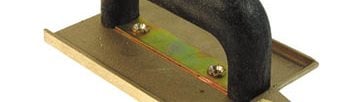 Groovers
Used for jointing concrete to prevent unwanted cracks
Groovers
Used for jointing concrete to prevent unwanted cracks
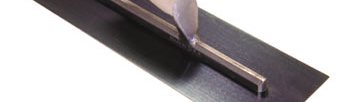 Trowels
Used for closing up the slab at the end of the finishing process
Trowels
Used for closing up the slab at the end of the finishing process
 Power Tools for Concrete
Grinders, saws, polishing machines and other equipment
Power Tools for Concrete
Grinders, saws, polishing machines and other equipment
 Concrete Finishing Tips
How to place, spread and finish a concrete slab
Concrete Finishing Tips
How to place, spread and finish a concrete slab
In Bob Harris' Guide to Stamped Concrete, the veteran decorative concrete pro says it's essential to match the tool to the job. "The work you do immediately following concrete placement is critical, since this is when you must create the perfect canvas for decorative stamping," Harris emphasizes.
For example, he notes that you're likely to need different tools for finishing exterior concrete that's air entrained because the high air content can make the concrete sticky. Harris finds that a magnesium bull float works best because it won't stick to the concrete. For non-air-entrained concrete, on the other hand, he recommends using a laminated wood bull float because it does the best job of smoothing and leveling the surface. The extra heft of the wood float makes it effective at cutting high spots, filling low-lying areas, and consolidating the aggregates to bring more paste to the surface. Harris also prefers to use steel trowels or fresnos for final finishing of exterior concrete flatwork prior to stamping because they produce a smoother, flatter surface.
Understanding these nuances and knowing which finishing tools work best under certain conditions should be the key factors guiding your purchasing decision. To get the results your new tools were designed to achieve, it's also important to hone your finishing skills so you wield the tools properly. Harris recommends that decorative concrete contractors get trained and certified by the American Concrete Institute as concrete flatwork finishers and technicians.
RELATED: Curing Concrete
 Encore Finishing Aid
Improve workability and surface quality
Encore Finishing Aid
Improve workability and surface quality
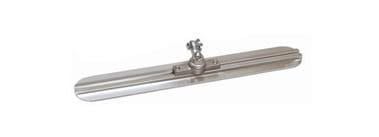 Kraft Concrete Float 24" x 3.25"
Lightweight magnesium float for small areas
Kraft Concrete Float 24" x 3.25"
Lightweight magnesium float for small areas
 DAY1® Finishing Aid
Colloidal silica for easy, fast finishing
DAY1® Finishing Aid
Colloidal silica for easy, fast finishing


