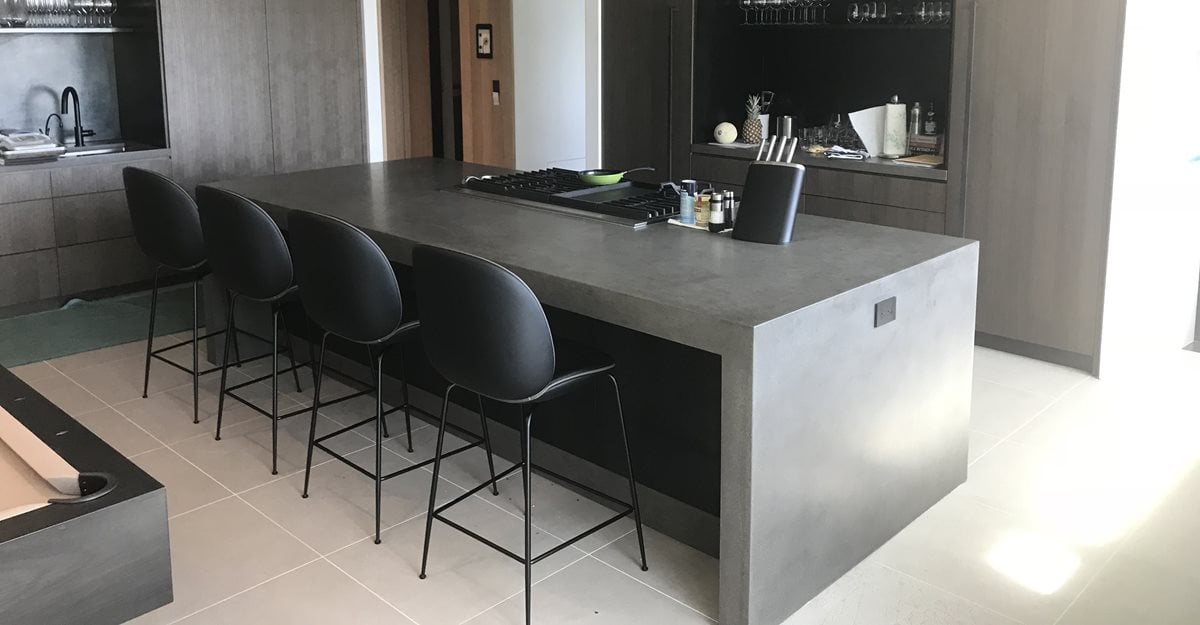
Modesto, CA
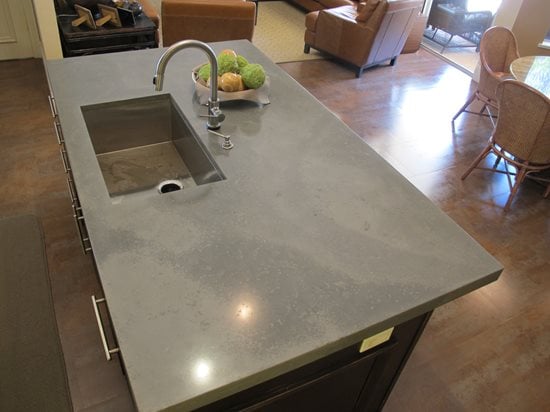
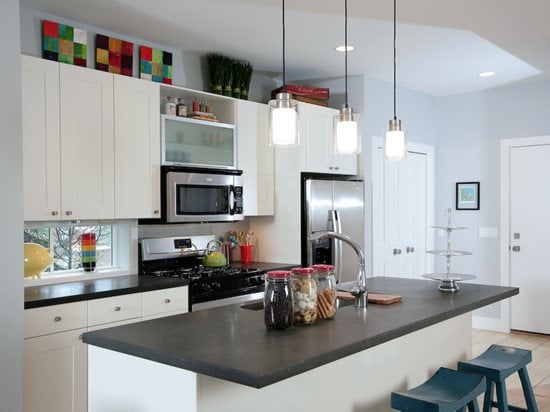
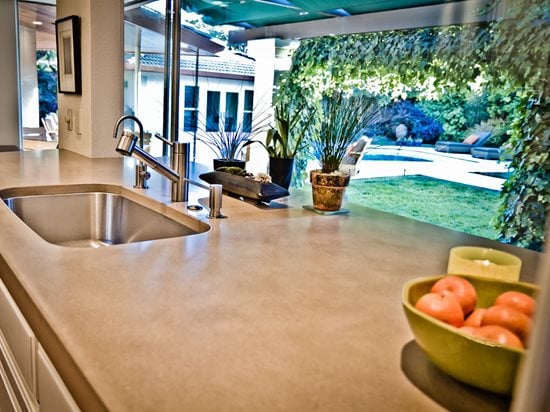
Concrete countertops offer a completely customizable, handcrafted surface popular in kitchens, bathrooms and outdoor entertaining areas, as well as in restaurants and bars. Concrete counters marry functionality and beauty, plus they are inherently durable and easy to clean and maintain.
Find contractors: Concrete countertops near me
Popular: Cost | Pictures | Ideas
PROS & CONS
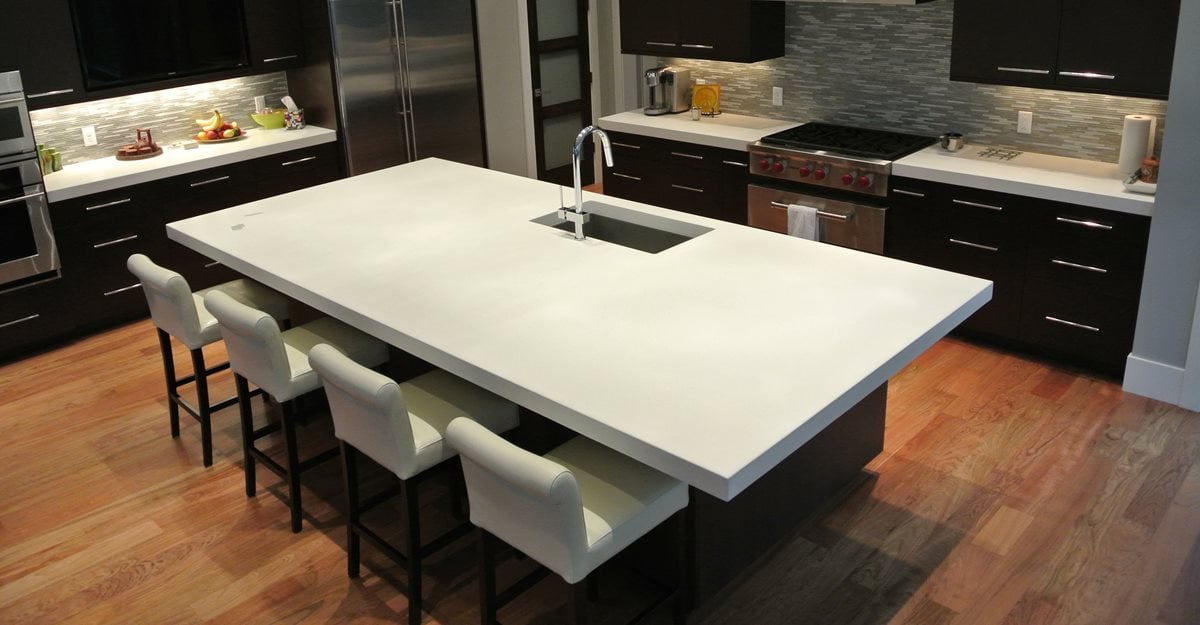
Hard Topix in Jenison, MI
Consider the following benefits and drawbacks when deciding if concrete is a good choice for you.
Pro: Customization
The biggest advantage is that the customization options are virtually endless.
- You’ll be able to choose the exact color and shape you want, pick a unique edge profile, add embeds, or polish the surface for a shiny finish.
- Concrete can be left its natural grey or be customized to replicate the look of granite, marble or even wood.
- Textures and finishes are available to match any design style, including traditional, modern, contemporary, industrial, or rustic.
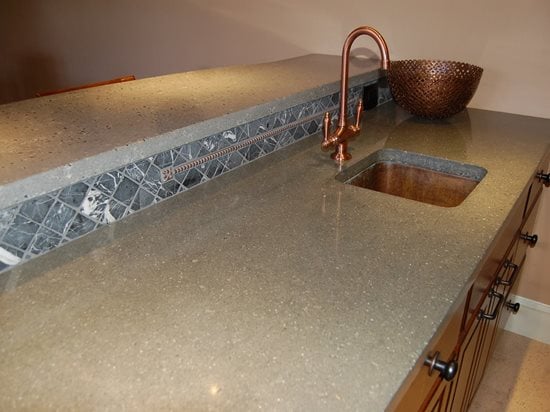
- You can have custom features cast into your counters including drainboards, trivets or cutting boards.
- Decorative glass or stone aggregates can be added to the mix to create a beautiful stone-like appearance.
- Or take your design over the top with integrated lighting or a stenciled logo.
Stained Concrete Floors
Time: 01:537
Watch more floor videos
The end result is a truly one-of-a-kind counter with lots of character. See the wide variety of design ideas or browse our gallery of pictures.
Pro: Durability
Durability is another positive feature. Most contractors reinforce the mix by adding glass fibers, making the counter both exceptionally strong and lightweight. Reinforcement allows for long, seamless spans and even daring overhangs not possible with granite or other materials. An added benefit is that glass fiber reinforced concrete (GFRC) is far less likely to crack.
Con: Stains
While counters made from cement will last for years, they are vulnerable to stains. You’ll need to regularly reapply sealer and wax to protect the surface and be sure to clean up spills and messes right away. But, if you’re used to tile, you’ll love not having the added job of cleaning grout lines. Compare to other popular materials.
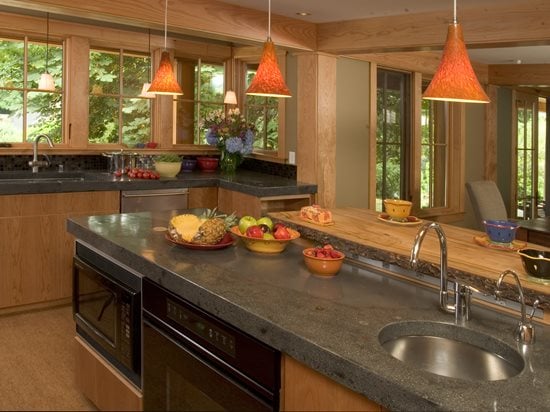
Absolute ConcreteWorks in Port Townsend, WA
Con: Speed
Keep in mind that custom countertops take time to design, cast and cure—if you’re in a hurry, this could be a disadvantage. Plan for the turnaround time to be at least a few weeks.
Con: Cost
Lastly, their handcrafted nature means you might pay more due to the labor required. But, because they are a premium material, they will increase the long-term value of your home, making them a good investment.