- Concrete Stencils Home
- Paper or plastic The pros and cons of each
- Stock or custom concrete stencils: Which type fits your design needs?
- Adhesive or nonadhesive stencils: When to use each type
- Concrete stencil patterns: View some of the options
- How-To Tips for Using Stencils
- Step-by-step process of applying stencils
- Using microtopping and stencils to rejuvenate ugly concrete
- Related Information:
- Stenciling Concrete Floors
- "Floor Me" video series: Stencil design ideas and techniques
- Concrete logos and graphics: Creating images with concrete stencils
- Bob Harris' five favorite methods for creating graphics on floors
CONCRETE STENCILS FOR OUTDOOR SURFACES
Factors to consider and tips for weighing the options when selecting a stencil product for your design goalConcrete stencils offer contractors more versatility for adding patterns to concrete. Design details that seemed impossible to create by hand can now be applied with stencils available in basic designs to custom, computer-designed intricate patterns.
Use this section to find information about popular concrete stenciling products, tools, and techniques
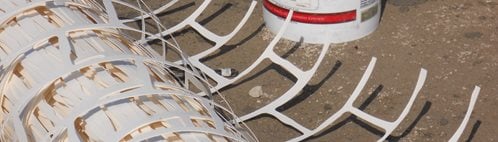 Adhesive vs. Nonadhesive
Get advice on deciding between adhesive and nonadhesive stencils for your next project.
Adhesive vs. Nonadhesive
Get advice on deciding between adhesive and nonadhesive stencils for your next project.
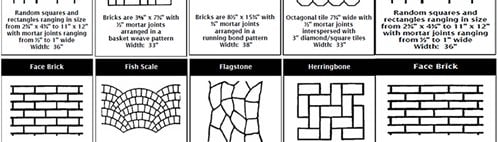 Stencil Patterns
Compare popular stencil patterns including running-bond brick, stone, slate and tile.
Stencil Patterns
Compare popular stencil patterns including running-bond brick, stone, slate and tile.
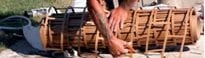 How to Stencil Outdoor Concrete
Get an overview of how to use stencils on both new and existing concrete surfaces.
How to Stencil Outdoor Concrete
Get an overview of how to use stencils on both new and existing concrete surfaces.
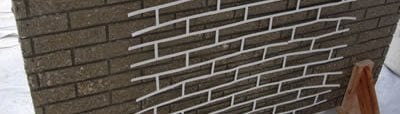 Paper or Plastic?
Compare the pros and cons of each stencil type.
Paper or Plastic?
Compare the pros and cons of each stencil type.
 Stenciling Concrete Floors
Find out how stencils can be used to enhance interior floors.
Stenciling Concrete Floors
Find out how stencils can be used to enhance interior floors.
 Concrete Stencil Videos
Watch 5 videos in which Bob Harris demonstrates how to use stencils indoors and out.
Concrete Stencil Videos
Watch 5 videos in which Bob Harris demonstrates how to use stencils indoors and out.
Advantages of Stenciling Concrete
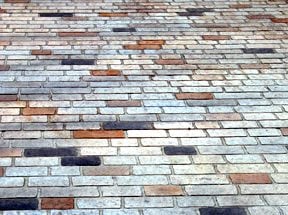
ArtistiCrete LLC in Noblesville, IN
Stenciling can be a great alternative to decorative stamping while permitting similar design flexibility. Here are some of the chief advantages:
-
Stenciling is easy for a novice to accomplish successfully. Nearly any competent concrete finisher can turn out a passable job the first time out.
-
The stencils are disposable, so contractors can offer customers the pattern of their choice without investing in a new set of expensive tools. The contractor simply buys a roll of the desired pattern and absorbs the entire cost into that job. Stencil price will vary with the manufacturer, but on average the cost is about $350 roll.
-
Virtually any good concrete flatwork mix will work with stencils. The stenciled joints are not pushed down into the slab, so they are not affected by aggregate size or shape.
-
Stenciling is a fast process because all of the work can be done from outside the forms with long-handled tools. This means crews can pour larger areas at one time because they can begin working in the stencil without having to wait until the concrete sets enough to bear their weight.
-
Stenciling produces a flatter surface profile than some stamped concrete patterns because the joint indentations aren't as deep. The effects are still realistic, but the elevation between high and low points isn't as noticeable. This flatter surface can aid in snow removal because it causes less interference with the blade of a shovel.
Paper Stencils for Exterior Concrete
Time: 01:04
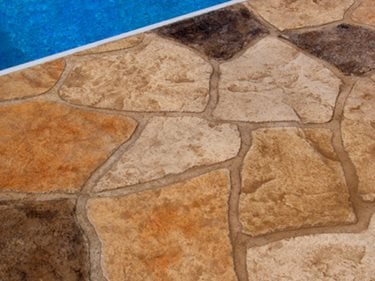
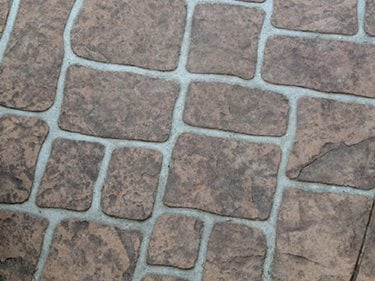 ArtistiCrete LLC in Noblesville, IN
ArtistiCrete LLC in Noblesville, IN
ArtistiCrete LLC in Noblesville, IN
Although stenciling offers many advantages, there are a few drawbacks. Because the stencils are die-cut, there can be a noticeable repetition in the pattern, especially when covering a large area. In addition, there are fewer stencil patterns to choose from than stamp patterns. However, the most popular brick, stone and tile designs are represented.
 Reusable Urethane Stencils
New Technology - leaves crisp clean designs
Reusable Urethane Stencils
New Technology - leaves crisp clean designs
 Decorative Stencils
Adhesive or non-adhesive, slate, brick, etc.
Decorative Stencils
Adhesive or non-adhesive, slate, brick, etc.
 Paper Stencils
Thick, tear resistant & a wide variety of patterns
Paper Stencils
Thick, tear resistant & a wide variety of patterns
Concrete Stencil Product Reviews
Here's an inside look at the latest stenciling products: