
Concrete Statuary
The Newest Art Form in the GardenFind GFRC Mixes for Precast Concrete
What is cast stone?
Cast stone is a highly refined architectural precast concrete that can be manufactured to simulate nearly any type of natural cut stone including limestone, sandstone, granite, slate and travertine. Think of it as precast concrete taken to the ultimate level, with strength, weathering and aesthetic properties that often exceed those of quarried stone, depending on the quality of the mix design used. Cast stone can be made from white or gray cement, and often mineral pigments or decorative aggregates are tossed into the mix to add color and variation. Because the pieces are cast in molds under controlled manufacturing and curing conditions, they are more consistent in appearance and more predictable in performance than natural stone. Plus, they can be reinforced with steel or with glass or plastic fibers to improve strengthen and inhibit cracking.
Advantages of cast stone vs. natural stone
While natural stone will always have a place in the garden, there are many reasons why concrete statuary is emerging as the newest outdoor art form.
"Concrete is an ideal medium for creating themed gardenscapes," says Janice Lucioni of Secret Garden Statuary, Seattle, one of a growing number of garden centers and specialty retailers sprouting up across the country to offer this addictive yard ornamentation. "Two trends popular with our customers include Asian-themed designs and Art-Deco styles with plain, clean lines to go with modern architecture. Taller fountains are in demand too, with customers going for multi-tiered units 6 to 7 feet high," she says. "It boils down to versatility and cost. Because these products are cast into molds, you can create multiples of the same piece at a lower price. Depending on the mix used, cast stone is often more durable than porous stones, such as granite, especially when exposed to freeze-thaw conditions," she adds.
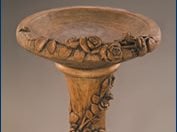
Al's Garden Art
Types of Concrete Statuary
Garden Accents and Art
Cast stone statuary and garden accents are available in every form and genre imaginable -- and the options continue to expand as the market heats up for these products. "Every year, new designs come out from all the manufacturers," says Janice Lucioni of Secret Garden Statuary, Seattle.
This breadth of selection is one of the best attributes of cast stone, giving you the creative freedom to set any stage you want for your outdoor sanctuary, whether you're striving for a classic Old World look or simply want to add whimsy or an element of surprise.
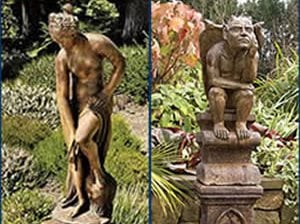
Cast Art Studios
There are dozens of categories to choose from including cherubs, wood nymphs, gargoyles, gnomes, religious figurines, nearly every species of animal (even the mythical and extinct), Ini Itu (a modern Indonesian-inspired art form) and birdbaths of all shapes and styles.
Many cast stone manufacturers and suppliers offer specialized collections of concrete statuary and garden ornamentation that allow you to evoke a particular time, culture or architectural style. The distinctive prairie style of noted architect Frank Lloyd Wright is reproduced in a collection of cast concrete urns, vases and sculptural pieces. At Secret Garden Statuary, you can find classic reproductions of statuary from Italy's Tuscanyregion and ancient Greek mythology as well as a selection of pagodas, Buddhas, Japanese lanterns and other symbols of the Orient. Campania recently introduced a collection of concrete garden ornaments and planters replicating pieces from the world-renowned Longwood Gardens in Pennsylvania, which draws inspiration from classic European gardens.
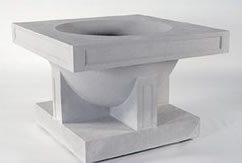
Nichols Bros.
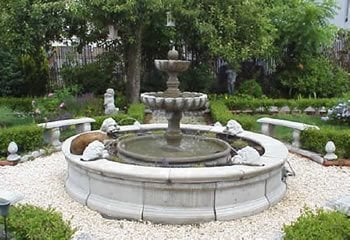
Secret Garden Statuary
Fountains and Modular Ponds
Water features are highly coveted centerpieces for many courtyards and gardens because they appeal to multiple senses, providing visual beauty enhanced by tranquil sounds and hypnotic movement. Cast stone fountains are available in myriad sizes and styles to enhance any outdoor environment.
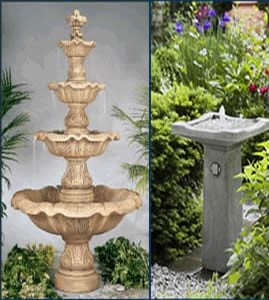
(Left) Henri Studio & (Right) Campania International
For formal settings, you'll find everything from stately wall-mounted fountains, like a lion's head, to a regal four-tier Renaissance-style fountain. For the ultimate in grandeur, Al's Garden Art recently introduced a series of "estate-sized" pedestal fountains measuring 12 feet tall and surrounded by custom-built basins.
Naturalized gardens and smaller spaces can be enhanced by compact bain-style fountains that soothe and captivate with the gentle sounds of bubbling water.
In many garden settings, fountains and formal ponds go hand in hand, which inspired Marco Lucioni of Lucioni Arts Design (which does customized work for Secret Garden Statuary) to develop modular pond units made of precast concrete. These versatile, decorative blocks can easily be installed above ground in nearly any configuration, eliminating laborious, disruptive digging.
"We came up with the idea after hearing customers talk about their in-ground pond projects," says Janice Lucioni. "Some customers were spending thousands of dollars on brickwork ponds, only to have them crack and leak after the first ground shift. We wanted to offer people something nice looking, versatile, easy to install and reasonably priced."
The modular pieces are much easier to work with than a solid cast pond and can be arranged to form a multitude of shapes including circles, squares, rectangles, ovals and even quadrafoils. They also can be cast in various colors to suit the owner's landscaping scheme. Once installed, the modular ponds are lined with reinforced PVC so they will not crack or leak due to ground tremors or exposure to freezing and thawing.
Concrete Tables, Benches and Containers
No outdoor sanctuary is complete without a place to sit and enjoy the serenity of the surroundings. Precast concrete furnishings are available in an endless array of styles and can remain outdoors year-round with minimal maintenance. Best of all, they can serve as distinctive sculptural elements in addition to their practical function.
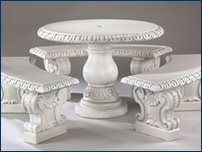
Massarelli's
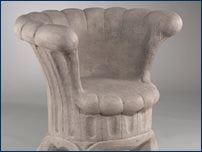
Massarelli's
In smaller gardens, artistic arrangements of cast stone containers can put on a stunning show, whether used as planters, vessels for miniature water gardens, or to display winter evergreens or other seasonal branches. Styles range from the fanciful to the formal as you may see below.
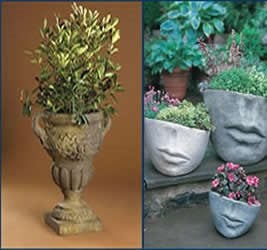
Avila's Garden Art & Campania International
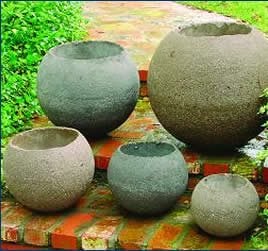
Stonesmith Garden Vessels
Design Ideas for Concrete Statuary
Using Concrete to Create Garden Decor
Janice Opie of St. Catharine's, Ontario uses concrete to create beautiful garden decor. Initially, she grows rhubarb leaves and subsequently casts them into tables, waterfalls, and hanging fence decor. The decorations are then painted afterwards.
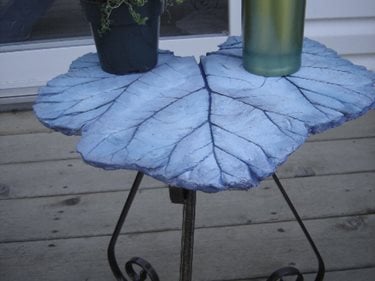
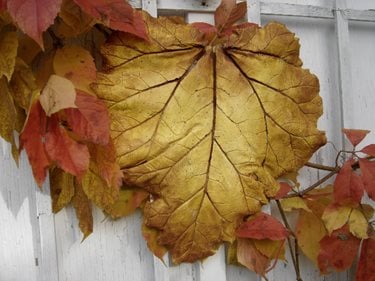
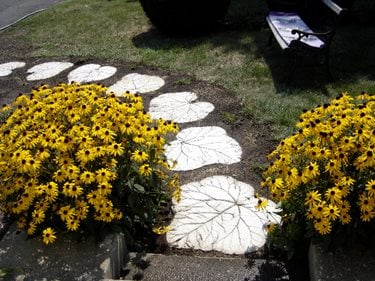
The very fine veins of the leaves show up after the concrete has cured affording beautiful, colored detail when painted. Because of their durability, they are a unique item for outdoor environments being able to withstand rain or wind.
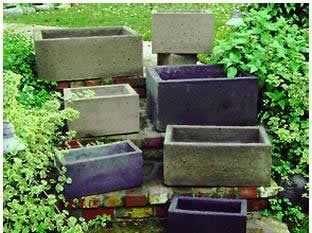
Stonesmith Garden Vessels
Concrete Statuary: Colors and Finishes
Cast stone comes in a broad spectrum of colors, ranging from natural gray to designer shades that mimic materials such as terra cotta, slate, sandstone, desert clay, aged iron or brass, patinated copper and even moss-covered stone. For pieces that are made to order, many manufacturers also have the ability to custom color their products.
Left a natural gray, cast stone will age much like natural stone, developing a rich patina over time. Finished pieces can also be accented with stain and other surface-applied treatments to create a mottled, weathered look that adds instant character without the long aging process.
Examples of Design Ideas and Concrete Statuary Projects
Tips for Buying and Caring for Cast Stone
Janice Lucioni of Secret Garden Ornaments, Seattle, recommends going to a local specialty shop or garden center for your cast stone products, rather than a big-box retailer. "A good retailer will know the manufacturer and be able to educate you on how to care for your purchase," she says. "You may pay more, but you'll get better quality and customer service."
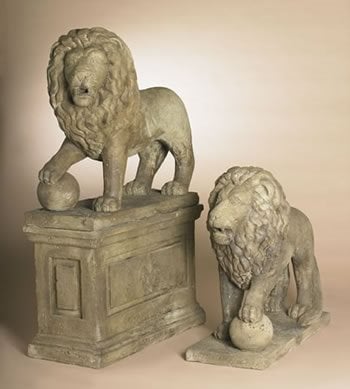
Avila's Garden Art
Be sure to find out where the product comes from and the reputation and experience of the manufacturer. Many manufacturers also have websites where they provide details about their casting process, display a full catalog of products and finish options, and offer advice on care and maintenance. Reputable manufacturers will often provide warranties for their pieces.
Some other useful buying tips:
- Ask if your statuary will stand up to the climate conditions in your area. "Nationwide distributors are really into quality control because their products are exposed to all types of conditions," says Lucioni. "Local manufacturers tend to make products that stand up well to the weather conditions in their market. What works well in Arizona might not work well in Seattle."
- Keep convenience and maintenance in mind, especially with fountains. Does the fountain come as a complete ready-to-work unit with all the plumbing fittings and electrical components required for operation, or must the components be purchased and installed separately? In case of malfunction, are the pump parts easily accessible and replaceable?
- Seam lines and small bug holes are common in the casting process and do not necessarily mean bad quality or workmanship. In many cases, these minor flaws add character to the piece.
- Weight is good because it usually means a denser concrete mix was used and will be less susceptible to water penetration. "A lot of people are looking for a lightweight product, but lightweight usually means fewer rock components and more plastic or lightweight aggregates have been used says Lucioni, noting that many plastics do not stand up to prolonged exposure to sunlight, and can get brittle and crack with age. Pieces made with lightweight aggregates rather than old-fashioned mixes also have a tendency to crack more readily. Then there's the wind factor: "If a rather large bush or tree is planted in a lightweight pot, a good wind can take it over because there is not enough weight on the bottom," warns Lucioni.
- While nearly any large cast stone container can be used as the vessel for a water garden, containers that are glazed on the inside are best suited for this purpose because they will retain water better.
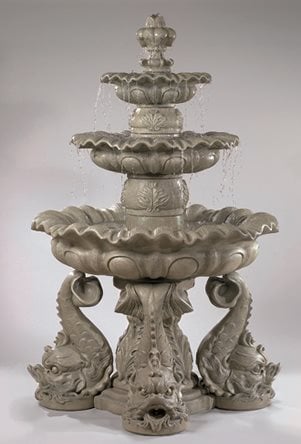
Massarelli's
Be Willing to Pay for Top Quality
When buying cast stone, as with any other manufactured product, you generally get what you pay for. Well-made pieces containing high-quality materials will last longer, weather better and have a more flawless finish.
For pieces that will serve as major focal points, such as multi-tiered fountains and large statues, it's especially important not to compromise or pinch pennies. "Concrete statuary should reflect the style of the home and its occupants," advises Janice Lucioni of Secret Garden Ornaments, Seattle. "If a million dollar home has a $200 fountain in front, things just don't look right."
She says that a good-sized concrete fountain will cost between $750 and $2,500, depending on the manufacturer and the style. If you set a target price somewhere in the middle (say around $1,500 to $2,000), you are likely to find a broad assortment of fountains that will meet your performance and aesthetic requirements. There's no need to shoot for the moon, but you shouldn't set your price too low either and end up being disappointed.
"With a fountain or yard art, we have to look at that item every day. Why settle for the 'settle' mode when it should be inspiring?" Lucioni comments.
How to Care for Cast Stone
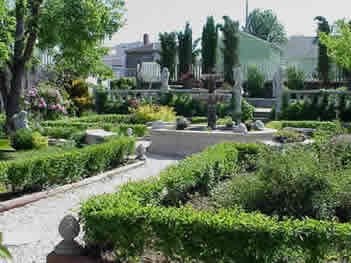
Secret Garden Statuary
Anything that remains out in the elements needs some type of periodic maintenance, cast stone concrete included, says Janice Lucioni of Secret Garden Statuary, Seattle.
"We recommend that all pieces be treated with a water sealer, once a year for fountains and birdbaths and every other year for statues, benches, etc. Air pollution and acid rain do more damage to concrete statuary than anything. They affect natural stone, too," she adds.
But keeping concrete statuary in like-new condition may not be desirable for all garden settings, particularly those where a more naturalized look is desired. Cast stone manufacturer Campania recommends letting statuary weather naturally so it takes on an antiqued appearance. They purposely do not seal their products, saying that exposure to the elements will permit them to "age gracefully" and develop moss growth.
What most cast stone suppliers do agree on, however, is to take precautions with pieces exposed to freeze-thaw cycles. Suggested strategies include:
- Placing planters left outdoors year-round on pot risers, tiles or pieces of pressure-treated wood to leave the drainage hole open.
- Raising birdbath/fountain bases, statuary and bench legs off the ground in winter so they will not come in contact with the soil.
- Bringing the tops of birdbaths and fountain bowls indoors, or if that's not possible, turning them upside down or covering them with plastic or waterproof tarps so they don't fill with water that can freeze and expand.
- Draining fountains during winter, and removing pumps and drain pipes if accessible.
If your fountain or statuary comes with a warranty, be sure to understand what it covers and follow the manufacturer's maintenance instructions. The warranty may not apply, for example, if you neglect to drain your fountain and cracking occurs after a hard freeze.


