
- Concrete Stain Home
- Get the Look - Stained Floor Pictures
- Color Chart: Concrete stain colors
- Comparison Chart: Compare acid stains, water-based stains and dyes
- Stain Buying Tips: Questions to ask before you buy
- How to Stain Concrete
- Types of Stains and Coloring Options
- Acid-Based Stains
- Water-Based Penetrating Stains
- Concrete Dyes
- Concrete Paint
- Exterior Concrete Stain: Click through images of outdoor stained concrete projects
- Stains and Equipment Product Reviews
- Troubleshooting Concrete Stains
- Common Staining Issues: Tips from expert Chris Sullivan
- Removing Stains from Concrete
Concrete Stains & Dyes - Buying Tips
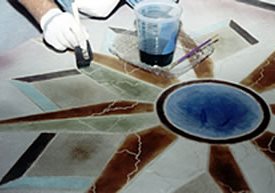
When using stains or dyes, there are few limitations in color or design possibilities. Decorative Concrete Institute in Temple, GA.
Ready to take advantage of a color explosion? Here's an overview of the various types of concrete stains and dyes on the market, followed by important questions to ask before choosing a product for your next project. Keep in mind that once you apply stains and dyes, the color is permanent. So whatever product you choose, be sure to test it in an inconspicuous area on the surface to be treated to ensure the color and aesthetics are exactly what you're aiming for. Some manufacturers sell small sample sizes of their products or test kits with samples of every color in their line.
What Color Effects Do You Want to Achieve?

Decorative concrete training classes are a great way to learn what can be done with stains and dyes. Decorative Concrete Institute in Temple, GA.

Deeper color effects can be achieved by mixing two or more stain colors before application or applying one color over another. Decorative Concrete Institute in Temple, GA.
Of course, this will be your most important consideration, equal in priority to the decision a painter makes when choosing between water colors, acrylics, or oil-based paints, knowing that each will impart color to the bare canvas but with strikingly different results.
Before making this decision, it's wise to experiment with stain and dyes and the various application methods so you know what effects are possible with each medium. Decorative concrete training classes on applying topical color are a great way to learn what you can do with stains and dyes and give you the opportunity to experiment with combining or layering different mediums to achieve special effects. (Visit our concrete products section to locate companies that sell concrete stains and offer training classes)
When weighing your options, here are some things to keep in mind:
- With acid-based chemical stains, wide color variations are normal. Surfaces will have a mottled, variegated appearance, and the variations will be emphasized when a clear sealer is applied.
- Some acid stain colors are deceiving in liquid form. For example, a stain may look dark green in its container but will take on its actual color (such as a reddish brown) after it has reacted with the concrete surface. The stain may not reveal its true color until it has been allowed to remain on the concrete for several hours or longer.
- Although acid stains are available in limited color selections, you can mix two or more stain colors before application to achieve a different shade or apply one color over another. You can also produce deeper color effects with a stain by making two applications.
- Water-based stains can also be mixed to achieve custom hues and often are used in conjunction with acid stains to add highlights or expand the color palette. But be sure to check with the manufacturer for compatibility.
- Most dyes are packaged in concentrated form (either as a liquid or powder, depending on the product), allowing flexibility in the end color. They can be used full strength to attain greater depth of color or diluted with water or solvents to produce paler shades or simply a light wash of color. You can also blend different colors of dye to produce custom hues.
- If you'd rather not experiment with mixing different colors of stains or dyes, many manufacturers will offer custom color matching for an additional fee.
What is the Condition of the Concrete?
Before you buy a topical coloring product, make sure the concrete you intend to put it on will be a suitable canvas. Most stains and dyes can be applied to new or old and plain or integrally colored concrete or cement-based overlays. But some concrete surfaces aren't good candidates for stains and dyes. And even for those that are, don't expect to achieve identical results on each project, since the characteristics of the concrete (such as age, cleanliness, the quantity of cement in the mix, porosity, and base color) can influence color penetration and, in the case of acid stains, the required chemical reaction.
Here's what to take into account when assessing your concrete substrate:
-
Stains and dyes are intended to enhance rather than disguise the surface. They will not hide cracks, blemishes, or other flaws. Nor will they completely mask an underlying color or conceal the texture of the surface.
-
Color effects will generally be more intense on new concrete than on older or weathered concrete.
-
Dirt, grease, sealers, curing compounds, or other contaminants on the concrete surface can block or inhibit the penetration of stains or dyes, resulting in washed-out color. That's why manufacturers always stress the importance of proper surface preparation and cleaning to ensure successful application of their products. In general, if water beads up on the surface and can't penetrate, neither will a stain or dye.
-
Different batches of concrete can vary slightly on the same job. These, as well as patched areas, may absorb stain or dye differently, resulting in noticeable color variations.
-
Chemical stains may not work on concrete previously cleaned with muriatic acid or other acid washes, because the acid removes the free lime needed for stain reaction. For these surfaces, it's best to use a dye or water-based stain that doesn't rely on a chemical reaction for color development.
If the condition of your concrete is unfavorable for stains or dyes, one solution is to apply an overlay or skim coat to the concrete surface to correct the problem. Harris says that concrete slabs heavily soiled with rust or oil contaminants or with major patching work are examples of where an overlay or skim coat should be used to create a new canvas to work on.
Can the Product Be Used for Both Interior and Exterior Applications?
Because they penetrate the concrete surface, most acid- and water-based stains have excellent UV stability and wear resistance, permitting you to use them on both interior and exterior concrete slabs. However, makers of some dyes do not recommend their products for exterior use because the color can fade when exposed to direct sunlight. If you are considering using a dye for an outdoor project, be sure to check its suitability for exterior applications. Most manufacturers also recommend applying a clear sealer to newly stained or dyed concrete for additional protection from abrasion, chemicals, and UV exposure.
How Easy Is the Product to Mix and Apply?
Most stains and dyes are very user-friendly. Some products come ready for use (as is the case with most acid stains), others simply require combining two components, such as a pigment and base resin (as with many water-based stains). Dyes often come as a liquid concentrate or powder that you dilute with an appropriate solvent or water before application. Stains also may require dilution with water or muriatic acid if you want to lighten the tone instead of using the stain full strength. Whatever product you decide to use, the key is to thoroughly shake or stir it right before application to ensure even pigment distribution.
Are Special Application Tools Required?
The coloring method you select as well as the project design will determine what application tools you’ll need. You’ll also have to take into consideration the size of the job. Get help deciding what application tools are best for you.
What Is the Average Coverage Rate?
"Average" is the operative word when assessing the coverage rate of a stain or dye. Manufacturers will typically give you an average range (in number of square feet per gallon), but state that the rate can vary dramatically depending on such factors as the porosity of the concrete substrate, the color intensity you wish to achieve, and whether you plan to apply the product full strength or diluted. Still, this figure can be helpful when comparing the prices of different products and when estimating how much to buy.
Keep in mind that you may need to apply more than one coat of stain or dye, depending on the effects you want to achieve and whether you want to layer various colors. Consult with the supplier for further assistance in estimating coverage rates for a particular project.
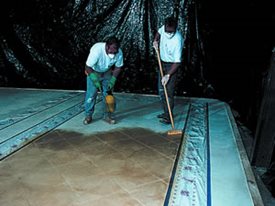
When applying chemical stain you should wear adequate personal protection including a respirator, splash-resistant goggles, and impervious gloves. L.M. Scofield Company in Los Angeles
Are Safety Precautions Required During Application?
Before purchasing or applying a stain or dye, always read the safety precautions provided by the manufacturer (often you can find these on the manufacturer's website). Chemical stains and solvent-based dyes will require greater cautionary measures than water-based products. That's because most chemical stains contain corrosive components (including hydrochloric acid and chlorides) that can cause severe eye, skin, and lung irritation. And solvent-based dyes can be highly flammable and produce vapors that are hazardous to breathe. When using these products, workers should wear impervious gloves and boots, splash-proof goggles, and facemasks or respirators to prevent inhalation of fumes. Products containing solvents must be kept away from combustible materials and heat sources and applied in rooms that are well-ventilated.
For projects in occupied spaces or where ventilation is poor, water-based stains and dyes will be your best choice. These products typically have a low VOC content and are safe to apply indoors without concern for odors or toxic fumes.
How Long Is the Drying Time?
This could be a critical issue on fast-track projects where you need to open the surface to traffic as soon as possible.
Chemical stains require the longest drying times between coats (typically at least 5 hours) to give the stain time to react. Then the stain residue must be rinsed off and the surface permitted to dry before a sealer can be applied. Water-based stains offer the advantage of shorter drying times (about 2 hours) with no rinsing required.
Dyes generally dry very quickly, reducing the amount of time it takes to complete a job by as much as 60%, according to Davis. "Some solvent-based dyes dry in less than a minute. Plus, cleaning is minimal and does not require water," he says.
How Much Cleanup Is Required?
One of the chief disadvantages of using chemical stains is the requisite cleanup work. After stain application, you must scrub the slab thoroughly to remove any stain residue and to neutralize the surface. Manufacturers recommend using a neutralizing solution of water combined with ammonia or baking soda followed by rinsing with clean water. You can also use an alkaline soap. Residue can be scrubbed off with a broom, mop, or floor scrubber and then picked up by a squeegee or acid-resistant wet vacuum. You must also take safety precautions when disposing of the residue and rinse water.
Water-based stains don't require neutralization or rinsing, and application tools can usually be cleaned with mild soap and water. In most cases, there is no reason to clean the concrete slab after dye application because dye particles are very fine and absorbed into the surface. However, if too much dye is applied, you may need to remove the excess with a mop or wet vac.
What Do Stains Cost?
The table below shows the cost ranges for acid- and water-based stains, concrete dyes, and sprayers for applying stain. However, these are just average costs. The final price you pay may be more or even less, depending on number of different factors. Here’s what you need to consider before purchasing concrete stains, along with a few buying strategies to help you reduce your costs.
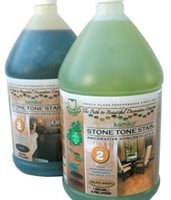
Acid Stains
Price: $35 - 60 per gallon
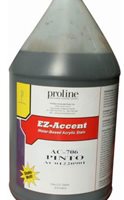
Water-Based Stains
Price: $20 - 40 per gallon
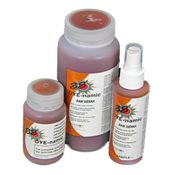
Concrete Dyes
Price: $40 - 78 per gallon
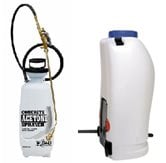
Staining Equipment
Price:
Sprayers - $99 - 175 each
Backpack Sprayers - $125.00 - 180.00 each
Resources: Calico Products, The Stamp Store, SRI Concrete, Walt Tools
Factors That Can Increase Stain Costs- Shipping: If you order concrete stain online or by phone, be sure to inquire about the shipping policy. Find out if factors such as the weight of the shipment, shipping distance, or total cost of the order will influence the final cost.
- Hazardous material charges: Some suppliers may charge extra for shipping caustic acid stains, which can increase the final cost of each bottle of stain.
- Color: Certain colors of stains, including reds, oranges and blues, may cost more because the price of the raw pigments used to make the stain is higher.
- Look for a local distributor: Rather than having the stain shipped to your door, find out if there is a distributor in your area and save the shipping costs. Find suppliers of concrete stains.
- Use a concentrate: Some suppliers sell stain and dye in liquid concentrates that can be diluted before use, which often reduces the shipping cost.
- Purchase the “economy size”: For larger staining projects, you can often get a better price if you order stain in bigger quantities, such as 5-gallon, drum or tote sizes.
- Check the coverage rate: When comparing stain prices, don’t just look at the price per gallon. Also, compare the coverage rate of the stain. Those with a higher coverage rate may be a better bargain, even if they cost a bit more.
- Buy materials from the same vendor: You may also get a price break if you buy all your materials from the same vendor. You’ll also ensure better compatibility by using stains from the same product line, especially if you plan to layer or mix different stain colors.
Related Information:
Gels and Thickeners Give You More Control
What is a True Concrete Stain?
Dyes vs. Stains: What are the differences?
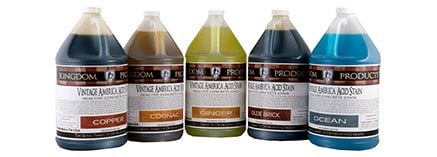 Vintage America Acid Stain
Organic, antique patina, deep penetrating reactive stain.
Vintage America Acid Stain
Organic, antique patina, deep penetrating reactive stain.
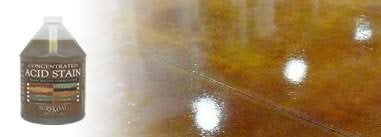 Acid Stain by Surfkoat
Makes up to 2 gallons. Great for marble look.
Acid Stain by Surfkoat
Makes up to 2 gallons. Great for marble look.
 Stain-Crete by Increte
9 standard colors. Useful for old or new concrete.
Stain-Crete by Increte
9 standard colors. Useful for old or new concrete.
 Elements® Transparent Concrete Stain
Water-based, environmentally and user-friendly
Elements® Transparent Concrete Stain
Water-based, environmentally and user-friendly
 Concrete Stain + Sealer in One
Waterproof, strengthen, preserve and beautify in one step
Concrete Stain + Sealer in One
Waterproof, strengthen, preserve and beautify in one step
 Concrete Acid Stain
BRICKFORM Blush-Tone Acid Stain available in 10 standard colors
Concrete Acid Stain
BRICKFORM Blush-Tone Acid Stain available in 10 standard colors
 In-Fluence Water-Based Stain
24 non-reactive colors that transform concrete.
In-Fluence Water-Based Stain
24 non-reactive colors that transform concrete.


