
- Concrete Stain Home
- Get the Look - Stained Floor Pictures
- Color Chart: Concrete stain colors
- Comparison Chart: Compare acid stains, water-based stains and dyes
- Stain Buying Tips: Questions to ask before you buy
- How to Stain Concrete
- Types of Stains and Coloring Options
- Acid-Based Stains
- Water-Based Penetrating Stains
- Concrete Dyes
- Concrete Paint
- Exterior Concrete Stain: Click through images of outdoor stained concrete projects
- Stains and Equipment Product Reviews
- Troubleshooting Concrete Stains
- Common Staining Issues: Tips from expert Chris Sullivan
- Removing Stains from Concrete
Concrete Acid Stain Products
Discover the pros and cons of using acid stains to color concrete
Concrete Stain Application Tips
Time: 05:31
Watch an overview of how to stain concrete using acid stains.
Acid stains are one of the oldest ways to color concrete.
Most acid stains are a mixture of water, hydrochloric acid, and acid-soluble metallic salts. They work by penetrating the surface and reacting chemically with the hydrated lime (calcium hydroxide) in the concrete. The acid in the stain lightly etches the surface, allowing the metallic salts to penetrate more easily. Once the stain reacts, it becomes a permanent part of the concrete and won't fade, chip off, or peel away.
Water Based vs. Acid Stains: A look at new water-based stains for concrete and how they compare to traditional acid stains
Acid base concrete stain is very versatile and can be used on the following:
- Indoor or outdoor surfaces
- Old or new concrete that has fully cured
- Cement-based overlays
- Vertical concrete
- Concrete countertops
Hire a contractor offering concrete staining near me.
ACID STAIN COLORS
Like stains for wood, acid-based stains are translucent and the color they produce will vary depending on the color and condition of the substrate they are applied to. Each concrete slab will accept the stain in varying degrees of intensity, creating natural color variations that bring character and distinction to each project.
What acid stains don't offer is a broad color selection. You'll mostly find them in a limited array of subtle earth tones, such as tans, browns, terra cottas, and soft blue-greens.
These sample colors from Brickform can give you an idea of the types of hues available.
 Jade
Jade
 Turquoise
 Coffee
 Caramel
 Mahogany


Tips for getting great color:
- Try a small test spot to make sure you like the color.
- Dilute stains for more subtle colors.
- Blend stains to create custom shades.
- Layer multiple colors for custom effects.
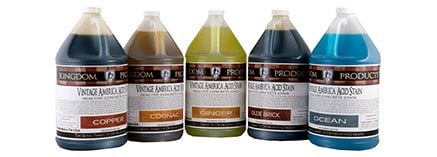 Vintage America Acid Stain
Organic, antique patina, deep penetrating reactive stain.
Vintage America Acid Stain
Organic, antique patina, deep penetrating reactive stain.
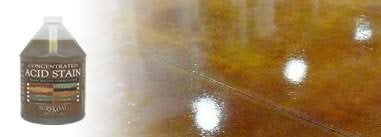 Acid Stain by Surfkoat
Makes up to 2 gallons. Great for marble look.
Acid Stain by Surfkoat
Makes up to 2 gallons. Great for marble look.
 Stain-Crete by Increte
9 standard colors. Useful for old or new concrete.
Stain-Crete by Increte
9 standard colors. Useful for old or new concrete.
 Elements® Transparent Concrete Stain
Water-based, environmentally and user-friendly
Elements® Transparent Concrete Stain
Water-based, environmentally and user-friendly
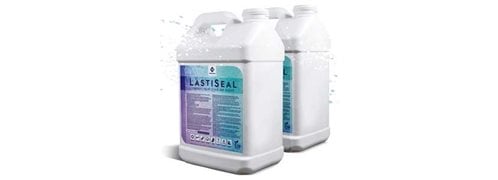 Concrete Stain + Sealer in One
Waterproof, strengthen, preserve and beautify in one step
Concrete Stain + Sealer in One
Waterproof, strengthen, preserve and beautify in one step
 Concrete Acid Stain
BRICKFORM Blush-Tone Acid Stain available in 10 standard colors
Concrete Acid Stain
BRICKFORM Blush-Tone Acid Stain available in 10 standard colors
 In-Fluence Water-Based Stain
24 non-reactive colors that transform concrete.
In-Fluence Water-Based Stain
24 non-reactive colors that transform concrete.
WHERE TO BUY ACID STAIN FOR CONCRETE
You can buy acid stains from big box stores. But if you're looking for professional grade products, it's better to purchase from a construction or concrete supply store or order directly from the manfacturer. Many high-quality stains can be purchased online and shipped to your door.
When purchasing stain, pay attention to whether the formula is concentrated or ready-to-use. Concentrated stains need water added before application, and come in smaller packages. Also check coverage rates to determine how much stain you will need for your project.
Acid stains require neutralization to stop the chemical reaction. Use a solution of water and either baking soda, T.S.P, or ammonia and rinse thoroughly. So remember to have these supplies on hand as well when acid staining concrete.


