Find Stained Concrete Contractors: |
|
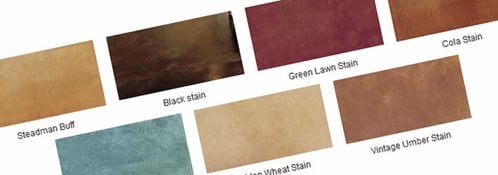
Sample stain colors
Surface preparation
Concrete stain application
Sawing and patterning
Pricing
Using dyes and tints
Applying sealer
Cleanup
Chemical stains gain respect
Print the "Acid Stain Information" articles by Joe Nasvik
Owner acceptance
Stained Concrete Maintenance
Comparison Chart: Stained Concrete versus Other Flooring Materials
Related Information:
Read more about staining concrete: how do stains work, can all concrete be stained, special effects possible with stains, cost of stained concrete, maintaining stained concrete, and more.
Common Questions about Concrete Floors: Are they cold? Are they loud? Are they expensive?
Lea acerca de Cemento Manchado en español
|
 Kemiko Concrete Products
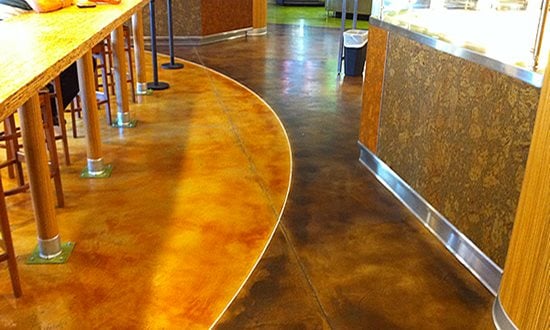
Staining concrete is one of the most popular applications for transforming concrete slabs. Often referred to as colored concrete, homeowners, designers and builders are drawn to stained concrete because of the unique outcome that can be achieved combining colors, application techniques, etc., on cement flooring and other substrates. The results are limited only by the creativity of those involved in the stained concrete process.
| Tips and Facts about Concrete Staining |
|
Find more information about concrete staining including all the basics to transform new or existing concrete. Here's a sample of topics you'll find:
- How do stains work
- Can all concrete be stained
- Special effects with stains
- Cost of stained concrete
- Maintaining stained concrete
- Much more...
|
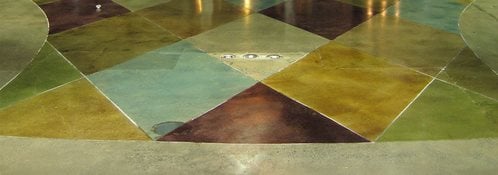
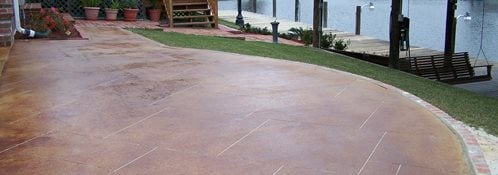
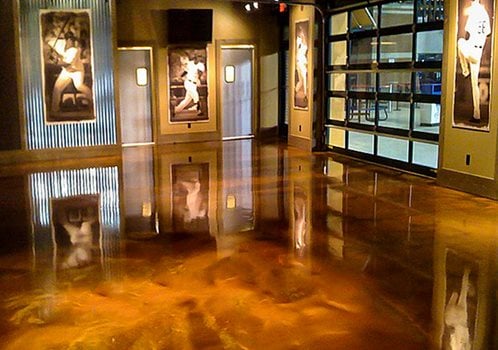
Because of concrete's porous qualities and neutral tone, it is the perfect blank canvas for topically applied color. Using acid-based chemical stains, decorative concrete contractors have been able to achieve rich, earth-toned color schemes resembling natural stone, marble, wood, or even leather, giving a completely custom look to cement floors, concrete driveways, patios, walkways, pool decks, concrete walls and more.
Most acid stains are a mixture of water, hydrochloric acid, and acid-soluble metallic salts. They work by penetrating the surface and reacting chemically with the hydrated lime (calcium hydroxide) in the concrete. The acid in the stain lightly etches the surface, allowing the metallic salts to penetrate more easily. Once the stain reacts, it becomes a permanent part of the concrete and won't fade, chip off, or peel away. Like stains for wood, acid-based stains are translucent and the color they produce will vary depending on the color and condition of the substrate they are applied to. Each concrete slab will accept the stain in varying degrees of intensity, creating natural color variations that bring character and distinction to each project. What acid stains don't offer is a broad color selection. You'll mostly find them in a limited array of subtle earth tones, such as tans, browns, terra cottas, and soft blue-greens. But newer products on the market such as water-based penetrating stains and water- and solvent-based concrete dyes are greatly expanding the artist's palette with colors ranging from soft pastels to vivid reds, oranges, yellows, and purples.
Acid Staining Information: By Joe Nasvik
"Copyright 2000, Hanley-Wood, LLC. All Rights Reserved. Republication or redissemination of this site's content is expressly prohibited without the writtenpermission of Hanley-Wood, LLC."
|