
- Radiant Floor Heating Home
- More FAQs: How much does it cost? Can the floor get too hot? Can the tubing leak?
- Lower Heating Costs
- Installing Radiant Floor Heating Systems
- Installing Radiant Heat
- Retrofitting a Concrete Floor with Radiant Heat
- Other Resources
- Common Questions about Concrete Floors: Are they cold? Are they loud? Are they expensive?
Radiant Heat Installation Tips
The design and layout of concrete floor radiant heat is often complex and typically should be done by a certified radiant heating professional, rather than the concrete contractor. A lot of planning and teamwork early in the process will help ensure a successful installation, says the Radiant Panel Association, in its 2008 Radiant Flooring Guide. The guide (available through the RPA website) offers the following tips and many other pointers to assist homeowners, architects and contractors.
Educate yourself. The more you know about radiant floor heating systems and how they work, the more effectively you can communicate your needs to the designer and installer. In addition to RPA, good resources for educational materials and technical information include the Hydronic Heating Association and the websites of vendors of radiant systems.
Find a qualified installer. Like any mechanical system, a qualified, experienced professional should design your radiant floor heating system. The designer will know which components work well together, capacities of various systems, special considerations for installations in your area, and product warranties and reliability. The installer should do a room-by-room heat-loss analysis of your home or building, and then size the system appropriately. To locate certified radiant contractors in your area, visit RPA's membership directory.
Work as a team. Successful radiant floor heating installation involves good coordination and communication among the concrete contractor, general contractor, architect and radiant system installer. The entire team should work together to arrive at the best solutions for heat-capacity needs and flooring installation. It's important to be aware that radiant heating systems can affect the height of flooring assemblies and project sequencing.
Understand how flooring affects heat transfer. A radiant heating system must be designed to deliver enough heat to transfer it efficiently through the thickness of the concrete it's embedded in and then through any floor covering placed on top of it. At the design stage, the radiant system professional should consider heat loss, the areas of the floor that might not be available for heat (due to installed items such as cabinets), and factors affecting resistance to heat transfer, such as floor coverings. Generally, radiant heating installed within a conductive medium, such as concrete or a cement-based overlay that also functions as the finished flooring, will transfer heat much more efficiently than a system installed under a subfloor or covered by another layer of flooring, such as laminate floor panels or carpet.
Get the right controls to run your system. To ensure optimal comfort and energy efficiency with radiant heating, you'll need a control system that will evenly maintain the desired room temperature and maintain operating temperatures within the upper limits specified for the flooring type. If you live in a climate with modest heating needs and few major variations in temperature, your radiant system may run fine with a simple floor thermostat. However, homes that experience a lot of heat loss or located in climates with large temperature fluctuations will often require more sophisticated controls, such as a system with separate sensors to monitor outdoor temperature, the temperature within the floor slab, and room temperature. Be sure to discuss your control needs with your radiant heating contractor.
One Contractor's Method of Installing Radiant HeatDavid Pettigrew of Diamond D Concrete, Capitola, Calif., says that nearly half of his decorative concrete floor installations now incorporate hydronic radiant heating. Among his residential clients, the greatest demand for radiant heating is in the northern California area.


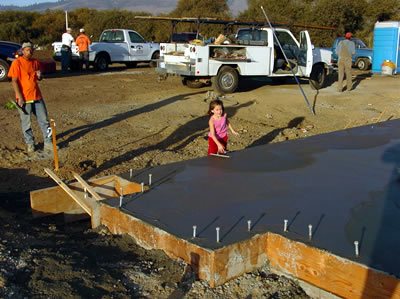
Pettigrew uses an innovative "double-pour" method that allows him to embed the hydronic tubing (he primarily uses PEX) in a thin concrete slab placed over a plywood subfloor. He then places another layer of 1 ½-inch-thick decorative concrete on top of that. In between the two layers of concrete, he installs a slip sheet topped by metal lath. He says the metal lath not only serves as reinforcement, it also helps to conduct the radiant heat. In the decorative concrete top layer, he makes sawcut patterns to control cracking.
Pettigrew does not design the radiant heating system himself; he leaves that up to a professional who understands the complexities of radiant heat transfer and zoning. "You have to zone the system properly, or one room will be warmer than another," he says. "For example, rooms with a southern exposure will need less heating than those with a northern exposure."


