- Permeable Concrete Installation
- How Pervious Concrete Works
- Related Information
- Concrete Driveways
- How Decorative Concrete Qualifies for LEED Credits
- Green Building: Information for sustainable living
Permeable Concrete Pavements
Learn about this environmentally friendly paving material that offers the durability of standard concrete while retaining stormwater runoff and replenishing local watershed systems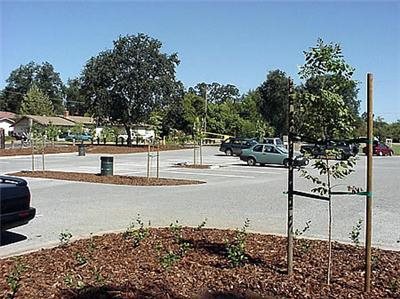
This parking lot installed in 2001 at Bannister Park,
Fair Oaks, Calif., is the first in the state to use
permeable paving. The Sacramento Cool Communities
program was a partner in the project, which used
pervious concrete for stormwater management and to
reduce the urban heat-island effect. In about 10 years,
the trees will shade more than half the lot.
Paved surfaces are so ubiquitous in urban areas today that most of us give little thought to the impact they have on water quality and the health of the environment. But here's the sobering reality: As more available land area in the country gets paved over, a larger amount of rainwater ends up falling on impervious surfaces such as parking lots, driveways, sidewalks, and streets rather than soaking into the soil. This creates an imbalance in the natural ecosystem and leads to a host of problems including erosion, flash floods, water table depletion, and pollution of rivers, lakes, and coastal waters as rainwater rushing across pavement surfaces picks up everything from oil and grease spills to deicing salts and chemical fertilizers.
Find concrete contractors near me.
A simple solution to avoiding these problems is to stop installing the impervious surfaces that block natural water infiltration into the soil. But few of us are ready to give up our paved roads, driveways, and parking lots. Rather than building them with conventional concrete or asphalt, more and more communities, municipalities, and businesses are switching to pervious concrete or porous pavement, a material that offers the inherent durability and low life-cycle costs of a typical concrete pavement while retaining stormwater runoff and replenishing local watershed systems.
Instead of preventing infiltration of water into the soil, pervious pavement assists the process by capturing rainwater in a network of voids and allowing it to percolate into the underlying soil. In many cases, pervious concrete roadways and parking lots can double as water retention structures, reducing or eliminating the need for traditional stormwater management systems such as retention ponds and sewer tie-ins.
WHERE PERMEABLE CONCRETE IS BEING USED
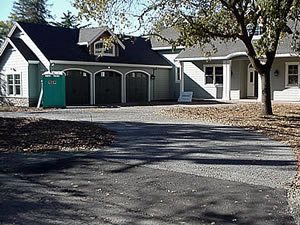
This pervious concrete driveway in Walnut Creek, Calif., saved the homeowner $100,000 by eliminating the cost of connecting to the county-owned storm sewer system.
While pervious concrete pavements may be new to some areas of the country, Florida and other southeastern states have been installing them since the 1970s to control runoff, erosion, and flooding. Florida has been a leader in the construction of pavements using pervious concrete, according to the Florida Concrete & Products Association. Hundreds of projects have been completed statewide, with many pavements in service for more than 10 years.
More recently, pervious concrete has been embraced by the West Coast for its environmental benefits. For example, pervious concrete is helping communities in California and Washington restore groundwater supplies and reduce pollution of coastal waters, which can endanger fragile aquatic ecosystems and even swimmers. In a study conducted by researchers at the University of California, Irvine, contaminated runoff has been linked with waterborne illnesses in surfers in urban areas.
In the Pacific Northwest, most of the annual precipitation comes from rainfall events of less than an inch. A stormwater management system using pervious concrete can be very effective at reducing total runoff and increasing the amount of filtered groundwater.
"It's a great system in that it provides both day-to-day mitigation as well as catastrophic containment," says Andy Youngs, a technical representative with the California Nevada Cement Promotion Council and a specialist in stormwater management. "With the change in EPA stormwater runoff regulations, pervious concrete has really come into play because of its use in controlling pollution. In California, the concrete industry knew about pervious concrete, but didn't understand the fit and what a great product it is. It took some time to get everyone onboard, but now we're starting to hit critical mass and see the use of pervious concrete explode."
In California, pervious concrete is primarily being used to pave parking lots, says Youngs. But he notes that its also becoming a practical alternative for subdivision streets, sidewalks, and golf cart paths.
More homeowners are using pervious concrete as well, to eliminate puddling, prevent erosion, and save the expense of tying into local storm sewer systems. Typical applications include driveways, walkways, pool decks, and patios.
Below are links to projects across the country that have used pervious concrete for purposes ranging from controlling water runoff, to protecting sensitive fish habitats, to irrigating land.
-
The Washington State Aggregates and Concrete Association investigates the use of pervious pavements to manage stormwater and to protect endangered salmon habitats in Puget Sound
-
Finley Stadium in Chattanooga, Tenn., installs pervious concrete in the parking area to collect stormwater runoff and use it to irrigate the playing field
PERVIOUS CONCRETE PROBLEMS
ConcreteNetwork.com
While this thirsty pavement is an excellent option for certain situations, it may not always be a viable choice.
Because pervious concrete has a rough-textured, honeycombed surface, moderate amounts of surface raveling are normal. This can be a problem on heavily traveled roadways.
"The main reason pervious concrete is not used for high-traffic pavements, such as highways, is surface raveling," says Youngs, who notes that tire sheer can loosen the aggregate at the surface. One potential solution being looked at is to grind down the pavement surface about half an inch.
Special attention must also be given to the overall design of the pavement system in order for pervious concrete to perform as intended. Proper engineering of the substrate beneath the pavement is essential, since it must be able to temporarily store the water while it percolates into the soil. An initial soils site survey and site-specific stormwater calculations should be performed by a stormwater management engineer.
PERVIOUS CONCRETE INSTALLATION
ConcreteNetwork.com
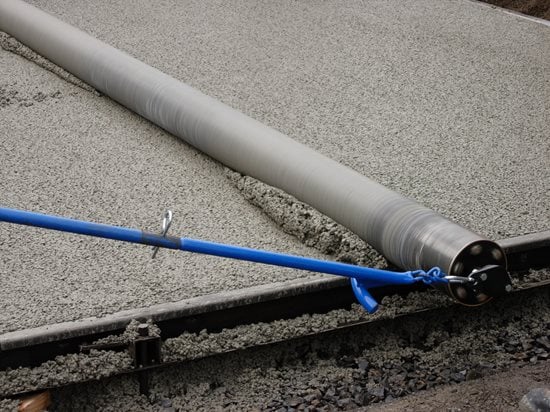
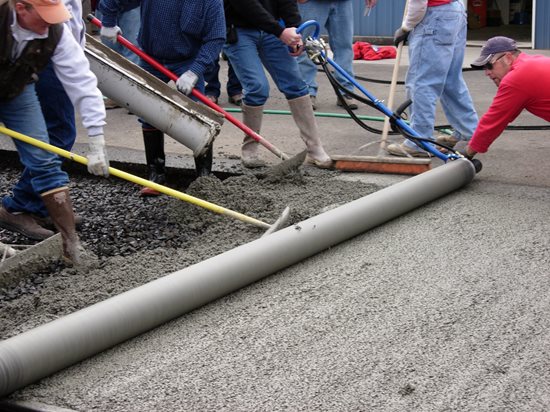
Pervious concrete is delivered to the jobsite by conventional ready-mix trucks and placed within standard forms. Because pervious concrete is thicker in consistency than regular concrete, a vibrating mechanical screed is used to level it off. Vibration is followed by compaction with a heavy steel roller to attain greater strength.
Because pervious concrete has a low water content, curing is especially critical. After placement, the concrete is misted with water and then covered with plastic sheeting and kept damp for at least 7 days to allow full hydration of the cement.
Often paving crews can complete pervious concrete jobs faster than when installing regular concrete. That's because pervious concrete doesn't need to be worked with a bull float or trowel, since these finishing operations can seal off the pavement surface and decrease water penetration.
10 strategies for a successful pervious concrete installation
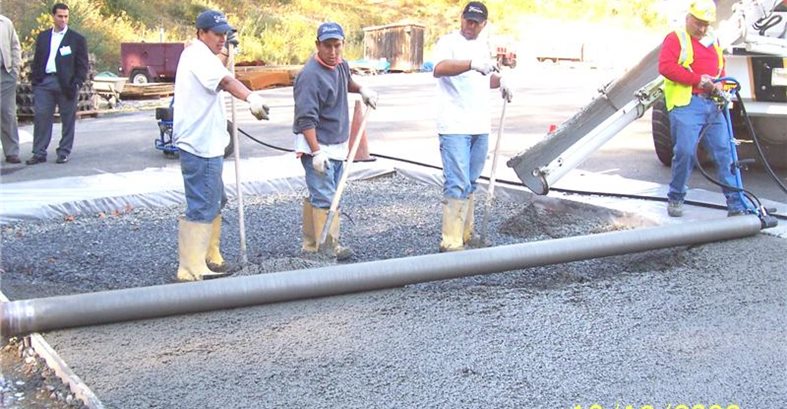
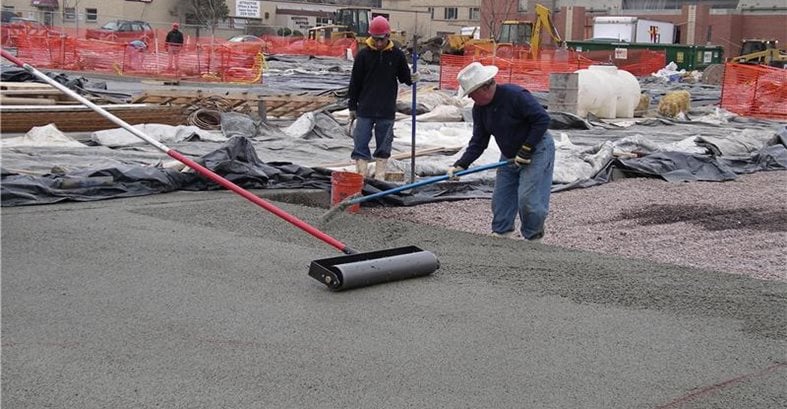
Pervious concrete has many wonderful properties, but without an experienced contractor and ready-mix supplier, a failed installation is possible. Pervious concrete is difficult to place and finish properly. The right mix and proper compaction and curing are critical to success. Attention to the following steps will help improve the performance and durability of your pervious pavement installation.
- Design the pavement system to prevent saturation of the pavement during freeze-thaw cycles.
- In freezing climates, prevent water runoff from buildings or adjacent impervious pavements from draining onto frozen pervious concrete.
- Pervious concrete pavement systems should only be used where the underlying soil percolates well or when there is a subbase drainage system.
- To get the proper mix, work with an experienced ready-mix supplier and insist on 600 pounds per cubic yard of cementitious material (no more than 50 pounds per cubic yard of fly ash), a water-cement ratio of 0.26 to 0.30, aggregate at ½-inch maximum size (3/8 inch is best), and no fine aggregate smaller than #4. This should result in a concrete with a unit weight of 120 pcf with voids at 20% after compaction.
- Adding 5 ounces per hundredweight of cement of hydration stabilizer (not retarder) is essential to prevent hydration before placement; some contractors also like to use a viscosity modifier and a mid-range water reducer.
- Contractors must have experience working with pervious concrete, since it is different than conventional concrete. The National Ready Mixed Concrete Association (NRMCA) offers a training program, but installers should also have some hands-on experience.
- Proper compaction-to a void ratio of 12% to 20%-is essential. This can be achieved with a roller screed followed by cross rolling with hand rollers that weigh 40 pounds per foot.
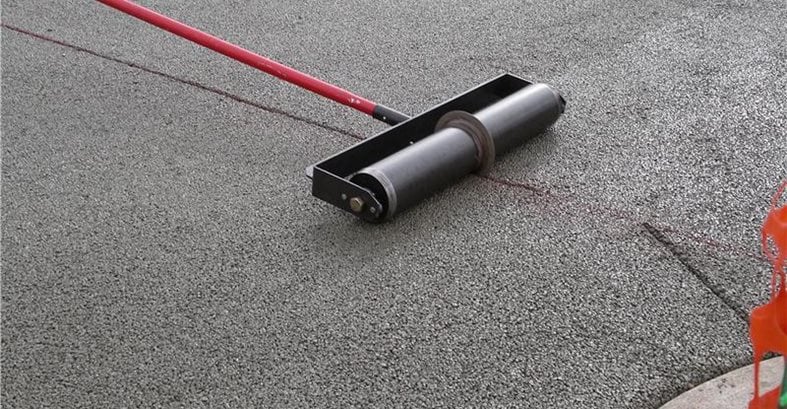
- Don't overwork edges or joints. Joints should be cut with a "pizza cutter" roller, not with a saw.
- Curing must begin within 10 minutes after concrete placement and continue for at least 7 days. During the interval between screeding and placing plastic sheeting, spray evaporation retarder onto the surface.
- If a pattern is to be stamped into pervious concrete, stamp through the plastic curing film using open-faced stamps.
FAQ'S ABOUT PERVIOUS CONCRETE
Where can I get pervious concrete?
Many ready-mix producers can supply pervious concrete. Contact your local ready-mix concrete association for referrals in your area, or use The Concrete Network' s concrete association directory to find associations in your state.
Can the voids in the pavement become clogged, and thus ineffective?
It's unlikely that a pervious surface will become totally clogged. Reducing erosion and sediment runoff onto the pavement through good design can eliminate most problems. If any voids do become clogged, vacuuming or pressure washing of the pavement can restore most of the permeability.
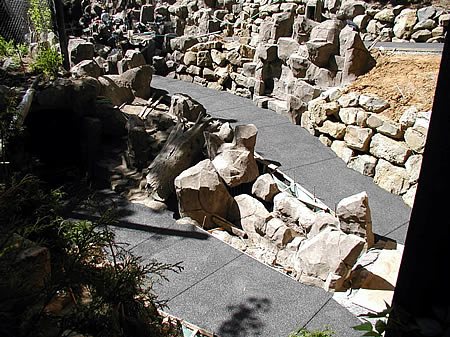
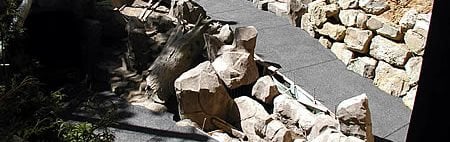
The new Eagle Canyon exhibit at the Portland, Ore., zoo features a rustic pervious concrete pathway winding through a terrain of faux boulders.
Can decorative treatments be applied to pervious concrete pavements?
Many landscape architects like the organic, rough-textured look of plain pervious concrete. But for installers who want to enhance the aesthetics, there are several options. Integral coloring agents can be added to the concrete before its placed. Or water-based concrete stains can be sprayed onto the surface after installation. (Dont use solvent-based coatings or sealers because they can clog the voids in the pavement.) Because pervious concrete is much stiffer than standard concrete, patterns can't easily be stamped into it. But it is possible to score decorative lines into the surface.
How strong is a typical pervious concrete pavement?
It's possible to achieve pervious concrete compressive strengths of 3000 to 4000 psi and flexural strengths of 500 to 600 psi, which are on par with conventional concrete. With the use of admixtures, today's pervious concrete mixes can be made with less water, which improves strength and durability. Also, better placement methods have resulted in tighter pavements that maintain point-to-point contact of all the aggregates while providing the necessary void content.
Can pervious concrete be used in climates exposed to freezing and thawing?
In most cases, the strength and durability of pervious concrete make it resistant to potential cracking from freezing and thawing. According to the National Ready Mixed Concrete Association, pervious concrete that is partially saturated should have sufficient voids to accommodate the expansion caused by freezing of water. Structural damage could occur, however, if the pavement becomes fully saturated or the ability of the concrete to drain water is compromised due to clogging of the void structure. NRMCA offers recommendations for preventing these problems in its publication Freeze-Thaw Resistance of Pervious Concrete.
Can pervious pavements be used over impervious, clayey soils?
Yes, but the pervious concrete should be installed over a permeable subgrade layer of rock several inches thick. This additional layer will allow the pavement to hold more water until its absorbed into the ground. Consult a geotechnical engineer for design and construction options specific to the soil in your area.
What about maintenance?
Generally the only maintenance needed is to occasionally sweep, pressure wash, or vacuum the pavement to remove any debris that might clog the voids and inhibit water penetration.
PERVIOUS CONCRETE DESIGN IDEAS
Decorative concrete contractors around the country have sent us awesome pictures and stories about unique jobs they've been doing. Read about them here to get ideas for your decorative concrete proejct. Find out how the projects were designed and created, what techniques and products were used, and any special challenges that were overcome during construction.
 Decorative Concrete in the Philippines Manila’s Chinatown gets a pervious walkway with a decorative design
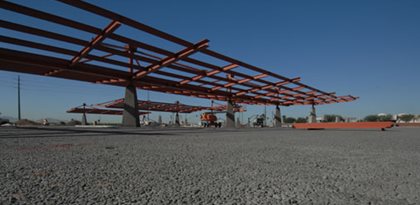 Pervious Paving Installed at Glendale Park & Ridefrom Progressive Hardscapes in Pheonix, AZ.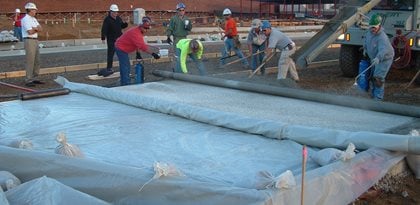
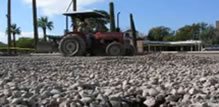
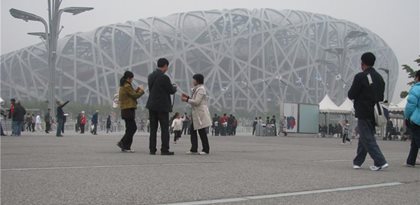 The Decorative Side of Pervious ConcreteIn Beijing, China, pervious concrete pavements combine beauty with practicality
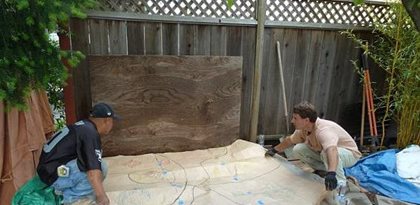 Garden Art in Permeable ConcreteWho knew permeable concrete could be so beautiful? This project demonstrates the artistic options possible with this eco-friendly material.