
Vertical Concrete Overlays
Create decorative wall coverings with lightweight cement-based overlays to mimic stone, brick and many other wall textures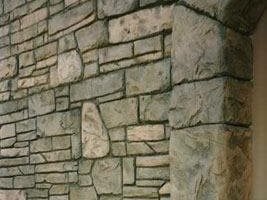
Stone Edge Surfaces
You've seen how decorative stamping can add beauty and drama to concrete floors, sidewalks, driveways and other horizontal surfaces. But did you know you can use similar stamping and texturing techniques to enhance vertical surfaces, such as the walls inside your home or business, a fireplace front or an exterior privacy wall?
More decorative concrete contractors are literally climbing the walls to demonstrate new vertical applications for their artistry. They are defying gravity with the use of new lightweight cement-based wall overlay materials that can be applied directly over virtually any properly prepared wall surface, including concrete and masonry, wood, cement board, plaster, drywall and even insulating concrete forms (ICFs).
Need help with your project? Local Resurfacing Concrete Contractors
These tenacious mixes are formulated to go on thickly without sagging, allowing them to be embellished with deep rock textures, wood-grain patterns, grout joints and many other carved or imprinted designs created with special stamps, texturing skins and sculpting tools. What's more, vertical overlays can be colored and stained to simulate the appearance of natural stone, brick or other wall materials.
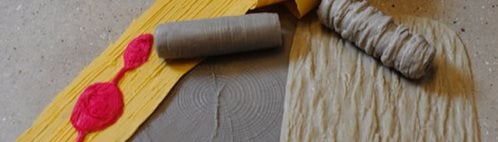 Tools for Vertical Stamping
Tips for buying and using the essentials for vertical stamping and carving.
Tools for Vertical Stamping
Tips for buying and using the essentials for vertical stamping and carving.
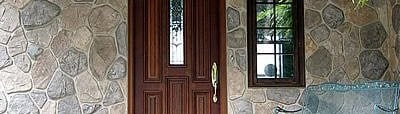 Vertical Resurfacing Mixes
Get information on the components of a vertical mix.
Vertical Resurfacing Mixes
Get information on the components of a vertical mix.
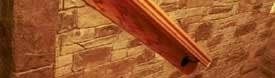 Pattern & Texture
Find out how stamping, texturing skins and hand carving techniques can be used on vertical surfaces.
Pattern & Texture
Find out how stamping, texturing skins and hand carving techniques can be used on vertical surfaces.
Hand-carved vertical overlays are one of the newest trends in decorative concrete, according to Nathan Giffin, owner of VerticalArtisans.com, who has turned basements into stone-walled coves and old closets into wine cellars. "The design possibilities are endless," he says.
Wayne Sellon of Tajmawall is another contractor specializing in stamped and hand-carved vertical overlays. "My customers like the idea that they are getting something that's one of a kind," he says. "I can beat the price of stick-on rock and provide more variety in the texture and staining process."
Stan Pace, owner of FossilCrete, a company that sells tools and materials for vertical resurfacing, says the process is perfect for mainstream use. "It's a monolithic system, it's strong, it can be colored and it's an easy application. There's lots of freedom, and it's like a natural product, only better."
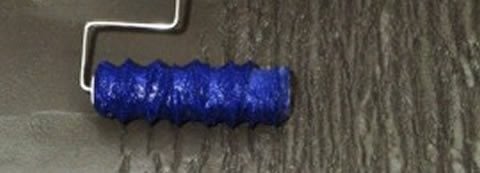 Vertical Overlay Texture Tools
by Butterfield Color
Vertical Overlay Texture Tools
by Butterfield Color
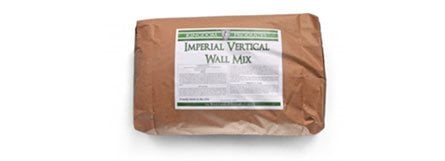 Vertical Wall Mix
40 lb Bag
Vertical Wall Mix
40 lb Bag
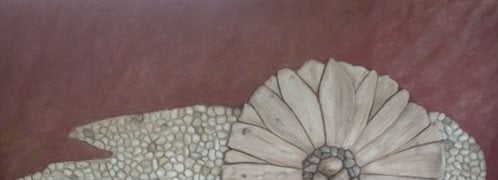 Brickform Vertical Mix
Great for Carving or Stamping
Brickform Vertical Mix
Great for Carving or Stamping
 Butterfield Cantera Wall Mix
Just Add Water
Butterfield Cantera Wall Mix
Just Add Water
Design Possibilities with Vertical Overlays

Hand-carved fireplace. VerticalArtisans.com in Hickory Hills, IL
Since vertical overlays can be applied to nearly any sound, properly prepared surface, the applications are wide-ranging. A few of the most popular include:
- Interior accent walls
- Fireplace fronts
- Storefronts
- Arched entryways
- Retaining walls
- Exterior privacy walls
- Basement walls and wine cellars
- Chimneys
- Backsplashes
- ICF wall surfaces
- Theme rooms in hotels and resorts
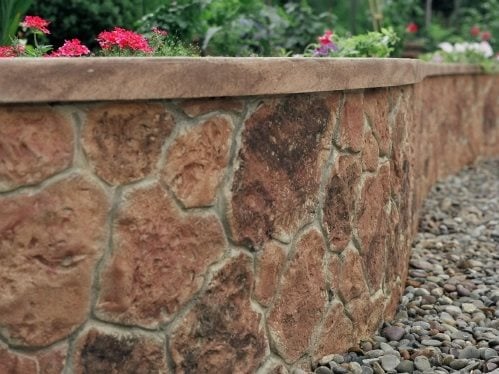
Vertically stamped retaining wall. Custom DesignCrete in Crescent, PA
The biggest advantage of vertical overlays is versatility. In addition to their ability to be stamped or carved to look like real stone, brick or slate, companies who supply vertical mixes have developed special stamping and carving tools that allow installers to mimic many other materials such as weathered wood, fossilized rock, botanical imprints, cut coral, lava rock and even bamboo. These overlays also can be pigmented, stained or faux finished in just about any color imaginable, whether you want to match the surrounding décor or replicate the natural colors of the materials they simulate. The overlay depth can be varied, too, depending on the pattern or look desired.
Vertical overlays also permit total flexibility in the size of individual units in the pattern, which can easily be customized to suit the dimensions of the wall. "You can do more with vertical overlays than manufactured stone because you can make the stone patterns any size and shape you want," says Andy Yoder of Flex-C-Ment. "The material takes the impression of stamps well and is easy to sculpt or carve. You can also work it around corners and fit it into narrow areas."
Click here to view Design Ideas for Vertical Work from Around the World.
Finding Contractors Who Do Vertical Work
Vertical overlays are a relatively new application for decorative concrete, so it may be difficult to find professionals who specialize in this type of work. Many who do are self-taught plasterers or concrete contractors who have acquired their skills after years of practice. Others have learned the technique by attending the growing number of installer training programs offering instruction in vertical overlay application.
Find Local Contractors: Resurfacing Concrete Contractors
Often the manufacturers who sell vertical overlay mixes can direct you to experienced contractors who install their products. In fact, some manufacturers will sell their mixes only to certified applicators who have been trained to install them.


