
- Concrete Coatings Home
- Garage floor coatings
- Epoxy terrazzo toppings
- Polyaspartic coatings: A new polymer for one-day floor toppings
- Metallic Coatings
- Choosing the Best Coating for the Job
- Selecting the proper coating for concrete floors
- Coating product reviews
- How-To Tips for Installing Coatings
- How to install epoxy terrazzo
- Reducing bond failures caused by moisture-vapor transmission
- Related Information:
- Concrete floor videos, with Bob Harris
Concrete Coatings - Compare Coating Types
The best type of coatings for protecting, beautifying and prolonging the life of concrete floors and slabs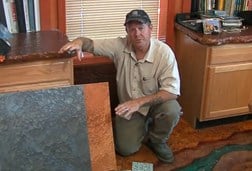
Garage Floor Coatings
Time: 05:51
Find out what products are good to use as a decorative garage floor surface.
A concrete coating is a floor covering for basements, garages, warehouses, manufacturing plants, restaurants, stores and more. A good coating gives concrete an durable layer of protection against heavy traffic, abrasion, chemicals, and moisture exposure. It also beautifies the surface, simplifies maintenance and improves skid resistance.
On this page: Coating Types | Epoxies | Polyaspartics | Special-Effects
Find Concrete Coating Products
Find Local Stores and Distributors
Find Concrete Coating Contractors
 Concrete Coating Reviews
An inside look at the latest epoxies, metallics and more.
Concrete Coating Reviews
An inside look at the latest epoxies, metallics and more.
 Resurfacing Products
Permanently cover up surface imperfections, or turn a plain slab from drab to fab.
Resurfacing Products
Permanently cover up surface imperfections, or turn a plain slab from drab to fab.
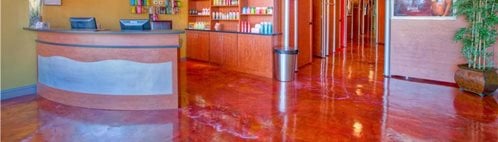 Metallic Coatings
Tips for using and applying metallic epoxy coatings for concrete floors.
Metallic Coatings
Tips for using and applying metallic epoxy coatings for concrete floors.
WHAT IS THE BEST COATING FOR CONCRETE?
The selection of products today for coating concrete has never been greater, as manufacturers strive to meet market demands for newer formulations that are faster curing, more abrasion resistant, lower in harmful VOCs and adhere better to properly prepared surfaces. And many of today's coating products are available with a profusion of decorative options, including a broad selection of mix-in pigments and other add-ins for achieving special visual effects.
With the myriad options available, however, shopping around for the best concrete coating can be as daunting as navigating the cereal aisle in a well-stocked grocery store. The number of choices is overwhelming, and each product will differ -- at least to some extent -- in terms of performance, ease of application, economy and appearance. The challenge is to find the most economical and practical solution among the many products on the shelf.
It would be impossible to compare every concrete coating on the market, since there are literally hundreds to choose from. Instead, here are some of the most advanced products that maximize performance and are more user-friendly to install. These offerings typically cost more than their traditional counterparts, but can be more affordable in the long run by saving installation time, allowing floors to be put back into service sooner and lasting longer. Some products also achieve special decorative effects, such as metallic or luminescent finishes.
COMPARING COATING TYPES

100% solids epoxy coating with a urethane top coat. Innovative Concrete Surfaces, Inc in Bonita Springs, FL
The term "coating" is often used broadly to refer to just about any liquid or semi-solid material applied to cured concrete, including cement-based toppings and overlays, paints, and epoxy-aggregate systems. However, for the purposes of this guide, we're narrowing down the definition to refer only to noncementitious polymer products typically applied at thicknesses of less than 1/16 inch. (Click on these links for tips on buying and using cement-based toppings and overlays and epoxy-aggregate systems.)
Without getting too scientific, a polymer is basically a chemical compound or mixture of compounds. The most commonly used concrete coatings today fall under or are hybrids of four basic polymer categories: epoxies, urethanes, acrylics and polyureas. Because of the chemical nature of polymer coatings, manufacturers will often tinker with the properties and molecular makeup of their products to improve their performance and provide other benefits, such as faster curing times or lower VOCs.
When comparing the attributes of various products, the first step is to look at the coating manufacturers' data sheets and technical specifications. They are your best sources for performance and installation information. Many of these spec sheets are available from the manufacturers' websites. You will also need to evaluate the surface you're working with and make some important decisions regarding protection requirements, aesthetic goals, budget and the time frame for installation. For more guidance, read Robert Cain's article Selecting the Proper Coating for Concrete Floors.
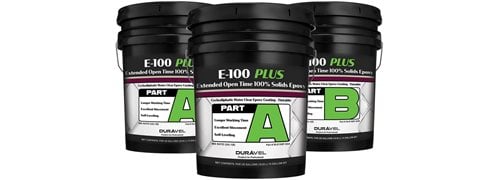 E-100 PLUS Epoxy
Extended open time 100% solids epoxy
E-100 PLUS Epoxy
Extended open time 100% solids epoxy
 HellFire® Concrete Coating
Chemical & heat resistance
HellFire® Concrete Coating
Chemical & heat resistance
 Self Leveling Overlay
Find the overlay to meet your project's needs
Self Leveling Overlay
Find the overlay to meet your project's needs
 Self-Leveling Polishable Overlay
Long working time, smooth surface topping
Self-Leveling Polishable Overlay
Long working time, smooth surface topping
STATE-OF-THE-ART EPOXIES
Drawbacks of Epoxy Flooring
Time: 01:37
Epoxy coatings have been used for years on concrete floors in commercial settings, and more recently as a traffic-resistant decorative coating on residential garage floors (see Garage Floor Coatings). Many contractors like epoxies because they produce a long-lasting high-gloss finish with superior hardness and abrasion resistance.
However, despite their protective benefits, traditional epoxies have some drawbacks that can limit their use on certain projects, such as:
- Long concrete curing times before application (typically a minimum of 30 days)
- Loss of adhesion in the presence of moisture
- The tendency to yellow when exposed to ultraviolet light
Most traditional epoxies also are two-component systems that require mixing at the proper ratio right before use. To overcome some of these disadvantages, manufacturers have recently introduced advanced epoxies with greater permeability, better UV stability, faster curing times and more convenient single-component application.
DRYLOK Concrete Protector. United Gilsonite Laboratories in Scranton, PA
One-part systems
Several manufacturers now offer one-part ready-to-use epoxies that require no mixing before application. These user-friendly epoxies are said to compare in performance to two-part systems and are suitable for both residential and commercial applications, including garage floors, driveways, basements, commercial showrooms, gas stations and restaurants. They resist hot-tire marks, chemicals, oil, grease and gasoline stains. They also are UV-stable and won't yellow or chalk when applied to exterior slabs.
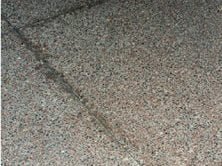
Moisture vapor transmission through polyacrylate terrazzo joints. Key Resin Company in Batavia, OH
Breathable epoxies
Most epoxy floor coatings are impermeable to moisture and can fail if applied to damp substrates or to slabs with high moisture-vapor emission rates (see What Problems Does Moisture Create?). To help avert these moisture-related failures, breathable systems, that allow the passage of moisture vapor, have been developed. Some will even bond to damp substrates and to new concrete slabs after only four or five days of curing, making it ideal for fast-track projects.
Fast-setting epoxies
Many epoxies require a minimum drying time of 24 hours before they can be recoated (depending on application temperatures and humidity conditions) and must cure for several days before they can accept traffic. But some new fast-setting epoxy coatings dry to the touch in just 20 minutes and reach thorough drying within 12 hours.
Note: All of these new epoxies are water-based and low in VOCs and odor. They also are available in pigmented finishes or can be tinted.
FAST-SETTING POLYASPARTICS
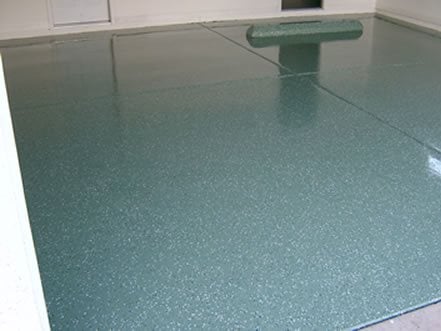
Advantage Chemical Coatings.
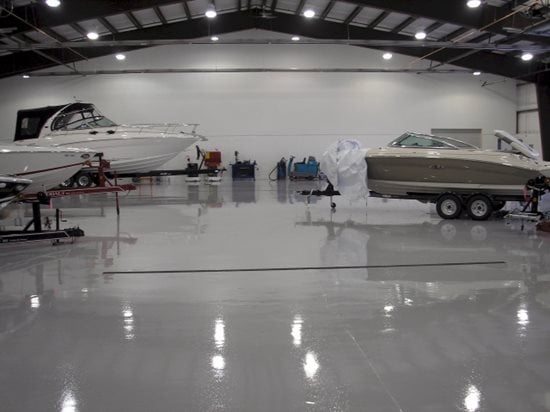
InstaDrive coating, a self-priming system. Kamcrete in Mesa, AZ
Polyaspartics (a type of polyurea) are the newest coating products to hit the market, and they are gaining in popularity because of their super-fast setting times. In fact, some manufacturers claim that their polyaspartic floor coating systems can be installed in less than a day, from start to finish, including the addition of decorative effects.
Although polyureas have been available commercially since the 1980s, polyaspartics are a more recent innovation with enhanced performance characteristics and easier installation (see What Are Polyaspartics?). Beyond the advantage of allowing projects to be completed in record time, these floor coatings offer many other benefits, including:
- The ability to be applied to full thickness in one coat
- Greater abrasion and impact resistance than epoxy or urethane coatings
- The ability to be applied at high or low temperatures
- Excellent bonding characteristics and UV stability
They are suitable for both residential and commercial applications and are especially popular for garage floors, driveways, retail facilities, auto showrooms, warehouses and other slabs subject to heavy wear and tear.
One of the few drawbacks of these coatings is the cost, since they tend to be more expensive than other concrete coatings. However, when you factor in the reduced labor costs and downtime, the extra expense can often be justified. Below is a sampling of some of the products available. Most of these are sold as complete decorative floor systems that can be tinted onsite during mixing and embellished with decorative vinyl chips or quartz beads in a broad array of color combinations.
Limitations
All polyaspartics are two-component products and will require mixing before use. The potlife of some systems is as short as 20, which could limit their use when you need to coat large areas.
It's also important to be aware that polyaspartics are impermeable and don't transmit water vapor, so new floors should be allowed to cure for at least 28 days before application. Some manufacturers recommend testing both new and existing floors for moisture-vapor transmission. For the best coating adhesion and performance, the moisture emission rate shouldn't exceed 3 pounds per 1,000 square feet for most systems. However, Versatile Building Products says that its Roll On Rock can withstand emission rates exceeding 5 pounds without losing bond.
SPECIAL EFFECTS COATINGS
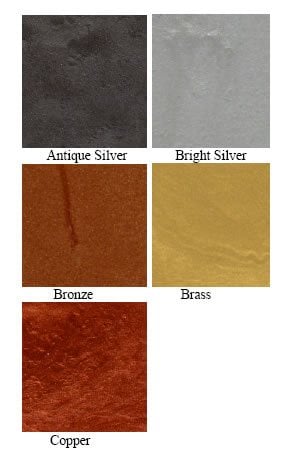
Key Luster Mettalic color chart. Key Resin Co.
Along with advancements in polymer coating technology, the creative possibilities with coatings have expanded as well, allowing you to achieve some stunning effects not previously possible. Here are a few of the newest options for creating floor surfaces that make a strong design statement.
Metallic-pigmented coating
A 100%-solids epoxy resin available in a variety of metallic pigments including bronze, copper, antique silver and bright silver. It is finished with a clear urethane or epoxy topcoat to enhance the metallic luster and to provide additional wear and abrasion resistance.
A coating that glows in the dark
Light-emitting coatings for concrete store light energy throughout the day and then gradually release the energy as visible light throughout the night. In addition to the obvious safety benefits in areas where there is little or no lighting or during a power failure, you can also use the coating to achieve unique decorative effects, such as adding a glow to the risers on concrete steps, defining driveway edges or garden pathways, and adding nighttime ambience to pool decks.


