
- Concrete Coatings Home
- Garage floor coatings
- Epoxy terrazzo toppings
- Polyaspartic coatings: A new polymer for one-day floor toppings
- Metallic Coatings
- Choosing the Best Coating for the Job
- Selecting the proper coating for concrete floors
- Coating product reviews
- How-To Tips for Installing Coatings
- How to install epoxy terrazzo
- Reducing bond failures caused by moisture-vapor transmission
- Related Information:
- Concrete floor videos, with Bob Harris
Are Polyaspartics Better Than Epoxies & Urethanes?
Compare the pros and cons of polyspartic vs epoxy coatingsBeing able to complete a garage floor makeover in a single day is a wonderful thing, but do you end up with a floor that will withstand the test of time? Although those installing polyaspartic floors insist that they have had very few failures, raising some doubts is Rob Hanson of Garage Floor Coating, which installs 35 to 40 residential jobs a day in Arizona.
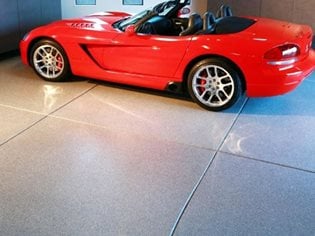
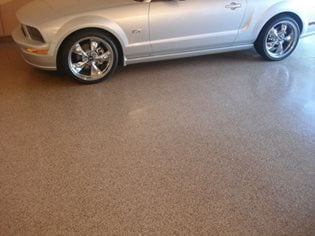
"We use polyaspartics, too," said Hanson. "But you can't have one product for every application and every condition of concrete. We go out first and measure the moisture vapor emission rate. This tells us what product to use and how to prep the concrete. The quick cure products cure so quickly that I don't think they get the deep penetration you get with epoxies that cure more slowly."
Hanson usually recommends an epoxy/polyurethane system, despite that it will take 4 or 5 days to install. Epoxy has proven over the years to be able to resist very high moisture vapor emission rates—as high as 18 pounds. And epoxy systems have been used successfully for many years on floors such as trucking facilities, airplane hangers, and commercial kitchens. "It's not as temperamental as the one-day systems and it produces a floor with superior quality," said Hanson. "There are many types of epoxies and some are better for different situations. We use four different types of epoxies just for the primer depending on the condition of the concrete, and many different types of polyurethanes. If you don't test the concrete, how do you know what's best?"
"There were some early failures with 100% solids polyaspartics," said Jack Bracco. "One company was using epoxies and they had problems with slow curing so they went to polyaspartics but they didn't change their techniques and didn't get the wetting of the surface that's so very important. We looked at these failures and found that there were two things we needed to do differently: diamond grind the surface and reduce the solids content to 70%. So now we have working time, workability, and flow characteristics that make it successful. We've done thousands of floors and not had any problems with adhesion."
Polyaspartic Coating Limitations
As with any coating system, there are pros and cons. When it comes to polyaspartic coating systems, the benefits far outweigh the limitations. However, there are a few major limitations to consider:
Reaction Speed
The advantage of a fast cure can become a detriment if the material sets before application is complete. Polyaspartics can have cure times ranging from less than 10 minutes to 45 minutes depending on solids content, surface temperature and product chemistry. If these coatings happen to set before application is complete, trapped bubbles, blisters, and lap lines can be visible and ruin an otherwise perfect job.
Slip Resistance
Even at 3 to 5 mils in thickness, polyaspartic coatings can be very slippery when wet. The material will meet the ASTM coefficient of friction when dry, but will not when wet. This is especially important to consider if they are going to be used on exterior surfaces or on surfaces that may get wet periodically. If you plan on using polyaspartics in areas where standing water can be present, consider using a grit additive to increase the coefficient of friction (see Making Concrete Slip Resistant). Most polyaspartic coatings will accept polymer grit as well as quartz aggregate.
Removal
Polyaspartics are not foolproof, and should be installed by professionals who have extensive floor coating experience. We love the fact that polyaspartics are tough materials, but that quality also makes them tough to remove or repair if problems occur during application.
Despite these limitations, the cost-to-performance ratio of polyaspartics is good, and they warrant consideration for any future project where a high-performance coating is specified or being considered. Their relative ease of installation and solid performance characteristics make them the choice for the new generation of high-performance flooring.
RELATED:
Garage Floor Paint vs. Epoxy Coatings
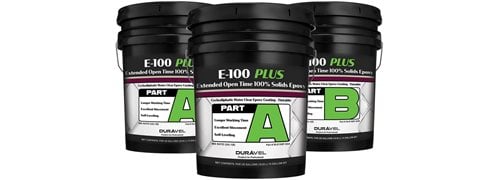 E-100 PLUS Epoxy
Extended open time 100% solids epoxy
E-100 PLUS Epoxy
Extended open time 100% solids epoxy
 HellFire® Concrete Coating
Chemical & heat resistance
HellFire® Concrete Coating
Chemical & heat resistance
 Self Leveling Overlay
Find the overlay to meet your project's needs
Self Leveling Overlay
Find the overlay to meet your project's needs
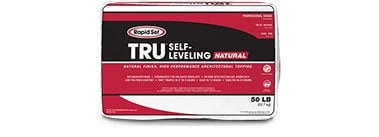 Self-Leveling Polishable Overlay
Long working time, smooth surface topping
Self-Leveling Polishable Overlay
Long working time, smooth surface topping


