Watch These How-To Videos
Clean, Elegant Concrete Floors
Time: 01:22
More Videos
Concrete Expressing Personality
Time: 01:11
More Videos
Durability and Resource Conservation
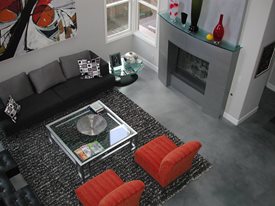
If properly maintained, a concrete floor should never need to be replaced. Masterpiece Concrete Compositions in Oceanside, CA
When properly installed and sealed (see Sealing Colored Concrete), a decorative concrete floor should last a lifetime and will never need replacement. Few flooring materials can boast this same longevity. Carpet, tile and even wood floors eventually need replacement, which uses up resources and creates waste disposal problems. If you stick with a neutral color palette for your concrete floor, it will easily accommodate any future changes to your interior décor.
Concrete floors also utilize sustainable materials. The predominant raw material for the cement in concrete is limestone, the most abundant mineral on earth. Your ready-mix supplier can also make concrete using waste byproducts, which reduces the consumption of raw materials. Fly ash, slag cement and silica fume, all waste byproducts from power plants, steel mills and other manufacturing facilities, are commonly used as partial cement replacements. Decorative concrete floors can also incorporate recycled products, such as crushed glass, bits of recycled plastic, marble chips, metal shavings and even seashells (see Beach House: An Indoor Ocean Floor).
Finally, in the highly unlikely event that your concrete floor ever needs to be replaced, the concrete itself can also be recycled at the end of its long service life (see Recycling Concrete).