- Concrete Stencils Home
- Paper or plastic The pros and cons of each
- Stock or custom concrete stencils: Which type fits your design needs?
- Adhesive or nonadhesive stencils: When to use each type
- Concrete stencil patterns: View some of the options
- How-To Tips for Using Stencils
- Step-by-step process of applying stencils
- Using microtopping and stencils to rejuvenate ugly concrete
- Related Information:
- Stenciling Concrete Floors
- "Floor Me" video series: Stencil design ideas and techniques
- Concrete logos and graphics: Creating images with concrete stencils
- Bob Harris' five favorite methods for creating graphics on floors
Adhesive or Nonadhesive Stencils?
For newly placed concrete and some overlays, you'll need to use a nonadhesive stencil that you can lay on top of the wet concrete and then press into the surface with a float or stencil roller. The wet concrete itself serves as the adhesive and will keep the stencil in place.
For hardened concrete, however, many contractors prefer to use adhesive-backed stencils because it's easier keep a pattern in place while applying a finish, doing sandblasting or applying topical color (such as a gel-type stain). Adhesive stencils are also perfect for walls and other vertical surfaces. Simply stick the stencil onto the wall and apply an overlay by trowel or spray, like you would on a concrete slab.
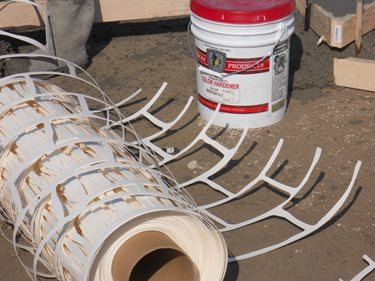
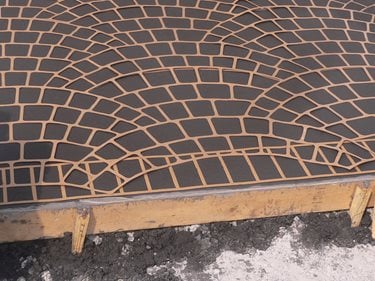
Most adhesive stencils have a self-stick backing that you expose by peeling away a protective paper. This eliminates the need to spot glue the stencil to the surface. The adhesive is pressure-sensitive, so all you need to do is press the material onto the concrete. Stencil manufacturers use adhesives that won't leave a residue on the concrete when they are removed. Intricate stencil patterns may also have a thin paper or plastic protective covering applied to the top to hold the design together without distortion while the stencil is stuck onto the concrete. After the stencil is secure, the protective covering is removed.
A disadvantage of adhesive stencils is that they aren't reusable, whereas some nonadhesive stencils made of plastic can be washed off and reused on other projects. Adhesive stencils also must be applied to a smooth surface to ensure good contact. For overlays or coatings that are sprayed on rather than trowel applied, you may not need to use a stencil with a self-adhesive backing.
 Reusable Urethane Stencils
New Technology - leaves crisp clean designs
Reusable Urethane Stencils
New Technology - leaves crisp clean designs
 Decorative Stencils
Adhesive or non-adhesive, slate, brick, etc.
Decorative Stencils
Adhesive or non-adhesive, slate, brick, etc.
 Paper Stencils
Thick, tear resistant & a wide variety of patterns
Paper Stencils
Thick, tear resistant & a wide variety of patterns
Adhesive Stencils in Action
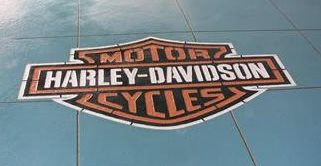
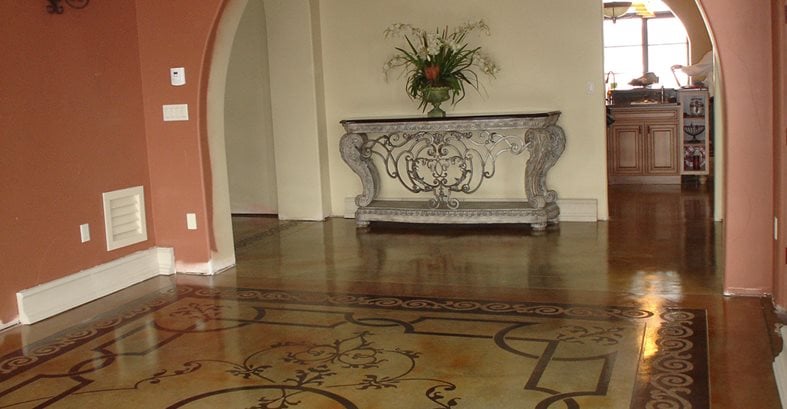
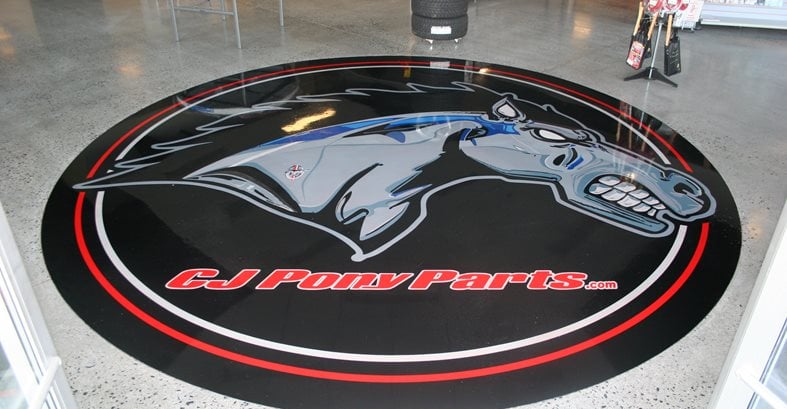
Creating a complex design or intricate logo on a concrete floor takes the skills and tools of the pros. An adhesive stencil can make all the difference in the final result. Over the years we have seen a lot of great stenciling projects. Here are some great examples of concrete work created using stock and custom adhesive stencils.