
- Colored Concrete Home
- Concrete Color Charts
- Ways to Color Concrete
- Concrete stains
- Integral Color
- Dry-Shake Color Hardener
- Concrete Dyes
- Concrete Paint
- Comparison Chart: Concrete Coloring Products
- Design Ideas for Colored Concrete
- Which Color Scheme is Right for Your Home?
- Creating color and texture with Stamped Concrete
- Adding Interest with Exposed Aggregate
- Creating Excitement with Color: Endless Possibilities with Polymer Stain
- Related Information:
- Problems with colored concrete: Common problems, why they occur, and how to avoid or fix them
- Guide to Buying Concrete Stains and Dyes
- Lea este artículo en español
The Complete Guide to Coloring Concrete
Davis Colors-John Siskin
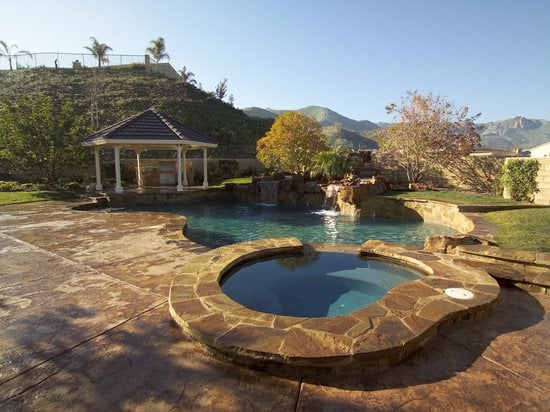
There are many options for coloring concrete, ranging from subtle shades to dramatic hues. Whether your concrete is new or old, indoors or outdoors, it can be enhanced with color. In the hands of a creative concrete contractor, these coloring mediums permit an endless array of decorative effects.
HOW DO YOU COLOR CONCRETE?
Here are the best ways to color concrete:
Ways to Color Concrete
Time: 00:49
With the exception of integral color and hardener, all of these products can be used on new or existing concrete. However, not all coloring methods are suitable for all exposure conditions or types of projects, and some have limitations in terms of color availability and intensity. But when you choose appropriately, you'll end up with rich, permanent color that will take your concrete from utilitarian to spectacular.
Comparison Chart: Concrete Coloring Products
WHY COLOR CONCRETE?
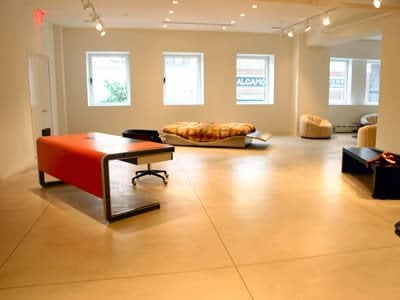
With colored concrete, the creative options and color choices are endless, making it possible to achieve the perfect look. Colored concrete can transform a room or patio from plain to spectacular. Many manufacturers offer a broad palette of colors to choose from, ranging from earth tones to vibrant hues (color samples).
Also, colored concrete can be used to simulate the look of brick, flagstone, pavers, or tile. Not only is concrete coloring a beautiful design option, but it is also affordable and compatible with both new and existing concrete. With the right products, techniques, and a creative contractor you can produce results that will transform concrete into works of art.
Finishing (texturing) techniques for colored concrete
Colored concrete can be paired with other decorative concrete finishes including broom finishing, stamping, sandblasting, exposing of aggregate and more. Create shadow effects, "swirl" and "fan" patterns, a two-tone appearance, or a natural textured look.
Fake-It in Vancouver, BC
Using colored concrete to break up large areas
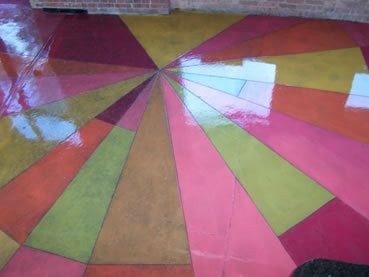
Multiple colors can be used side-by side to break up large areas. Also, color can be paired with other decorative techniques such as stamping (see patterns), sawcutting, brooming, or sandblasting to make the look even more personal. Another option for breaking up large areas of colored concrete is insetting materials such as granite, marble, tile or personal items.
Coloring concrete to mimic nature
Color schemes are often chosen to blend with each other and blend with nature. Sometimes concrete is colored and finished to look like a gravel path.
Often it is necessary to have the permanence of concrete (and the durability). But where plain concrete's gray color would draw attention to a drainage ditch or path, colored concrete can be used to help those features blend with the other landscape elements.
Hiding future stains
Most driveway, parking lots, and other parking areas are light gray concrete and soon become stained with oil and grease, tire marks, and dirt. Many property owners will add a dark integral color and then expose the aggregate. The lighter salt and pepper grays of the aggregate blend with the dark gray matrix of the cement paste. Grease and oil stains will be much less apparent, lost in the different shades of gray. Tire marks also do not show as bad on exposed aggregate.
Find Concrete Coloring Products and Suppliers
TIPS FOR GETTING THE BEST RESULTS WITH COLOR
The Concrete Impressionist in Brooklyn, NY
Think in terms of what effects you want to achieve.
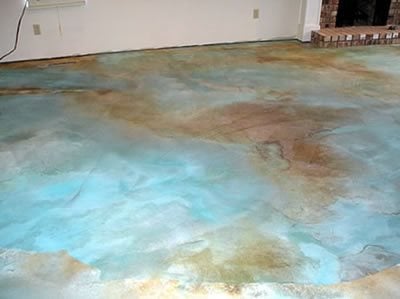
Each coloring medium can produce dramatically different results. First decide what look you're after, such as earthy tones vs. bright primary colors or uniformity vs. marbling or antiquing effects. Then work with your decorative concrete contractor to determine the best product or combination of products for your design needs.
Don't rely on color charts alone.
The color charts or cards provided by the color supplier may not precisely represent what the final results will be on your project. With integral pigments, the final color will vary depending on the cement color, sand color and the amount of water used in the mix. With surface-applied treatments, especially reactive chemical stains, the color can vary widely depending on the condition and original color of the base concrete. Always conduct a trial application of any color treatment you plan to use.
Concrete Coatings of Illinois in Crest Hill, IL
Consistency counts.
For new concrete, it's important for every batch of concrete used on the project to be consistent, including cement type and brand, aggregates and water-cement ratio. When different batches of concrete vary slightly on the same job, they may absorb stain or dye differently, resulting in noticeable color variations. Inconsistencies in finishing practices, timing of operations, and curing and sealing methods can also result in slight color variations.
Consider custom color matching.
If you can't find just the right color for your project, ask about custom color matching. Many color suppliers are able to match existing color tones or formulate custom hues to suit your design scheme. Plus stains and dyes can be mixed, diluted, blended or layered on site to achieve custom shades.
HOW TO GET COLOR INSPIRATION FOR CONCRETE WORK
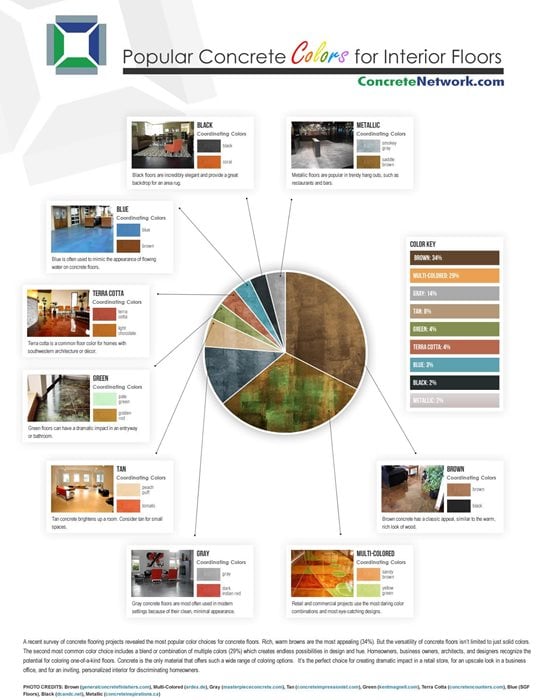
Popular Concrete Colors for Interior Floors
This infographic shows the most popular color options for concrete floors, based on a recent survey of decorative concrete flooring projects on ConcreteNetwork.com.
View the infographic
One of the best things about decorative concrete is that it can be personalized with color to reflect your personality, lifestyle or brand.
Here are 19 ways to get color ideas for decorative concrete surfaces:

Interior Color Ideas Using Concrete
Time: 03:45
How to design with color.
- Your favorite color
- Your favorite food or drink
- Your favorite sports team
- Your favorite piece of art
- The colors of the furniture and walls in your home
- The interior design of your home, such as modern vs. traditional
- Your favorite piece of clothing
- Your favorite vacation spot
- A photograph you love
- Your company's colors
- Your love for bling - think metallic coatings
- A mood you would like to create:
- brown = stability
- black = sophisticated
- gray = practical
- red = excitement
- orange = energetic
- yellow = optimistic
- green = refreshing
- pink = innocent
- Nature - the ocean, a river, flowers, leaves, an animal's coat
- Other building materials - granite, marble, wood, etc.
- Religious symbolism - use colors that represent your beliefs (especially appropriate for church buildings)
- Take cues from the exterior and interior style of your home or building
- Use Color Palette Generator to take any image on the web and instantly generate palettes. Try playing with some of your favorite personal photos until you find a palette you like.
- Browse our photo gallery to see what colors people have used for decorative concrete projects.
- Stick with the favorites, such as browns and grays

Rare Earth Concrete in Rockmart, GA
Generally speaking, for residential concrete it is best to pick safe, neutral colors, while commercial projects can pick something unexpected and exciting (see our Artistic Concrete gallery for ideas). If you're a homewoner, keep the resale value of your home in mind — going too extreme may turn off future buyers.
Learn more about color selection:
How do I pick the right stain color?
Video: Selecting colors for concrete flooring
MAINTAINING COLORED CONCRETE
When properly protected and cared for, colored concrete will retain its beauty for decades. Maintenance requirements will vary depending on the type of color used and the exposure conditions. Ask the color manufacturer or your decorative concrete contractor for the best the care and maintenance procedures for your installation. You can also review this section about cleaning concrete.
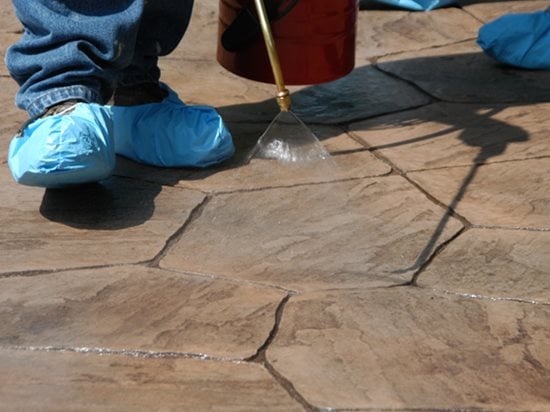
Decorative Concrete Institute in Temple, GA
For most projects, manufacturers will recommend applying a clear sealer to newly colored concrete for additional protection from abrasion, chemicals and UV exposure. A sealer can also provide aesthetic benefits by adding some sheen and intensifying the color effects. For exterior surfaces or concrete subject to heavy wear, it may be necessary to reapply a new coat of sealer every year or two to preserve the color.
For more information, see these maintenance and protection solutions for decorative concrete.
Integrally Colored Concrete Maintenance
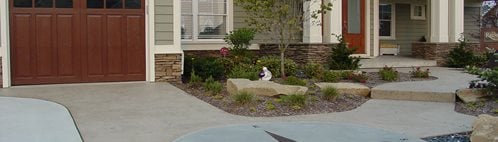 Which Color is Right For Your Home?
See how colored concrete can enhance nearly any style of home, from coastal to colonial.
Which Color is Right For Your Home?
See how colored concrete can enhance nearly any style of home, from coastal to colonial.
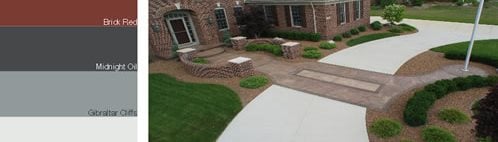 Concrete Style Guides
Download these design sheets for concrete paving ideas in modern, old-world, or traditional design schemes.
Concrete Style Guides
Download these design sheets for concrete paving ideas in modern, old-world, or traditional design schemes.
 Decorative Concrete Videos
Watch an assortment of videos showing how stains, dyes, integral colors and color hardeners work.
Decorative Concrete Videos
Watch an assortment of videos showing how stains, dyes, integral colors and color hardeners work.


