
- Concrete Polishing Equipment
- Get the Look - Polished Concrete Pictures
- How to Polish Concrete: Learn the basics and get a step-by-step overview
- Polished Concrete Preparation: How to clean, repair, and evaluate before polishing
- Concrete Polishing vs. Resurfacing
- Reviews of Concrete Polishing Equipment How to clean, repair, and evaluate the condition of concrete floors before polishing
- Tips on Using Polishing and Grinding Equipment
- Tips for Choosing Edge Grinders
- Selecting Dust-Collection Equipment
- Diamond Tooling: Tips for choosing the right type of diamond tooling and equipment
- Concrete Densifiers: An introduction to chemical hardeners and how they work to improve polished concrete
- 2023 Polishing Techniques: An online interview series featuring Bob Harris
Concrete Polishers & Equipment
Thanks to recent advances in polishing equipment and techniques, you can now grind concrete floor surfaces-whether new or old- to a high-gloss finish that never needs waxes or coatings. Offering superior durability and ease of maintenance, polished concrete has become a popular flooring surface in warehouses, retail spaces, schools, and other high-traffic facilities. But polished concrete serves much more than a utilitarian purpose. It's also an economical flooring alternative for homeowners or businesses that can't afford pricy marble or granite floors but want the same brilliant, mirror-like finish.

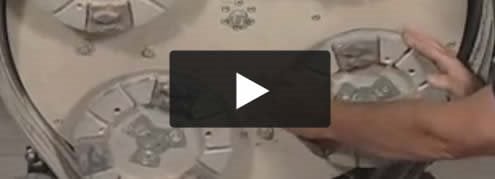 Concrete Polishing Videos
Watch a collection of videos featuring demonstrations on how to use and maintain polishing equipment.
Concrete Polishing Videos
Watch a collection of videos featuring demonstrations on how to use and maintain polishing equipment.
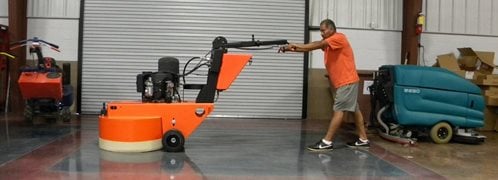 Find Polishing Machines
Get info from manufacturers & distributors such as free catalogs, color charts, info sheets, pricing, and more.
Find Polishing Machines
Get info from manufacturers & distributors such as free catalogs, color charts, info sheets, pricing, and more.
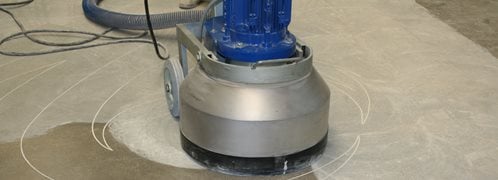 Polished Concrete Training
Find companies that offer training courses for developing your concrete polishing skills.
Polished Concrete Training
Find companies that offer training courses for developing your concrete polishing skills.
Concrete Polishing Equipment Buying Tips
Before you invest big money in a concrete floor grinder, be sure to listen, learn and ask the right questions
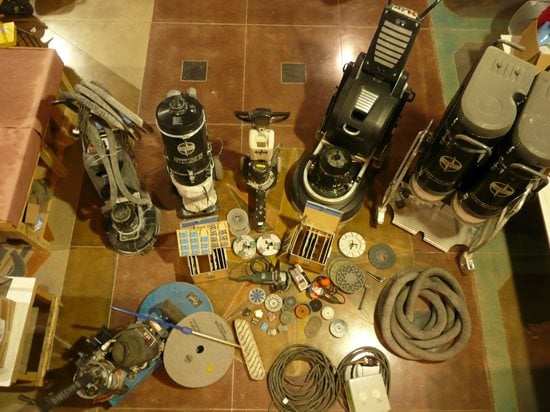
When you factor in the expense of a concrete grinder and all of the accessory items, you’re looking at a major investment. Do your homework and ask plenty of questions.
My, how the polishing industry has evolved since its inception back in the mid-1990s. Back then when you visited the World of Concrete, you’d find less than a handful of grinding equipment manufacturers and diamond tooling producers interspersed throughout the exhibit halls. Fast forwarding to the current market and specifically this year’s WOC, the amount of choices available is overwhelming, to say the least.
I felt sorry for the new generation of aspiring concrete polishers looking to get into the business, thinking that they were going to find all of the answers under one roof at the world’s largest concrete expo. At one point, I stumbled upon one of my former students visiting the show, and he pulled me to the side and said, “Help! I’m so confused on what I should be looking for when considering purchasing new equipment. All of the manufacturers are telling me their equipment has the latest and greatest bells and whistles.” Here was my advice to him, and it holds true for anyone overwhelmed by trying to make sense of which equipment best fits their company’s needs. Reflecting back on our conversation, the scenario reminded me of an episode from the old TV series Kung Fu.
Master Po: [after easily defeating the boy in combat] Ha! Ha! Never assume because a man has no eyes he cannot see. Close your eyes. What do you hear?
Young Caine: I hear the water, I hear the birds.
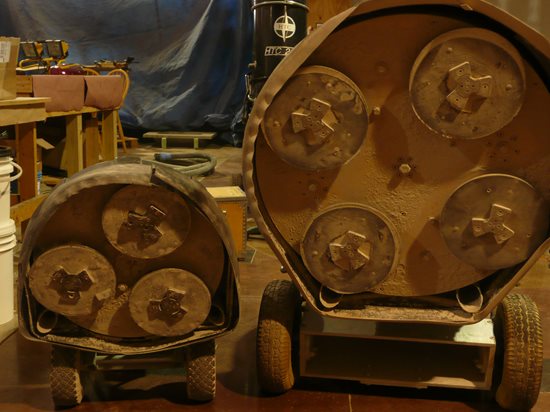
Ask what kind of production rates can be expected with the equipment you are proposing to buy. Bigger floor grinders with more heads will cover large areas faster.
Master Po: Do you hear your own heartbeat?
Young Caine: No.
Master Po: Do you hear the grasshopper that is at your feet?
Young Caine: [looking down and seeing the insect] Old man, how is it that you hear these things?
Master Po: Young man, how is it that you do not?
Our version went something like this:
Master Po: Ha! Ha! Never assume because one grinder manufacturer claims to have the best and fanciest equipment on the market that they do. Close your eyes. What do you hear?
Young Caine: I hear the same darn story at every booth I visit that their equipment is the best!!
Master Po: Do you hear your own heartbeat?
Young Caine: Who wouldn’t hear their own heart beat after what that damn salesman quoted me on the price of their equipment!
Master Po: Do you feel the scratch pattern left behind from the previous grit at your feet, which is a result of advancing the machine at too fast of a pace.
Young Caine: [looking down and seeing the scratches] Old man, how is it that you feel these things?
Master Po: Young man, how is it that you do not?
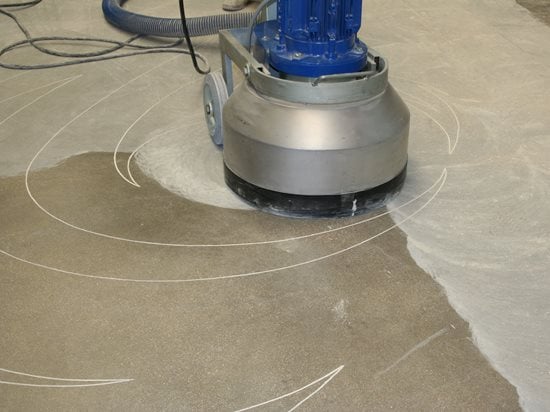
Take the grinder for a test drive. You want to avoid a machine that leaves behind visible lines or striping.
Know Your Market
As in the Kung Fu example, the decision on the appropriate type of equipment for your needs starts with listening and learning. You must truly have an in-depth understanding of what your target market is going to be and the project size your company intends on pursuing. Purchasing equipment can be a huge capital investment, and the differences between some of the equipment can equate to tens of thousands of dollars. This is why it is imperative to understand who your clients will be and if you will be servicing the residential, light industrial or heavy commercial market.
When making such an investment, take into consideration that single-head machines can range in grinding widths from 20 to almost 40 inches. Obviously, the smaller machines are great for getting into tight and hard-to-access areas and fit through most conventional doorways. But they aren’t as efficient as larger machines in open areas. Conversely, larger equipment can almost double production rates on large projects, but they require higher voltage and three-phase power to operate. The reality of this market is that it is tough to compete with the big guys already established in the polishing world, especially when you are trying to get into this business.
 Polishing Diamonds
Options for hard, medium, and soft concrete.
Polishing Diamonds
Options for hard, medium, and soft concrete.
 Propane Concrete Polisher
Concrete Polishing HQ
Propane Concrete Polisher
Concrete Polishing HQ
 Lythic Densifier XL
1 Gallon & 5 Gallon sizes
Lythic Densifier XL
1 Gallon & 5 Gallon sizes
Learn the Terminology
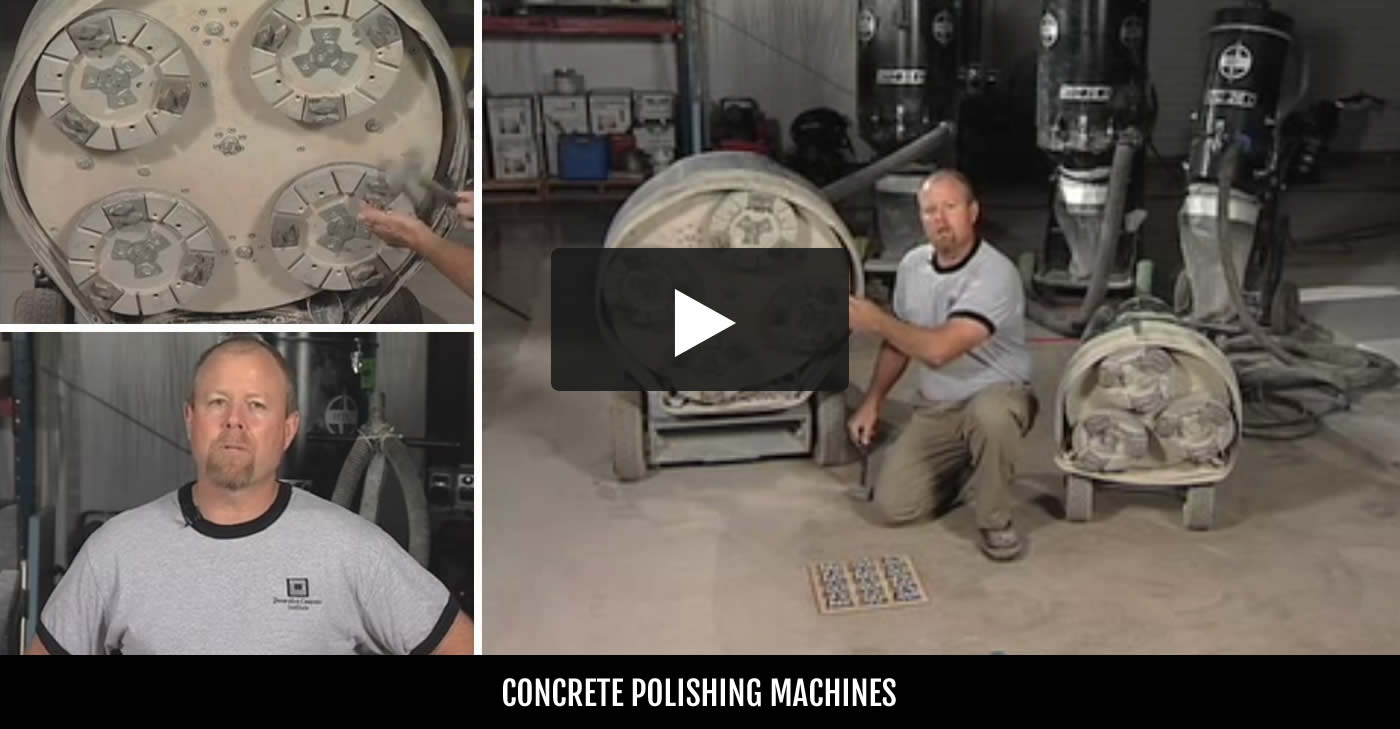
Do you know the difference between a “planetary” and “nonplanetary” grinder? To differentiate between the many choices of equipment out there, you’ll need to learn some basic industry terms. Let’s start with “active planetary” and “passive planetary.” Active planetary is where there are two belts, one driving the drum and one separate from the drum driving the grinding heads. Passive is where the drum is driven with a single belt, which means the drum is rotating but the grinding heads are just spinning freely and not being driven with a secondary belt.
A true nonplanetary grinder is where the drum is not spinning but the heads are gear-driven. The grinding heads overlap each other. Some think that this type of grinding machines is better-suited for heavy bulk removal. If you are not careful with this type of machine, though, it is very easy to get visible lines or striping, which makes it necessary to swing the machine side to side to avoid a corn row effect.
Evaluate Your Power Options
Although I do not personally have a tremendous amount of experience with propane-driven machines, the biggest selling feature with this type of equipment is that they are cordless, which saves in production time because you don’t have to fight with electrical cords throughout the duration of the project. Of course, theoretically this means you would have to have a propane dust extractor too (assuming you are grinding dry), since you would be defeating the purpose if your vacuum was electrically powered. The downside, I’m told, is that propane machines do not have quite the torque or power a 480-volt three-phase machine has. Also, there are certain scenarios where the fumes from a propane-driven machine are not acceptable.
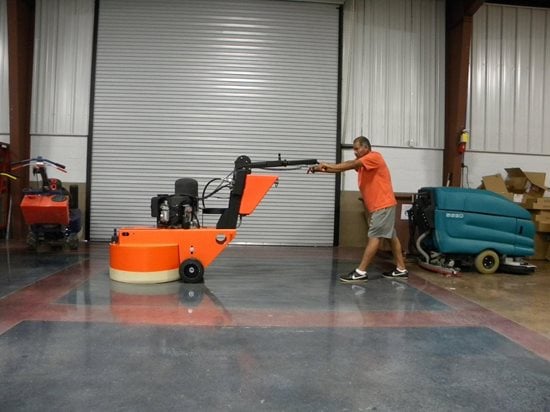
The biggest advantage of a propane-powered grinder is that it’s cordless, so you don’t have to rely on an electric power source or tether yourself to extension cords.
Beware of Package Deals
On the subject of the diamond tooling, most manufacturers are going to try and sell you on their entire package or complete “system,” as they put it. Does this mean most professional polishing contractors use one complete system throughout the entire process? The reality is, more often they do not.
As I’m writing this article, I just finished consulting on two separate 50,000-square-foot projects with different contractors. Each of the contractors was using a certain brand of grinding equipment with dust-extraction equipment and diamond tooling produced by a competitor. The point being, it’s not always a “one size fits all,” and the true professionals of the business find which setups work best for them.
Hear the Grasshopper
The best advice I can give to anyone considering diving into the polished concrete business is to do your research on the manufacturers and ask plenty of questions. After all, would you buy a new car without asking any questions? The last thing you need is to make a large investment, only to find out that your equipment is not performing like it should or you do not have the market to support your investment.
I know of two scenarios in which contractors tried to save a few dollars upfront and purchased equipment that performed marginally, at best. A year later, they put their machines up for sale to purchase grinders that ran more efficiently and, quite frankly, polished a heck of a lot better. In another case, a contractor forked out close to $20,000 on a machine, but had it for five months before getting his first polishing job. Fortunately for him, he was able to use his equipment on a weekly basis for prepping floors for cement-based toppings.
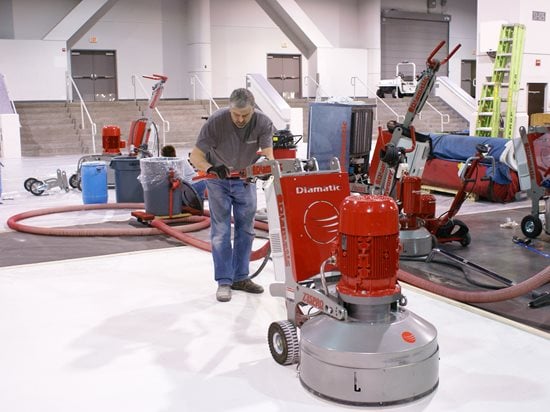
For the greatest versatility, choose grinding equipment that is universal, allowing you to interchange diamond tooling from other manufacturers.
Don’t be afraid to ask very specific questions when talking with vendors, and closely study their track record. Here is a list of questions I recommend bringing up when talking to polishing equipment manufacturers:
- How long have they been producing equipment?
- What makes their equipment different than their competitors’ machines?
- What is the warranty?
- Does the investment come with factory training?
- Does the investment come with jobsite training?
- During the training, do you actually get to operate the equipment? Are maintenance and service-related issues, like changing belts, covered?
- What kind of technical support does the company offer?
- What are the company’s hours of operation and time zone (East Coast vs. West Coast)?
- Will you be assigned a salesman covering your territory so you’re not just dealing with a customer service rep?
- Do they have facilities at different geographic locations, in case you encounter a problem on the jobsite?
- What kind of production rates can be expected with the equipment you are proposing to buy?
- What are the power requirements (if powered electrically)?
- Do they have diamonds for soft, medium soft, medium, medium hard, hard and ultra-hard concrete, and do they have specific diamonds for polishing cement-based toppings?
- What is the life expectancy of the diamonds on the various hardnesses of concrete?
- Is their equipment set up to be universal, so you can interchange diamond tooling from other manufacturers?
- What is the square-foot cost of a set of diamonds?
- If down the road you want to upgrade, is there a trade-in program or will they help you sell smaller or older equipment?
- Assuming you purchase their equipment and go through the proper training, do they have a referral program?
Checklist of Equipment and Supply Needs
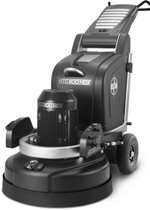
HTC-America in Knoxville, TN
Floor polisher
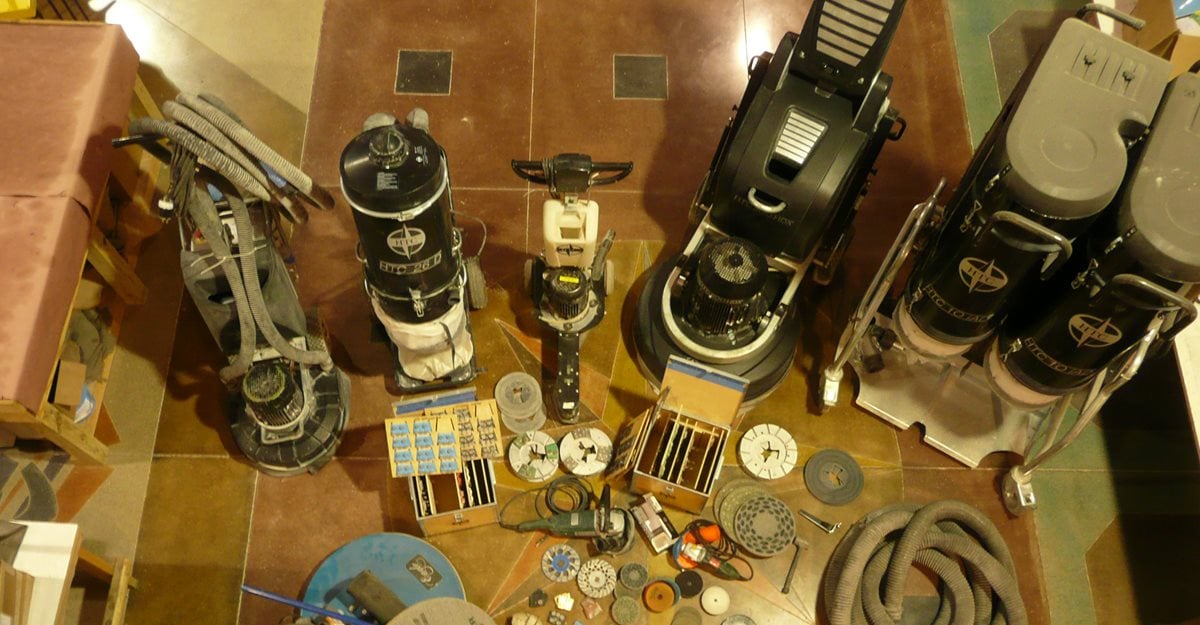
This is the indispensable workhorse on any polishing project. Look for a machine with a planetary drive system -- a large primary polishing head (ranging from 17 to 36 inches in diameter) fitted with three or four smaller satellite heads that hold the diamond abrasives. When the machine is operating, the satellite heads rotate in the opposite direction of the primary head to eliminate linear grinding marks in the floor.
Buying tips: Floor polishers can weigh anywhere from 250 to 1,250 pounds. Heavier machines produce greater friction levels, resulting in a better polish. If you're polishing dry, be sure your machine is equipped with a built-in vacuum port to collect the dust.
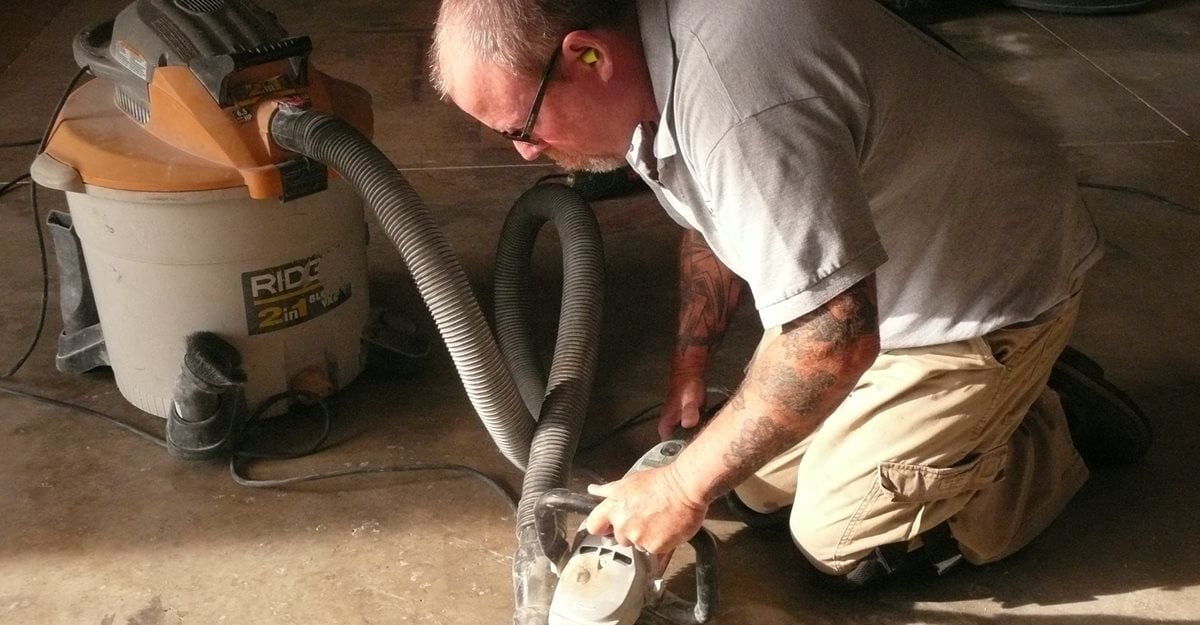
Handheld polisher or walk-behind edging tool
7 inches in diameter or smaller to work along edges or in tight spots where a large walk-behind floor polisher can't maneuver.
Set of diamond-segmented abrasives
Get various grit levels, ranging from about 16 to 3000 (the higher the number, the finer the abrasive level). You'll need two basic types of abrasives: Coarse diamond segments bonded in a metallic matrix for surface preparation and initial grinding (from 16 to 300 grit) and finer diamond segments embedded in a resin matrix for honing and final polishing (from 100 to 3000 grit). See summary of the Basic Polishing Steps.
If the job requires removing thick elastomeric membranes, coatings, or mastics from an existing floor, it may be necessary to purchase a more aggressive grinding head specifically designed for removing heavy coatings and mastics, such as the Terrco Model 6200. This tool achieve high removal rates, often completing the job after one pass.
Buying tips: The choice of polishing abrasives depends on the condition of the surface and the hardness or softness of the material being polished. Consult with your supplier to determine the right diamond tooling to use for a particular application. A basic starter's kit should include at least three abrasives at each grit level. (Most suppliers color-code their diamond abrasives by grit level for easy identification.) Be sure the diamond tooling is sized to fit the satellite heads of your polisher.
Dust-collection equipment
This is used to capture the dust generated from grinding of the concrete surface. Look for a machine capable of extracting about 99% of the dust from polishing (many of today's models do). For large scale jobs and ease of operation there are different size dust extractors for grinding and polishing.
Penetrating chemical hardener
After performing initial coarse grinding with the metal-bonded diamond abrasives, it's often beneficial to apply a liquid chemical hardener to the concrete to help solidify and densify the surface and provide extra protection from water penetration and staining. Hard concrete also produces a better polish. These products, which can be applied to new or existing floors, work by reacting chemically with the calcium hydroxide in the concrete to form a hard, crystalline structure. They are sold under different trade names, but are usually made of sodium-, potassium-, or lithium-based silicates.
Repair filler
This is used for patching any cracks in existing floors during the surface preparation stage.
Buying tip: Use an epoxy or other semi-rigid crack filler, making sure to level the filler at the surface. This will enable the polishing heads to move more easily over the floor.
Topical stain-guard treatment
Once you obtain the look and polish you're striving for, you may want to protect the surface by applying a commercial stain-guard product, especially if the floor will be exposed to grease, oil, or chemicals. Similar to Scotchgard for fabric, these solutions penetrate the surface to make the floor more resistant to stain absorption and dirt. They are usually applied by pump sprayer or wax applicator, but must be reapplied every few months or so to maintain their effectiveness.
Supplemental power and lighting
Floor polishing machines consume a lot of juice (from 220 to 460 volts and up to 40 amps). Make sure the facility you're working in has the right electrical outlets and enough power to operate your equipment. Consider investing in a portable generator to eliminate downtime due to insufficient power. Also check the lighting: Is it bright enough to clearly illuminate the surface you're working on? If not, you'll need to bring in portable halogen lights.
Optional decorative enhancements
You can enhance the lustrous beauty of polished concrete by using various coloring products and specialty treatments. To add color, you can apply chemical stains or dyes to the concrete during the polishing process. For new concrete floors, colored aggregate, glass pieces, or bits of metal can be seeded into the freshly placed concrete before it sets. The polishing process will reveal these decorative embellishments.


