
- Coloring Supplies
- Concrete Stains
- Concrete Dyes
- Color Hardener
- Integral Color
- Resurfacing & Overlays
- Concrete Coatings
- Concrete Overlay Supplies
- Concrete Resurfacer
- Vertical Concrete Overlays
- Terrazzo Flooring
- Concrete Countertops
- Countertop Mixes & Supplies
- Texturing & Patterns
- Concrete Stamps
- Concrete Stencils
- Concrete Engraving
- Forms & Molds
- Concrete Forms
- Concrete Molds
- Step Forms
- Concrete Polishing
- Polishing Equipment
- Concrete Densifiers
- Tools & Equipment
- Surface Preparation
- Concrete Tools
- Concrete Power Tools
- Concrete Pumps
- Protection & Repair
- Concrete Sealer
- Cleaning Concrete
- Concrete Repair
- Curing Concrete
- Vapor Barriers
- Foundation Waterproofing
- Concrete Mix
- Concrete Admixtures
- GFRC Mixes & Supplies
Leasing Equipment Buyer's Guide
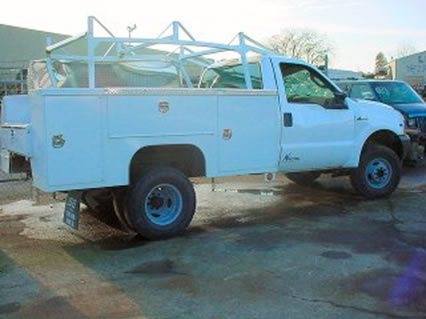
Truck Leasing - Utility Trucks Subway Truck Parts in Sacramento, CA
The backbone of your business relies on the use of specialized equipment - the kind which enables you to create surfaces that "wow" your clients. But for every piece of equipment you need, there is the question of whether to lease or buy. Both leasing and buying have their own unique pros and cons, and only after considering all the facts will you be able to make a decision that's right for you and your business.
Buying
If you're looking to buy (we'll assume through a loan), you're going to need to come up with a down payment and probably pledge other assets as collateral. Most loans also require two expenditures within the first payment period: the down payment and your first monthly loan payment. (If you're buying with cash, you should run the idea through your tax consultant, as he or she may advise you that there are better, more tax-friendly ways to purchase equipment.)
The good news is that loans allow you to claim a tax deduction for a portion of the loan payment (as interest) and for depreciation (tied to IRS depreciation schedules). It's always advisable to talk to your tax specialist before you make any move, as they will be aware of the current Internal Revenue Service (IRS) regulations.
Any equipment you buy is required to appear as an asset with a corresponding liability on your balance sheet. If you choose to buy, you'll be responsible for many things: the entire life of the equipment; tracking the asset through its entire life cycle; managing all maintenance costs, interest, taxes and insurance; and the disposal or selling of the equipment when it's outdated or no longer of any use to you.
Leasing
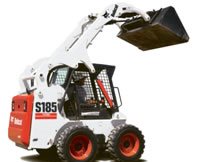
Bobcat Skid Steer Loader
You're probably already familiar with buying equipment, but leasing may be a new concept you haven't considered. According to the Equipment Leasing Association (ELA), a non-profit organization that represents companies involved in the equipment leasing and finance industry, leasing offers many advantages versus other financing methods (such as loans).
First, the IRS doesn't consider an operating lease to be a purchase. According to the IRS, it's actually a tax-deductible overhead expense, which means you can deduct the lease payments from your corporate income. An operating lease also isn't considered a long-term debt or liability. This means the lease does not appear as debt on your financial statement, which in turn makes you more attractive to traditional lenders, if and when you need a loan. And because lease payments are treated as expenses on your balance sheet, the equipment doesn't have to be depreciated over five to seven years. This is equal to an immediate write-off of the dollars you spend.
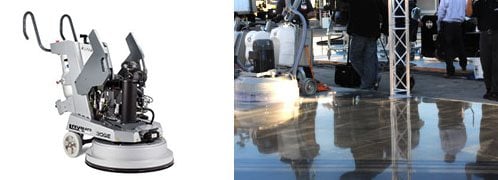 Lavina Polishing Machine Rentals
Rent machines & vacuums anywhere in the US!
Lavina Polishing Machine Rentals
Rent machines & vacuums anywhere in the US!
 Machine Rentals
From Moon Decorative Concrete in OKC
Machine Rentals
From Moon Decorative Concrete in OKC
In leasing, there is very little money down required. Also, because a lease doesn't require a down payment, it's equivalent to 100 percent financing (which means you will have more money to invest in revenue-generating activities). Leases also offer flexibility as you grow and your needs change. You can add or upgrade at any point during the lease term through add-on or master leases (note that the ELA recommends that if you anticipate growth, negotiate that option when you structure your lease program).
For example, if you plan to continually acquire equipment, a master lease that allows you to acquire many items within a single lease (and avoid executing a new contract with every new item) may suit your needs. Leases can even be customized to fit your month-to-month or year-to-year cash flow needs; they can be customized for cash flow, budget, transaction structure, cyclical fluctuations, etc. For example, some leases allow you to miss one or more payment without penalty.
A lease provides asset management because it tracks the use of equipment for specific periods of time at fixed payments. Better yet, the lessor assumes and manages the risk of equipment ownership. Leasing also offers cash forecasting; you know the amount and number of lease payments over the life of your lease. This way, you can accurately forecast equipment cash requirements for your company. And when the lease ends there are several options for the equipment, including returning it, renewing the lease or buying the equipment.
Lastly, in an industry where having the latest technology can make or break you, a short-term operating lease can help you get the equipment you need and keep your cash. The ELA recommends leasing any equipment you think will depreciate quickly or will be obsolete soon.
Ways of Leasing
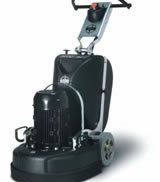
Concrete Polishing Equipment HTC-America in Knoxville, TN
If you decide to lease, you're not alone. Eight out of 10 companies lease some or all of their equipment, according to the ELA. There are three ways to lease equipment: you can select and order the equipment and then find financing through a lessor; you can choose the equipment through a vendor or manufacturer that offers leasing; or you can get the equipment directly through a lessor.
The two most common leases are operating and finance. An operating lease works well if you plan to update or replace equipment often. Operating leases also allow you to use the equipment without ownership and return it at lease end. A finance lease is a full payout, non-cancellable agreement in which you are responsible for maintenance, taxes and insurance. This type of lease is best used when you want the tax benefits of ownership or expect the equipment's residual value to be high.
Your Lessor
Most leasing companies will tailor lease pricing, payment schedule, end-of-lease options and other components suit your needs.
For example, Granite Leasing (www.graniteleasing.com) offers the Capital Lease (also known as $1 lease) that begins with first or first and last monthly payments. After the lease runs through the desired term, at the end of the term you would purchase the equipment for $1 (you'd have to depreciate this the same way you would a bank loan). Granite's Operating Lease starts with first or first and last monthly payments, but after it runs through the desired term, at the end of the term you have the option to purchase the equipment for a residual (normally 10, 15, or 20 percent of the original price), or you can turn the equipment back in. In this case, you would be able to write the payments off as a rental payment.
At Accord Financial Group (www.accordlease.com), they offer 100 percent financing and the ability to include "soft costs" such as installation and training in your monthly payment. According to their website, they require a one-page application for equipment acquisitions up to $75,000 (for organizations in business less than two years, additional information may be required). Accord offers nationwide lease coverage (including Canada); flexible payment options including deferred, seasonal and skip payment plans; lease terms from one to seven years for both new and used equipment; and various end-of-lease options.
Advantage Leasing Corporation (www.advantageleasing.com) offers a free lease line commitment, from $15,000 to $50,000, to lease most any type of equipment within six months of application. They also have a calculator that helps you figure out what your payments might be. Simply enter the cost of the equipment you want to lease, and the calculator will give you monthly payments for terms of 24, 36, 48 and 60 months (your actual payment may be lower or higher depending on your approval rating and funding options).
If you're feeling overwhelmed with options, the ELA has a directory at www.chooseleasing.org that will help you choose the lessor that's right for you. Chooseleasing.org is full of information on leasing and strategic financing methods, as well as a comprehensive directory of leasing companies. Just be sure to choose the lessor you feel the most comfortable with, as you may be working with them for many years to come.
Lessor Questions
The ELA recommends considering the following questions before you sign on the dotted line:
- Does the leasing representative understand your business and how this transaction helps you do business?
- What is the total lease payment and are there any other costs that you could incur before the lease ends?
- What happens if you want to change this lease or end the lease early?
- How are you responsible if the equipment is damaged or destroyed?
- What are your obligations for the equipment (such as insurance, taxes and maintenance) during the lease?
- Can you upgrade the equipment or add equipment under this lease?
- What are your options at the end of the lease?
- What are the procedures you must follow if you choose to return the equipment?
- Are there any extra costs at the end of the lease?
Clearly, whether you choose to lease or buy, there's a lot to consider. But by using the resources available to you, you can rest assured you'll be able to make the right decision for you - and your bank account.


